A packed week for global markets is set to be led by a key Federal Reserve interest rate decision, coming at a sensitive moment as concerns over central bank independence intensify following a criminal investigation involving Fed Chair Jerome Powell. Investors will also be watching a wave of high-profile technology earnings, while renewed tariff threats from U.S. President Donald Trump add another layer of geopolitical risk.
1. Fed policy decision in focus
The Federal Reserve’s interest rate decision on Wednesday is expected to dominate the week’s agenda. Policymakers will assess how to set borrowing costs at a time when the U.S. economy remains broadly resilient.
Employment conditions appear stable, with modest hiring and limited layoffs, while inflation has remained elevated but relatively steady above the Fed’s 2% target. Some economists, however, warn that the economy may be becoming increasingly “K-shaped,” with higher-income households and large corporations driving growth as lower-income consumers struggle with rising living costs.
Against this backdrop, markets widely expect the Fed to leave rates unchanged within the 3.5%–3.75% range. According to CME FedWatch, investors do not anticipate the next rate cut until June.
2. Powell succession under scrutiny
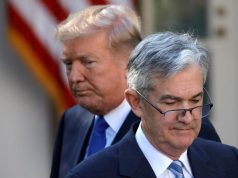
This meeting also takes place as Trump continues to push for faster and deeper rate cuts to stimulate economic growth. Long-standing concerns about political pressure on the Fed escalated earlier this month when the U.S. Justice Department opened a criminal investigation into Powell.
In an unusually direct public response, Powell criticized the probe, calling it an attempt to influence monetary policy. With only a few months remaining in his term, markets are closely watching whether Powell may remain on the Fed’s Board of Governors after stepping down as chair, potentially retaining influence over future policy decisions.
Attention is also turning to Trump’s choice of Powell’s successor. Prediction markets currently see BlackRock executive Rick Rieder as the leading candidate, ahead of former Fed Governor Kevin Warsh. Trump has indicated that a final decision could be imminent.
3. Big tech earnings take center stage
Corporate earnings will also be in focus, with results due from major technology companies including Meta Platforms, Microsoft, and Apple. These firms have been key drivers of equity market gains in recent years, buoyed by optimism surrounding artificial intelligence.
To stay competitive in the AI race, mega-cap tech companies have sharply increased capital spending, particularly on data centers and advanced semiconductors. While investors have so far tolerated these costs, expectations are rising for tangible revenue growth. Analysts increasingly view 2026 as a critical year for AI-driven returns, making this week’s earnings reports an early test of whether those expectations are being met.
4. ASML earnings watched closely
In Europe, attention will turn to ASML, the world’s largest supplier of chipmaking equipment, which reports earnings on Wednesday.
ASML’s valuation recently surpassed $500 billion after major customer TSMC announced higher-than-expected capital spending plans to meet surging demand for AI chips. While analysts remain optimistic about ASML’s long-term prospects, the company’s relatively cautious growth outlook for the current year has raised questions about whether new manufacturing capacity is keeping pace with booming AI demand.
5. Trump renews tariff threats
Geopolitical risks resurfaced over the weekend after Trump threatened to impose a 100% tariff on Canadian imports if Ottawa were to strike a trade deal with China. The comments followed earlier rhetoric over potential tariffs linked to U.S. access to Greenland.
Trump warned that any agreement between Canada and China would prompt sweeping import duties, accusing Beijing of seeking to undermine Canada’s economy. Canadian Prime Minister Mark Carney responded by saying Canada has no plans to pursue a free trade deal with China and would respect its existing trade commitments with the U.S. and Mexico.
Analysts at Vital Knowledge said they see a low probability of such tariffs being implemented, but cautioned that repeated threats could gradually erode investor confidence and weigh on market sentiment.