Fed Cuts Rates for First Time in Nine Months as Labor Market Weakens
The Federal Reserve lowered interest rates by 25 basis points on Wednesday, its first cut in nine months. Policymakers signaled two more cuts are likely this year, as concerns about a softening labor market outweighed inflation risks still above target.
Fed Flags Labor Market Risks
In its policy statement, the Fed said economic growth slowed in the first half of the year. Job gains weakened, while unemployment edged higher, though it remains low. Inflation has risen and remains elevated but is no longer the central concern.
The Federal Open Market Committee (FOMC) lowered the benchmark rate to 4.00%–4.25%. The move had been widely expected and priced in by markets.
Miran Dissents in First Vote
The decision came during a leadership shakeup. Earlier this week, the Senate confirmed President Donald Trump’s advisor Stephen Miran to the Fed’s Board of Governors. Miran, a supporter of more aggressive easing, dissented from the decision, favoring a deeper 50 bps cut.
More Cuts Ahead?
Fed members backed the prospect of two more cuts this year, up from one previously. But Morgan Stanley noted support for three cuts was fragile, hinging on just one voter shift.
Projections now see interest rates falling to 3.4% in 2026 and 3.1% in 2027.
Powell Signals Policy Shift
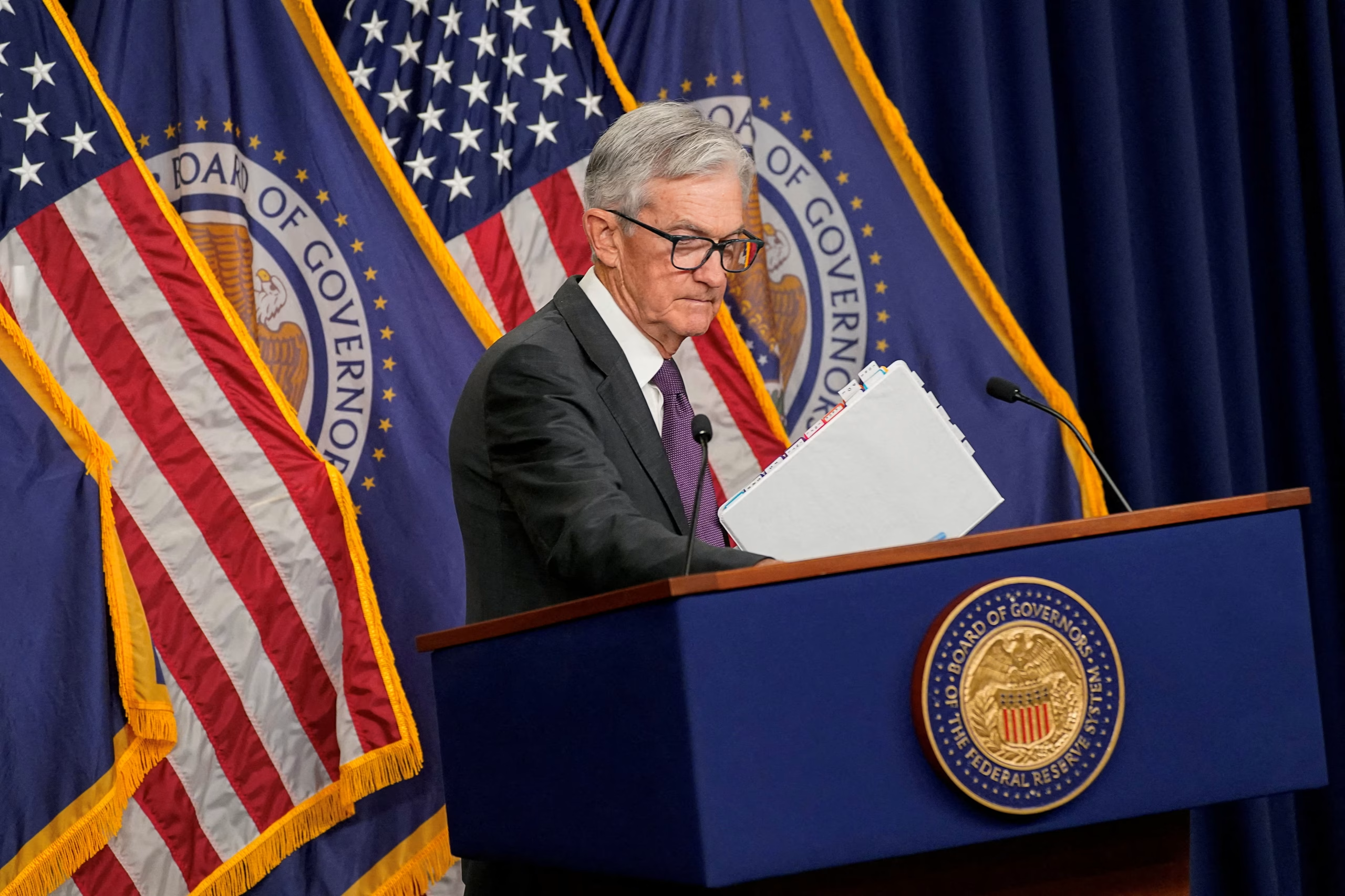
Fed Chair Jerome Powell said risks have shifted from inflation to the labor market. He called the move a “risk-management cut,” stressing that future decisions will be made meeting by meeting. Powell downplayed the idea of a deep rate-cutting cycle.
Recent labor data reinforced concerns. Payrolls rose only 22,000 in August, far below the expected 75,000, while unemployment increased to 4.3%.
Inflation and Growth Outlook
The Fed’s inflation forecast showed price pressures easing. Core PCE inflation is expected to hold at 3.1% in 2025, slow to 2.6% in 2026, and reach the 2.1% target by 2027.
The labor market outlook shows unemployment at 4.5% in 2025, improving slightly to 4.4% in 2026 and 4.3% in 2027.
Despite labor concerns, GDP forecasts improved. Growth is now seen at 1.6% this year, 1.8% in 2026, and 1.9% in 2027.