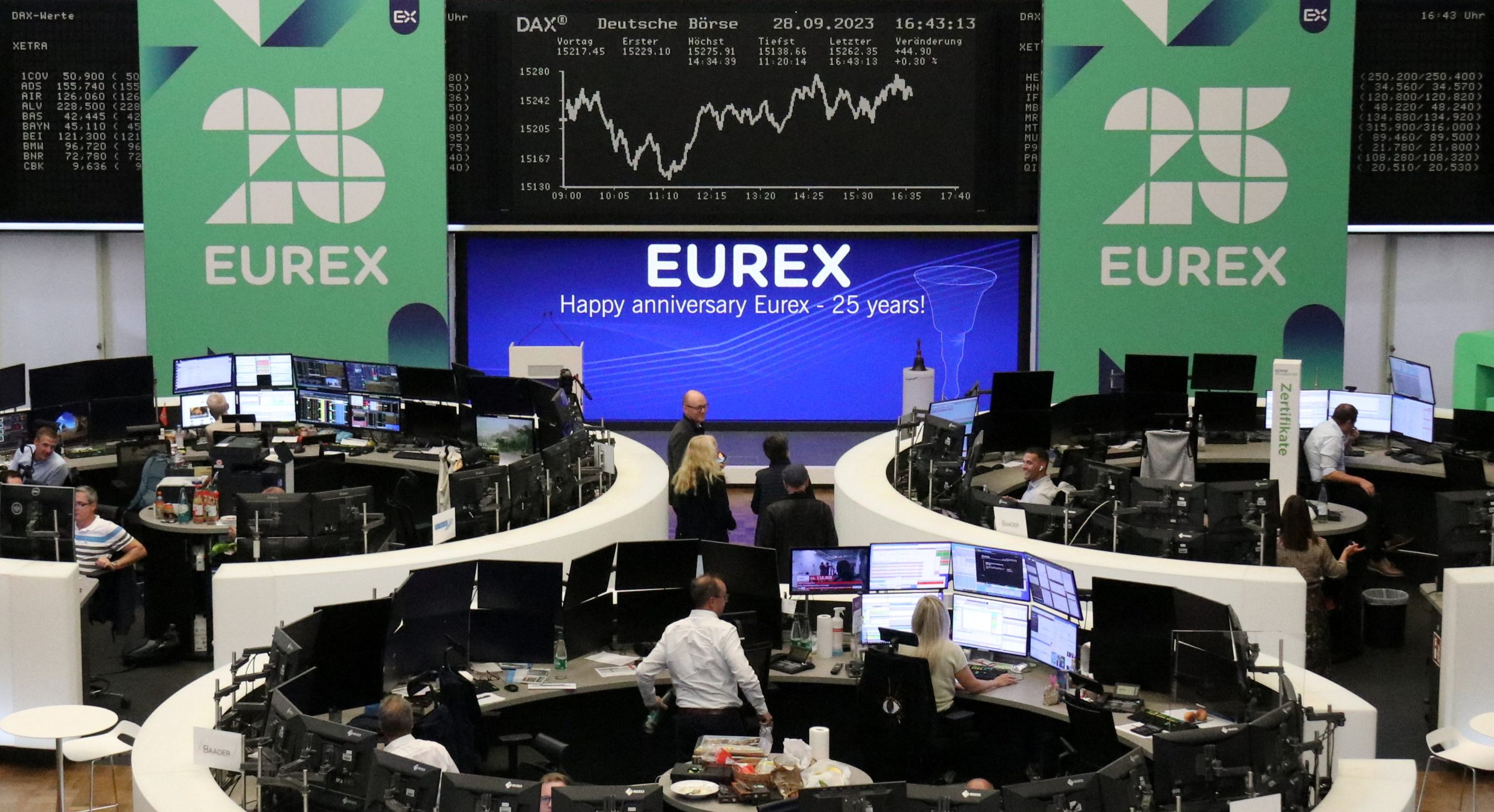
European stock markets moved slightly lower on Thursday as investors closely monitored the escalating conflict in the Middle East, which has now entered its sixth day and continues to weigh on global market sentiment.
At 03:02 ET (08:02 GMT), major European indices were trading in negative territory. Germany’s DAX index declined 0.4%, France’s CAC 40 fell 0.4%, while the FTSE 100 in the United Kingdom slipped 0.1%.
Middle East conflict raises global economic concerns
The conflict in the Middle East has intensified since U.S. and Israeli missile strikes targeted Iranian positions over the weekend. Military tensions expanded further after a U.S. submarine sank an Iranian warship near Sri Lanka on Wednesday, while NATO air defense systems intercepted an Iranian ballistic missile aimed toward Turkey.
There are currently few indications that the conflict will de-escalate in the near term. The U.S. Senate recently voted against a proposal that aimed to halt the ongoing air campaign and require Congressional approval for further military operations.
Political developments in Iran have also added uncertainty. Mojtaba Khamenei, the son of Iran’s late supreme leader, has reportedly emerged as a leading candidate to succeed him, signaling that Tehran may continue to resist international pressure.
International Monetary Fund Managing Director Kristalina Georgieva warned that the conflict could have significant global economic consequences.
She stated that a prolonged war could affect global energy prices, financial market sentiment, economic growth, and inflation, placing additional pressure on policymakers around the world.
Inflation fears grow as energy prices rise
Investors are also concerned that rising energy prices may increase inflation across Europe. The region is highly dependent on imported energy, making it particularly vulnerable to disruptions in global oil and gas supply.
Higher inflation could potentially push the European Central Bank (ECB) to consider tightening monetary policy further.
However, Bank of France Governor and ECB policymaker François Villeroy de Galhau said Thursday that he currently sees no immediate need for the central bank to raise interest rates.
He added that while the conflict could push inflation higher and slow economic growth, the overall impact will largely depend on how long the geopolitical tensions persist.
Eurozone retail sales and China growth outlook
Later in the session, investors will focus on eurozone retail sales data, which is expected to show a 0.3% monthly increase in January, representing a 1.7% annual growth rate.
Earlier in the day, China announced that it had set its economic growth target for 2026 at between 4.5% and 5%, slightly below the 5% growth achieved last year and marking the lowest official target since 1991.
Corporate earnings in focus
Investors are also reviewing a series of corporate earnings reports from major European companies.
U.K. consumer goods company Reckitt Benckiser reported stronger-than-expected fourth-quarter sales growth, driven largely by strong demand in emerging markets. The company expects its core businesses to grow between 4% and 5% in 2026.
German logistics giant Deutsche Post projected higher operating profit for 2026, broadly matching market expectations despite rising geopolitical risks.
Meanwhile, Zurich Insurance reported its highest annual profit in 2025, supported by a record performance from a U.S. business partner and a relatively calm year for natural disasters.
Swiss dermatology company Galderma also posted strong results, exceeding $5 billion in annual net sales for the first time and raising its peak sales forecast for its skin treatment drug Nemluvio to more than $4 billion.
German residential property group LEG Immobilien reported full-year results for 2025 that exceeded analyst forecasts, although a slight increase in vacancy rates and a partially share-based dividend tempered the overall outlook.
Oil prices extend rally
Oil prices continued to climb on Thursday, extending gains from earlier in the week as the Middle East conflict raised fears of supply disruptions from one of the world’s most important energy-producing regions.
Brent crude futures rose 2.9% to $83.75 per barrel, while U.S. West Texas Intermediate crude increased 3.2% to $77.08 per barrel.
Both benchmarks have now recorded five consecutive days of gains, with Brent reaching its highest level since July 2024.
Energy traders remain concerned about supply flows through the Strait of Hormuz, a crucial shipping route that carries around one-fifth of global oil and liquefied natural gas supplies.
Iran has reportedly targeted tankers in the area, effectively disrupting shipping traffic through the strategic waterway and increasing fears of prolonged supply disruptions.