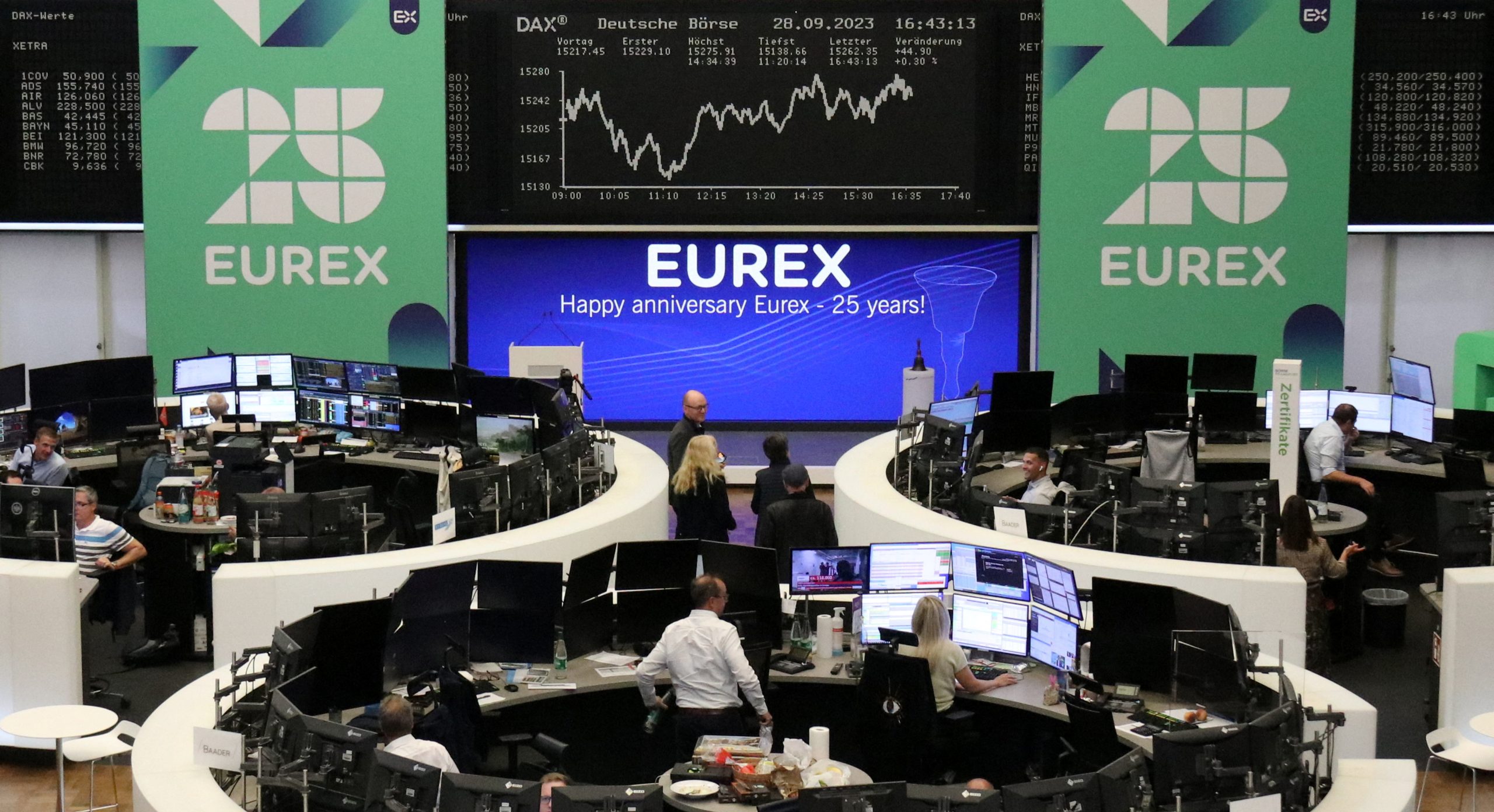
European Stocks Open Lower Amid Rising Iran Tensions
European equity markets started the week on a weaker footing, as investors reacted to President Donald Trump’s ultimatum demanding that Iran reopen the Strait of Hormuz.
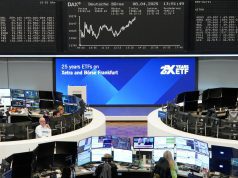
By early trading, the pan-European Stoxx 600 dropped 1.3%, Germany’s DAX declined 2.0%, France’s CAC 40 fell 1.6%, and the UK’s FTSE 100 lost 1.3%.
Weak Global Sentiment Weighs on European Markets
European equities followed a negative lead from Asia, where markets also recorded significant losses. Many Asian economies are heavily dependent on energy imports from the Gulf, making them particularly sensitive to supply disruptions.
Analysts noted that continued escalation in the conflict is broadly negative for global financial markets, as uncertainty drives investors away from risk assets.
Strait of Hormuz in Focus as Conflict Intensifies
As the U.S.-Israel conflict with Iran enters its fourth week, geopolitical tensions remain elevated. Recent strikes in Tehran reportedly disrupted power supply across parts of the Iranian capital.
However, the primary concern for markets remains the Strait of Hormuz—a critical global shipping route through which roughly 20% of the world’s oil supply passes.
Shipping activity has been severely impacted, with vessels avoiding the area due to security risks and insurers reluctant to cover transit through the region.
Trump’s Ultimatum Raises Risk of Further Escalation
President Trump has warned that the U.S. could target Iran’s energy infrastructure if the strait is not reopened. In response, Iran has stated that it will keep the passage closed and may retaliate if further attacks occur.
This standoff has heightened fears of prolonged disruption in global energy markets.
Oil Prices Surge on Supply Concerns
Oil markets have reacted strongly to the escalating crisis. Brent crude prices have surged significantly, reflecting concerns over restricted supply from the Persian Gulf.
Brent was recently trading at $109.52 per barrel, after settling at $112.19 on Friday. Prior to the conflict, prices were around $70 per barrel, highlighting the scale of the increase.
Europe Faces Rising Energy and Inflation Risks
Europe remains particularly exposed to energy shocks, as it relies heavily on natural gas imports from the Gulf, especially from Qatar. Recent strikes on key gas infrastructure have pushed European gas prices sharply higher.
ECB Warns of Renewed Inflation Pressures
The European Central Bank has cautioned that prolonged conflict could reignite inflationary pressures that had previously eased. Policymakers signaled readiness to adjust interest rates if necessary, raising expectations that borrowing costs could increase in the coming months.