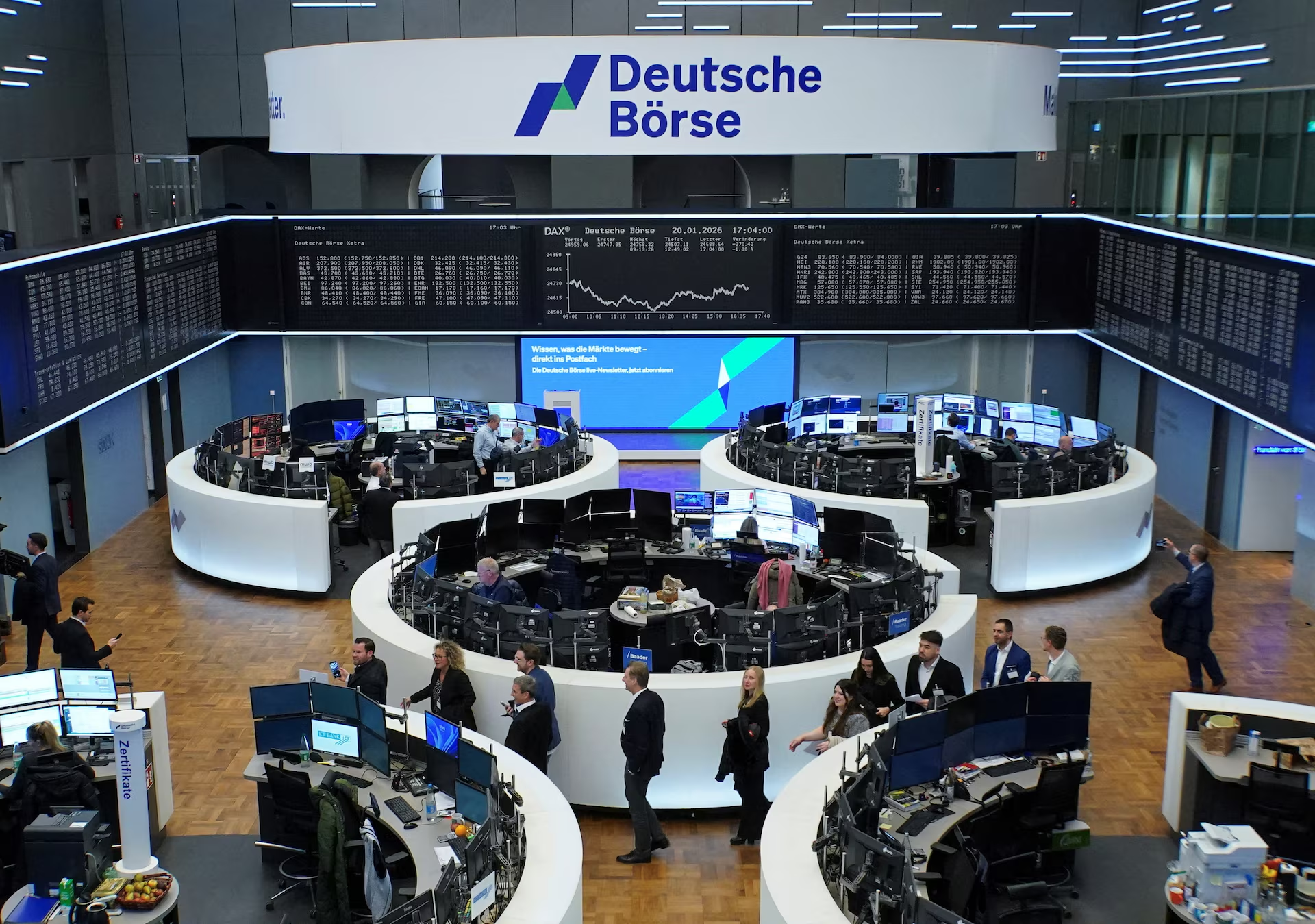
European stock markets traded mixed on Tuesday as investors assessed a heavy stream of corporate earnings from some of the region’s largest companies. The cautious tone came despite generally positive global market sentiment.
At 03:05 ET (08:05 GMT), Germany’s DAX slipped 0.2%, while the UK’s FTSE 100 also edged 0.2% lower. France’s CAC 40 bucked the trend, rising 0.3%.
Global sentiment improves after tech rebound
Confidence has returned to global equity markets, supported by a rebound in technology and artificial intelligence-related stocks following last week’s sell-off.
On Wall Street, major U.S. indices posted a second consecutive session of gains, with the Dow Jones Industrial Average reaching a fresh record high. In Asia, Japan’s Nikkei 225 also closed at an all-time high, boosted by optimism after Prime Minister Sanae Takaichi’s landslide victory in the Lower House.
Back in Europe, stock markets have made solid gains so far this year. The DAX and CAC 40 are both up more than 2%, while the FTSE 100 has climbed over 4%, supported by broadly positive earnings results.
Earnings season remains in focus
Corporate results continued to dominate market attention as the earnings season gathered pace.
Philips reported stronger-than-expected fourth-quarter performance, with sales reaching €5.10 billion. The Dutch healthcare group benefited from resilient demand despite the impact of higher tariffs.
Luxury group Kering posted a smaller-than-expected decline in fourth-quarter sales. The results marked the first quarter under new chief executive Luca de Meo, who is working to stabilize the company.
Pharmaceutical giant AstraZeneca forecast profit and revenue growth in 2026, citing strong demand for cancer treatments and newer drugs as it expands further in the United States and China.
Meanwhile, Barclays reported a 12% increase in annual profit and introduced new performance targets through 2028. The bank aims to improve returns by focusing on its core UK market and increasing the use of technology, including artificial intelligence, to cut costs.
On the downside, energy major BP said it would suspend share buybacks and use excess cash to strengthen its balance sheet. The move followed a fourth-quarter loss of $3.4 billion, compared with a profit of $1.2 billion in the previous quarter.
UK political uncertainty draws attention
The European economic calendar was relatively light, with the exception of French unemployment rising to 7.9% in the fourth quarter from 7.7% previously.
Investor focus in the UK remains firmly on politics, as Prime Minister Keir Starmer faces mounting pressure over the appointment of Peter Mandelson as ambassador to the United States.
Scottish Labour leader Anas Sarwar called for Starmer’s resignation on Monday, a move the prime minister rejected. The controversy has kept markets alert to potential political fallout.
According to Ruth Gregory, Deputy Chief UK Economist at Capital Markets, any leadership change could initially push gilt yields higher and weaken the pound. Over the longer term, she warned that looser fiscal policy could lead to persistently higher yields and a softer currency.
Middle East tensions keep oil markets cautious
Oil prices edged slightly lower on Tuesday as tensions between the United States and Iran remained elevated, keeping concerns about potential supply disruptions in the Middle East firmly in focus.
Brent crude futures fell 0.3% to $68.86 per barrel, while U.S. West Texas Intermediate crude dropped 0.3% to $64.18 per barrel.
Prices had gained more than 1% on Monday after the U.S. Department of Transportation Maritime Administration warned U.S.-flagged vessels to avoid Iranian waters when transiting the Strait of Hormuz and the Gulf of Oman.
Roughly one-fifth of global oil consumption passes through the Strait of Hormuz, making any escalation in the region a significant risk to global energy supplies. The warning came despite reports of progress in recent talks between Washington and Tehran over Iran’s nuclear program.