European stocks opened slightly higher on Monday as investors closely monitored rising oil prices and escalating geopolitical tensions in the Middle East. Markets remained cautious as the conflict involving Iran entered its third consecutive week, raising concerns about energy supply disruptions and global economic stability.
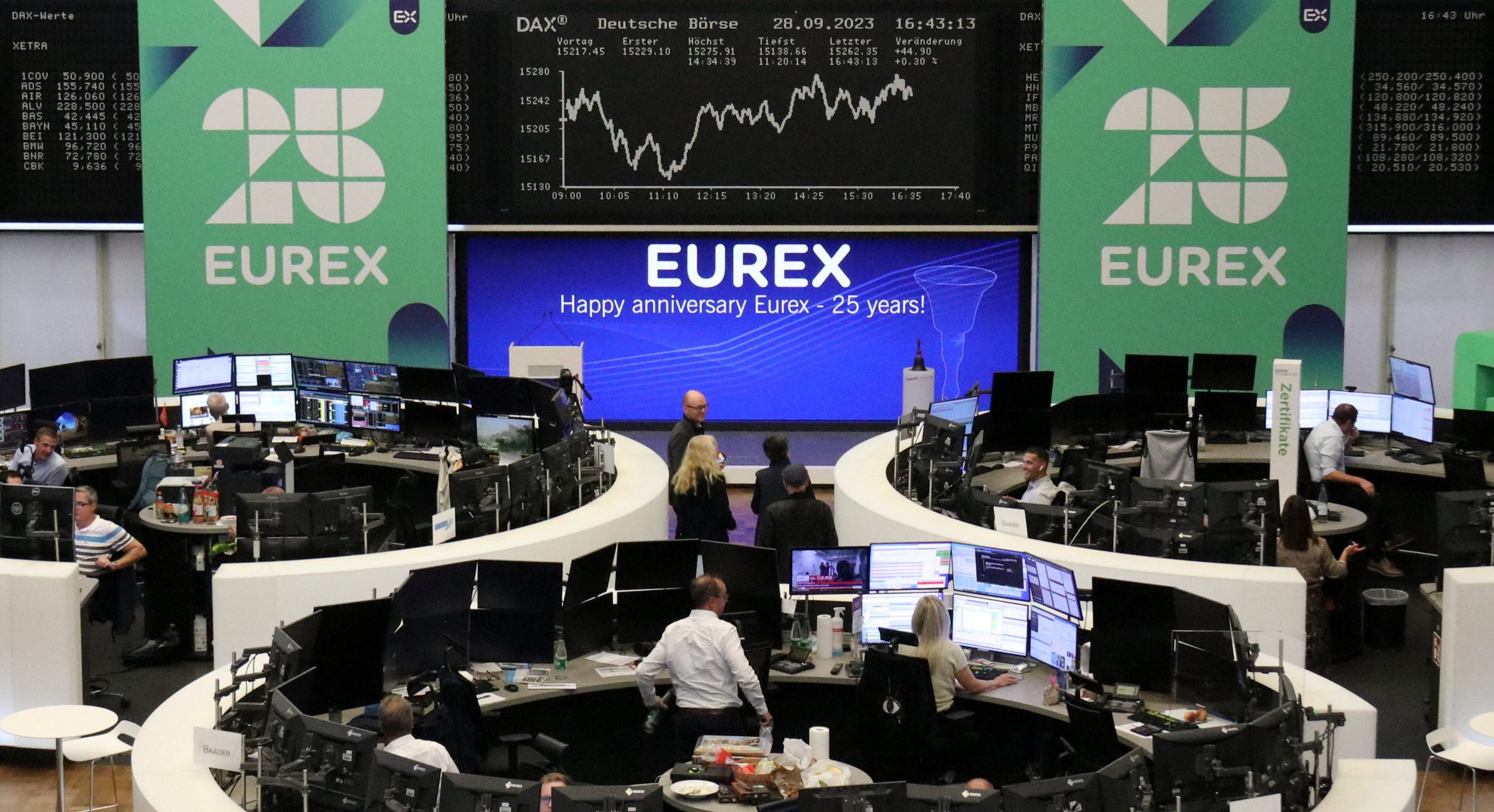
By 04:04 ET (08:04 GMT), the pan-European Stoxx 600 index had edged up by 0.1%. Germany’s DAX gained 0.1%, France’s CAC 40 rose 0.1%, and the FTSE 100 in the United Kingdom climbed 0.4% in early trading.
The broader Middle East conflict intensified following a joint U.S. and Israeli military operation against Iran, which has further destabilized the region. Saudi Arabia reported intercepting more than 60 drones flying over its territory, although officials did not confirm where the drones originated or what targets they were intended to strike.
At the same time, U.S. President Donald Trump urged several nations to assist Washington in securing the Strait of Hormuz, one of the most important energy shipping routes in the world. The strategic waterway carries approximately 20% of global oil supply, making it critical for international energy markets. Trump did not confirm whether any countries had agreed to participate in the security effort.
Tanker traffic through the Strait of Hormuz has effectively been blocked by Iran, pushing global energy prices sharply higher and increasing uncertainty about the outlook for the global economy.
The situation is particularly concerning for European economies, which rely heavily on energy imports transported through the Strait of Hormuz. The disruption threatens to reignite inflation in a region where price growth had only recently begun to stabilize.
Higher oil and natural gas prices have also driven borrowing costs higher across Europe, partly due to concerns that the European Central Bank (ECB) could eventually reconsider tightening monetary policy. Since the outbreak of the conflict, the Stoxx 600 index has fallen more than 5% from its pre-war highs.
Investors are now waiting for several major central bank policy meetings scheduled for later this week. The ECB, along with other global central banks including the U.S. Federal Reserve, will announce their latest monetary policy decisions.
Despite the geopolitical tensions and rising energy prices, economists surveyed by Reuters expect the ECB to keep interest rates unchanged throughout 2026.
Laurence Booth, Global Head of Markets at CMC Markets, said central banks are unlikely to introduce major policy changes in the near term. However, investors will be paying close attention to how policymakers assess the inflation outlook following the recent surge in oil prices.
Oil prices rise amid Middle East supply concerns
Oil markets remained volatile on Monday as traders assessed the risk of further supply disruptions in the Middle East.
Earlier in the session, oil prices briefly fell after President Trump called on countries including China to help restore shipping through the Strait of Hormuz. However, prices quickly rebounded as uncertainty in the region continued to dominate market sentiment.
Brent crude oil futures, the global benchmark, rose 2.7% to $105.90 per barrel, while U.S. West Texas Intermediate (WTI) crude climbed 2.0% to $98.75 per barrel by 04:06 ET. Earlier in the session, oil prices had surged by as much as 3% before briefly trading flat as volatility persisted.