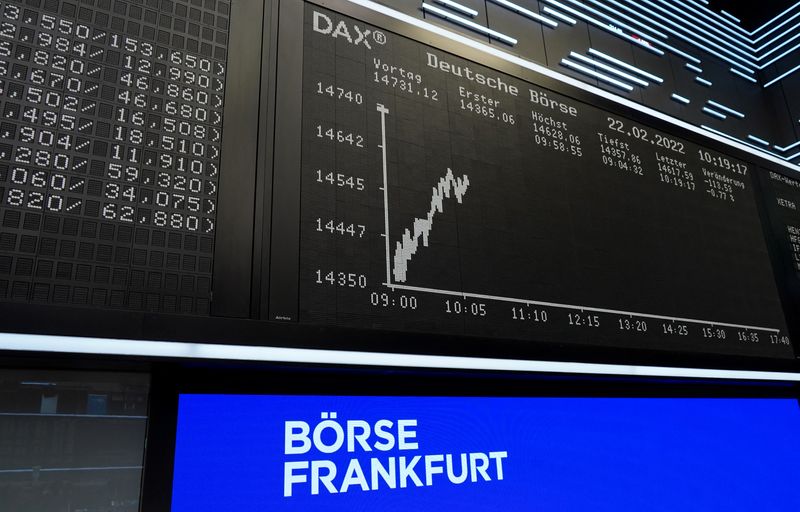
European stock markets edged higher on Tuesday, supported by a landmark trade agreement between the European Union and India. Investors also remained cautious as they awaited further corporate earnings and a key interest rate decision from the Federal Reserve.
By mid-morning trade, Germany’s DAX was up 0.2%, France’s CAC 40 added 0.3%, and the UK’s FTSE 100 rose 0.3%.
EU-India trade deal lifts sentiment
Market confidence improved following the announcement of a historic Free Trade Agreement between the European Union and India. The deal concludes negotiations that began in 2007 and covers roughly 25% of global GDP and about one-third of world trade.
Trade flows between India and the EU reached $136.5 billion in the fiscal year ending March 2025. Together, the two economies account for nearly one-fifth of global trade and around a quarter of the world’s population.
The agreement helped offset renewed trade uncertainty triggered by Donald Trump. The U.S. president recently announced a tariff increase on South Korean imports to 25%, up from 15%, citing delays in implementing a trade deal. Over the weekend, Trump also warned Canada of potential 100% tariffs if it pursued a trade agreement with China.
European car sales extend growth streak
European car sales rose for a third consecutive year in 2025, according to data released earlier Tuesday. New vehicle registrations increased 2.4% to 13.3 million units, helped by another rebound in December.
Meanwhile, the eurozone economic calendar remained light, leaving investors focused on the start of the Federal Reserve’s two-day policy meeting later in the session.
Analysts at ING said the Federal Open Market Committee is widely expected to leave interest rates unchanged, following 75 basis points of cuts delivered across the previous three meetings. Strong growth, low unemployment, near-record equity markets, and inflation still above target all support a pause, they noted.
Earnings season gathers momentum
The European earnings season is picking up pace, although much of the global focus remains on Wall Street. More than 90 companies in the S&P 500 are scheduled to report results this week.
In the U.S., earnings are due from Boeing and American Airlines on Tuesday, followed by results from Meta Platforms, Tesla, and Microsoft on Wednesday, and Apple on Thursday. So far, roughly three-quarters of reporting S&P 500 companies have exceeded expectations, according to FactSet.
In Europe, attention turned to luxury group LVMH, which is set to report annual results after markets close. Investors are watching closely for signs of a recovery following a prolonged slowdown in the luxury sector.
Swedish engineering firm Sandvik reported a 2% decline in full-year revenue due to currency effects, despite stronger orders and higher profits. HMS Networks posted a 64% surge in fourth-quarter adjusted operating profit, driven by increased sales. Norwegian energy producer Var Energi said fourth-quarter output jumped 43% year-on-year, supported by higher volumes and resolved operational issues.
German sportswear maker Puma was also in focus after China’s Anta Sports Products announced plans to acquire a 29% stake, making it the company’s largest shareholder.
Oil prices ease but supply risks remain
Crude prices edged lower on Tuesday, giving back part of last week’s gains. However, losses were limited by supply disruptions caused by extreme winter weather in the United States.
Brent crude slipped 0.5% to $64.46 per barrel, while U.S. West Texas Intermediate fell 0.4% to $60.38 per barrel. Both benchmarks ended last week up 2.7%, marking their highest closes since mid-January.
Severe winter storms disrupted U.S. energy infrastructure, with producers estimated to have shut in up to 2 million barrels per day over the weekend, or roughly 15% of national output.