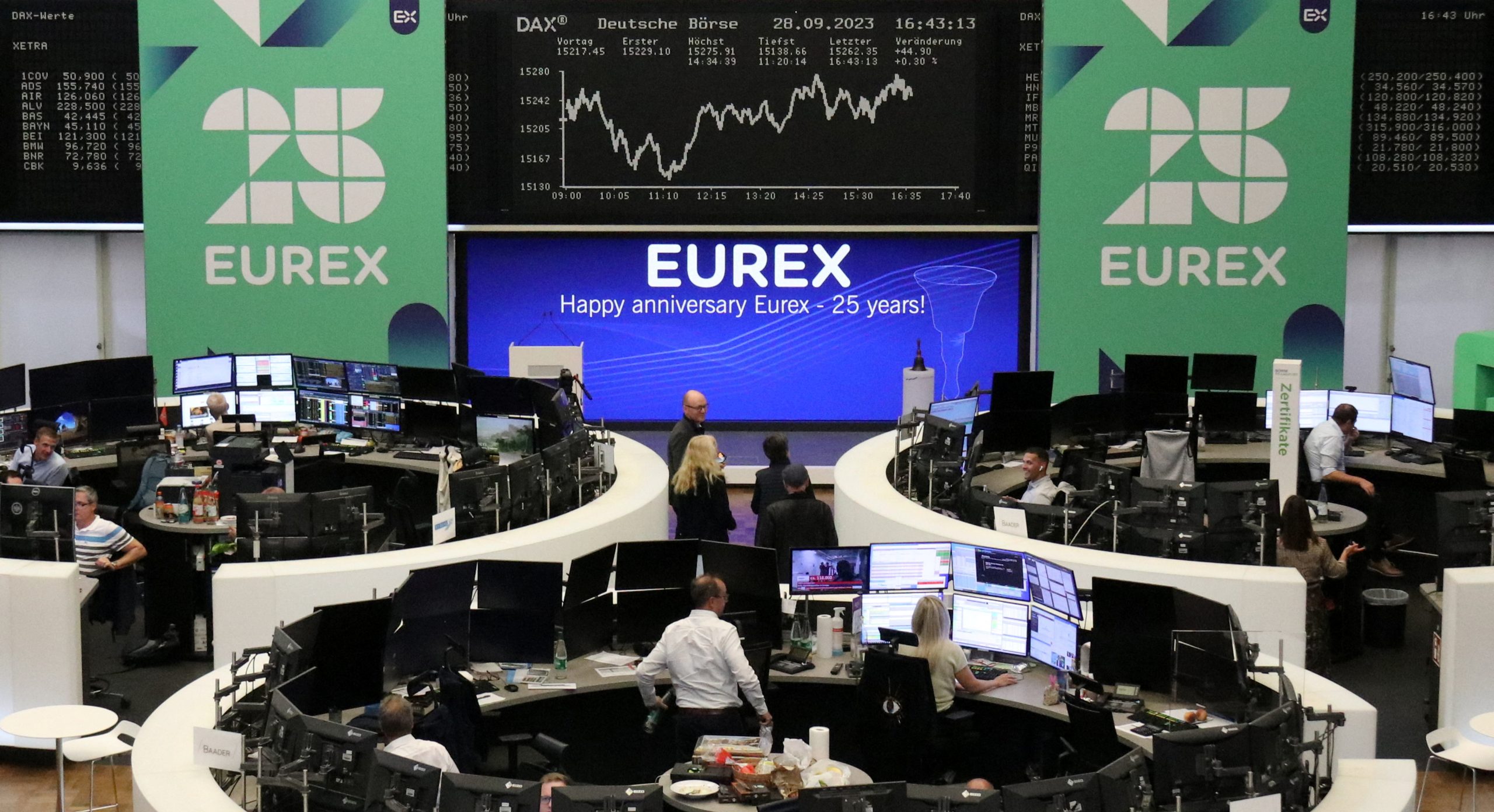
European equities sold off sharply on Monday after U.S. President Donald Trump warned of potential economic sanctions against several countries in the region if they oppose his plans for the United States to acquire Greenland.
By 03:05 ET (08:05 GMT), Germany’s DAX was down 1.3%, France’s CAC 40 slid 1.6%, and the UK’s FTSE 100 fell 0.4%.
Tariff threats hit market sentiment
Over the weekend, Trump said Washington would impose tariffs on exports to the U.S. from eight European countries that have pushed back against his Greenland proposal. The targeted nations include France, Germany, and the United Kingdom, as well as several Nordic and northern European states.
According to Trump, a 10% tariff would take effect from February 1, rising to 25% in June if no agreement is reached allowing the U.S. to take control of Greenland, a semi-autonomous territory within the Kingdom of Denmark.
The European Union has already paused ratification of its trade agreement with the United States. Media reports also suggest the bloc could revive a previously proposed €93 billion tariff package on U.S. goods, raising the risk of a broader transatlantic trade confrontation.
Market analysts warned that the dispute could strain diplomatic and trade relationships. Tony Sycamore, a market analyst at IG, said the latest escalation has fuelled concerns about potential cracks within NATO and disruption to recent trade agreements, driving risk-off positioning in equities while lifting demand for safe-haven assets such as gold and silver.
Attention is also turning to the World Economic Forum, which begins later in the session in Davos, bringing together global leaders, including a large U.S. delegation led by Trump.
Eurozone inflation data in focus
The main economic release for the region on Monday is the eurozone’s December consumer inflation reading, particularly with U.S. markets closed for Martin Luther King Jr. Day.
Annual eurozone CPI is expected to come in at 2.0%, matching the European Central Bank’s target for the first time since mid-2025, down slightly from 2.1% in November. The ECB has kept interest rates unchanged since ending its rate-cut cycle in June and signalled last month that it sees no urgency to adjust policy, with inflation pressures easing and growth holding up toward the end of 2025. The ECB’s next policy meeting is scheduled for early February.
Earlier data showed China’s economy grew 4.5% year on year in the fourth quarter, marking a three-year low and slowing from 4.8% in the previous quarter.
Corporate updates and commodities
Corporate earnings were relatively light across Europe. UK building materials group Marshalls reported full-year 2025 adjusted profit before tax broadly in line with expectations, despite ongoing uncertainty in end markets.
Shares of major U.S. technology firms listed in Europe were also in focus, as investors assessed the risk of potential retaliation by European authorities should the U.S. move ahead with tariffs linked to Greenland.
In commodities, oil prices edged lower, giving back part of last week’s gains as traders weighed the possibility of a trade conflict. Brent crude slipped 0.1% to $59.74 a barrel, while U.S. West Texas Intermediate fell 0.1% to $55.95 a barrel.
Crude had rallied earlier last week on concerns that unrest in Iran could disrupt Middle Eastern supply. However, much of that risk premium faded after Trump signalled there would be no immediate U.S. military intervention, allowing prices to stabilise toward the end of the week.