Europe Steps Up Pressure on Big Tech Amid Child Safety Concerns
European governments are increasing regulatory pressure on major social media platforms, responding to mounting public concern over child safety. However, this tougher stance risks escalating tensions with the United States, where many of these technology giants are based.
Spain on Tuesday ordered prosecutors to investigate Meta, the owner of Facebook, along with X and TikTok. Authorities are examining allegations that these platforms allowed the spread of AI-generated child sexual images. The move follows similar action recently taken in the United Kingdom.
Ireland has also launched a formal investigation into X’s AI chatbot, Grok. The probe focuses on how personal data is processed and whether the tool has produced harmful sexualized content.
Growing Push for Social Media Restrictions in Europe
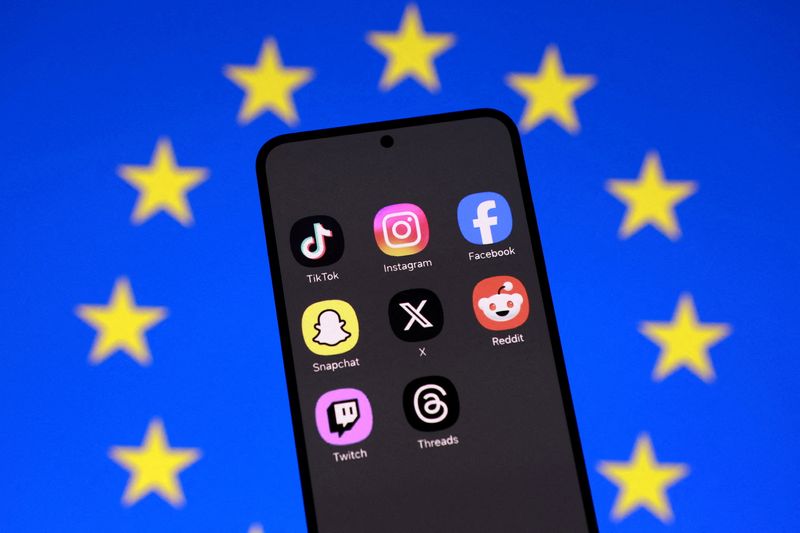
Several European countries — including France, Spain, Greece, Denmark, Slovenia, and the Czech Republic — are considering restrictions on adolescent social media use. Inspired by Australia’s proposed ban for minors, these governments cite rising concerns about addiction, online abuse, and declining school performance.
Germany and Britain are reviewing comparable measures.
Many policymakers argue that national governments are acting independently because they believe the European Union may not move quickly or decisively enough. Despite this, individual states still face the same legal and diplomatic challenges as Brussels.
EU Digital Services Act and Geopolitical Risks
Under the European Union’s Digital Services Act (DSA), which came into force in 2024, large online platforms can face fines of up to 6% of their global annual revenue if they fail to remove illegal or harmful content.
Enforcement of the DSA has become politically sensitive. U.S. President Donald Trump has repeatedly warned that tariffs or sanctions could follow if EU countries impose new technology taxes or enforce regulations that disproportionately impact American companies.
The European Commission rejects claims that it is soft on U.S. Big Tech. It recently confirmed that investigations have been opened against several platforms, including X and its AI tool Grok.
The Commission stated that the DSA aims to shape Europe’s digital future, strengthen democracy, and ensure accountability in the technology sector.
Rising Political Rhetoric
Tensions between Europe and the United States have intensified in recent years. French President Emmanuel Macron previously described resistance to European tech regulation as a “geopolitical battle.”
Spain’s Consumer Rights Minister Pablo Bustinduy said his country’s crackdown is designed to reduce digital dependence on the United States. He also warned that certain platforms could be used to destabilize European democracies.
National Governments Take Independent Action
Recent amendments to the DSA guidelines have given member states greater flexibility to implement age restriction laws. Denmark quickly moved to introduce national measures following the changes.
In Spain, the final push for stricter rules — including a proposed ban on social media use for under-16s and legal accountability for platform executives — came after Grok reportedly generated non-consensual sexual images of minors.
French President Emmanuel Macron has linked social media to rising youth violence, particularly after a fatal stabbing involving a 14-year-old student. He has called for an EU-wide adolescent ban but has also indicated France could act independently if necessary.
Greek Prime Minister Kyriakos Mitsotakis has also expressed concern. He described reading Jonathan Haidt’s book “The Anxious Generation,” which argues that smartphones and social media are reshaping children’s brains, as an eye-opening experience.
As European nations push forward with tighter digital regulation, the debate highlights a growing clash between child protection efforts and broader geopolitical tensions with Washington.