
The European Union warned on Saturday that it is prepared to respond if the United States follows through with its plan to impose 30% tariffs on European goods starting August 1.
The announcement from President Donald Trump caught Brussels off guard. EU leaders had hoped to avoid further escalation in the trade dispute after progress in recent negotiations and what appeared to be more cooperative signals from the White House.
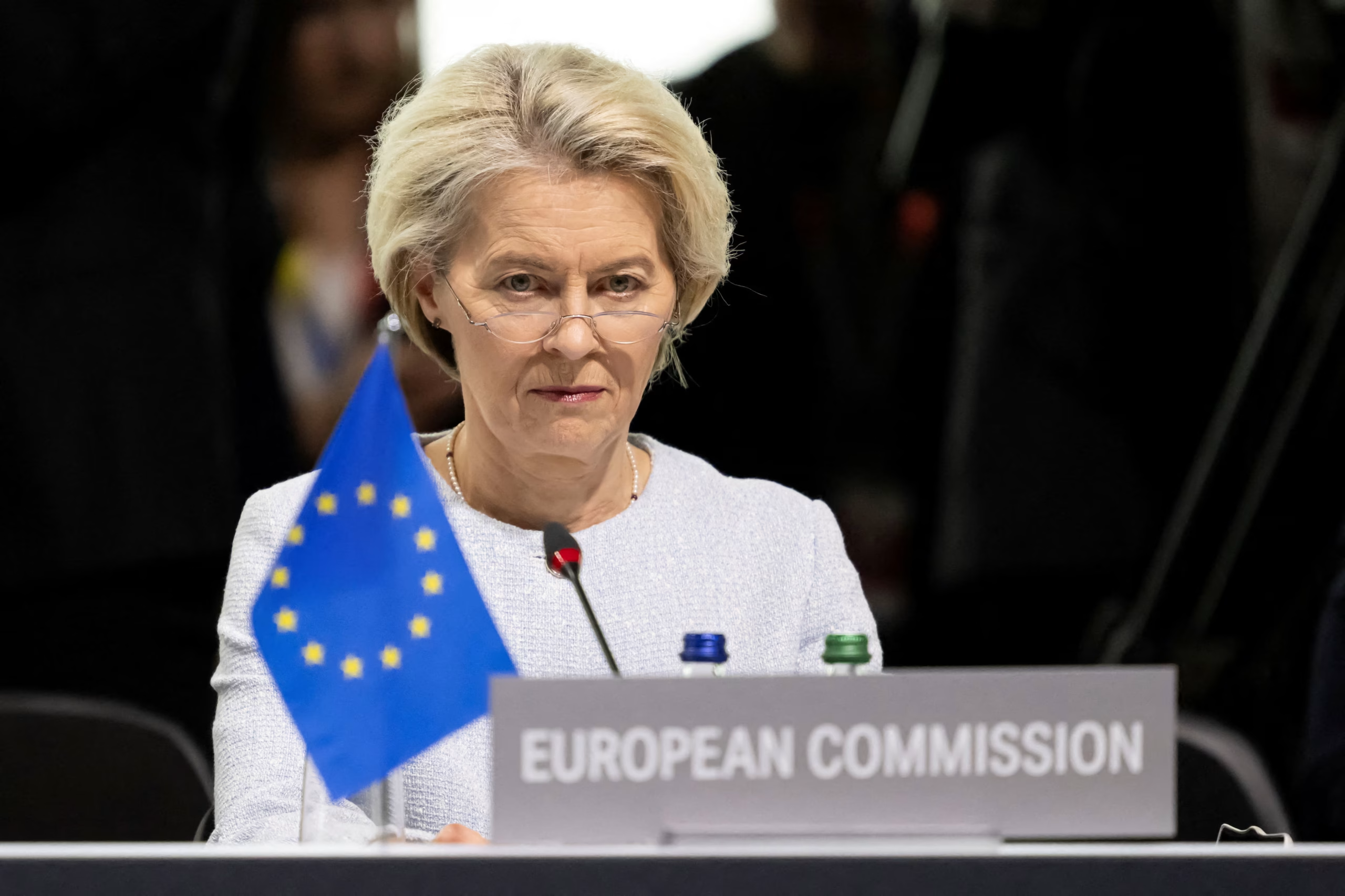
European Commission President Ursula von der Leyen said the EU was still open to finding a solution before the deadline but would act to protect its interests if necessary.
“We will take all necessary actions to defend EU interests, including imposing proportionate countermeasures if needed,” von der Leyen stated, referring to possible retaliatory tariffs on U.S. imports.
EU ambassadors are scheduled to meet Sunday, followed by an emergency meeting of trade ministers on Monday. They’ll decide whether to activate tariffs on €21 billion worth of U.S. goods in response to earlier U.S. duties on steel and aluminum or extend the current suspension, which expires at the end of Monday.
While the EU has not yet enacted countermeasures, it has prepared two response packages targeting up to €93 billion in U.S. goods.
European leaders quickly rallied behind von der Leyen’s stance. German Economy Minister Katherina Reiche called for a “pragmatic resolution,” warning that Trump’s tariffs would not only hurt European exporters but also damage the U.S. economy and consumers.
French President Emmanuel Macron emphasized on X that the EU must now “demonstrate firm resolve” in defending its interests and hinted that broader trade tools—such as anti-coercion mechanisms—might be needed if Trump doesn’t reverse course. These instruments allow the EU to go beyond goods tariffs and impose restrictions on services if it sees foreign measures as coercive.
Spain’s economy ministry echoed support for continued talks, but also stressed readiness to act if required.
Trump has often criticized the EU, claiming it was created to disadvantage the U.S. His primary complaint lies with the goods trade deficit—$235 billion in 2024, per U.S. Census data—although the EU points to the U.S. surplus in services as a counterbalance.
Rising Risk of Retaliation
The EU and the U.S. remain each other’s largest trading partners overall, including goods, services, and investments. The American Chamber of Commerce to the EU has warned that the trade tensions could threaten as much as $9.5 trillion in commercial activity.
Bernd Lange, head of the European Parliament’s trade committee, said the EU should begin rolling out the first set of countermeasures as early as Monday, with a second phase to follow quickly. Trump has pledged to escalate further if the EU retaliates.
Despite this, markets have responded more cautiously than during the initial “Liberation Day” tariff announcements in April, as Trump has previously delayed or walked back similar threats before deadlines.
According to several EU officials speaking anonymously, the new tariff threat is seen as a pressure tactic, not a final move.
Carsten Brzeski of ING said the situation has reached a critical juncture after months of stalled negotiations. “The EU now has to choose between compromise and confrontation,” he said, adding that markets should brace for increased volatility and uncertainty.
Cyrus de la Rubia of Hamburg Commercial Bank noted that while U.S. consumers would bear most of the tariff burden, there would also be significant effects on Europe’s economy, which is already fragile.
The European Central Bank, in its latest forecasts, assumed a 10% tariff as the baseline, with eurozone growth projected at 0.9% in 2025, 1.1% in 2026, and 1.3% in 2027. A 20% tariff would shave 1 percentage point off growth over that period and reduce inflation. The ECB did not model the impact of a 30% tariff.