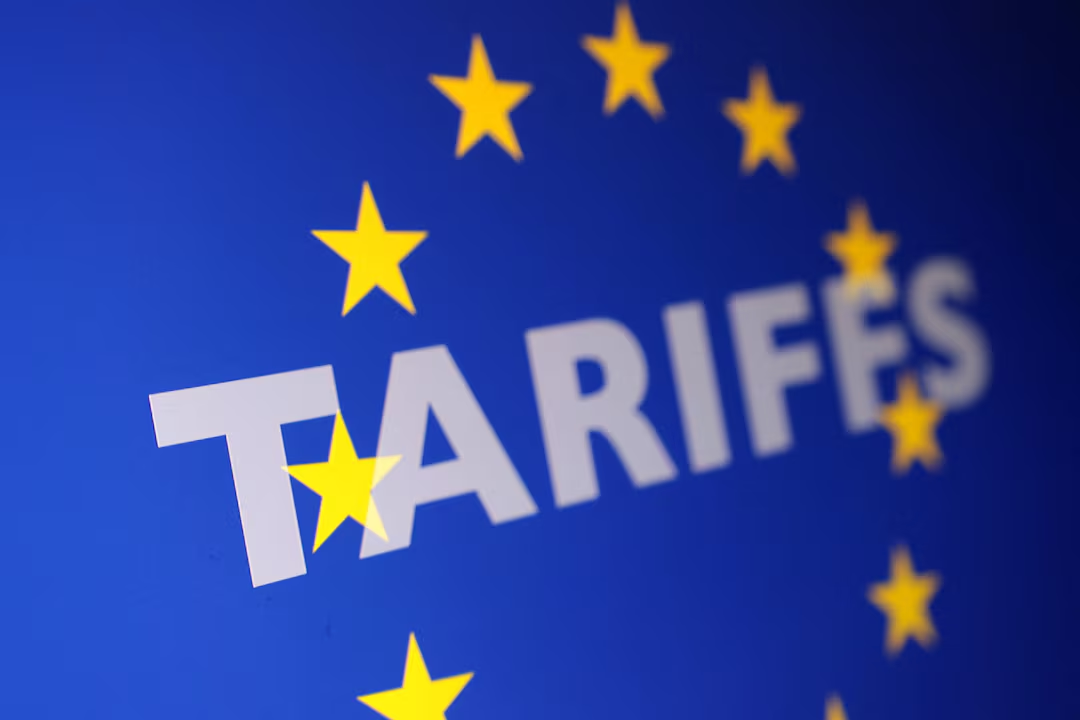
EU Unlikely to Raise Tariffs on India or China Despite Trump’s Push
The European Union is highly unlikely to impose steep tariffs on India or China, two of the largest buyers of Russian oil, despite pressure from U.S. President Donald Trump, EU sources revealed.
Talks in Washington
This week, an EU delegation that included the bloc’s Russia sanctions chief traveled to Washington to coordinate with U.S. officials on new measures against Moscow over its full-scale invasion of Ukraine.
During the talks, Trump urged the EU to impose tariffs of up to 100% on India and China. His goal was to increase economic pressure on Russian President Vladimir Putin, who depends heavily on energy revenues to finance the war in Ukraine.
EU’s Approach to Tariffs
The European Commission declined to comment on the request. While the EU has imposed extensive sanctions on Russia, including measures against two Chinese banks and a large Indian refinery in July, tariffs are treated differently.
Unlike sanctions, tariffs require lengthy investigations to establish legal justification. So far, the EU has only applied tariffs related to the Ukraine war on Russian and Belarusian fertilizers and farm products, aimed at avoiding dependency and protecting European producers.
An EU diplomat confirmed, “So far, there is no discussion on possible tariffs on India or China.”
Trade and Strategic Concerns
The bloc is also negotiating a trade deal with India, which it does not want to jeopardize. Trump himself signaled a softer stance by midweek, saying he hoped to reset trade relations with New Delhi.
EU officials warned that sweeping tariffs could be risky and overly broad. Instead, they prefer targeted sanctions on specific entities, with the option to lift restrictions if companies stop doing business with Russia.
Next Steps in EU Sanctions
Up to now, Brussels has mainly sanctioned smaller third-country entities, often shell companies funneling equipment or dual-use goods to Russia’s military.
The EU is preparing its 19th sanctions package, which could be announced as early as Friday. It may include measures against banks in Central Asia and Chinese refineries, expanding the bloc’s effort to cut off Russia’s access to critical funding and resources.