
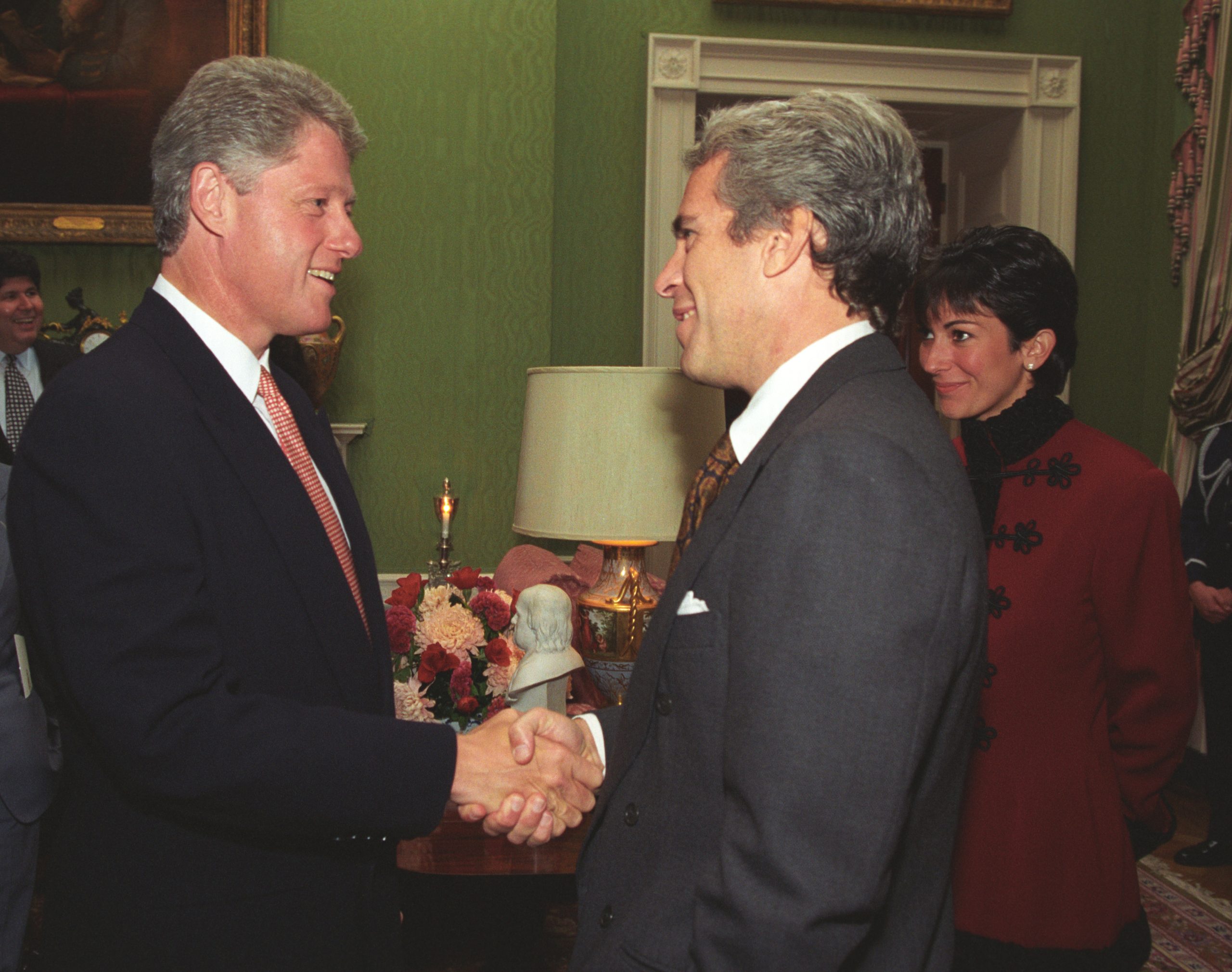
The U.S. Justice Department released thousands of heavily redacted documents on Friday related to the late financier and convicted sex offender Jeffrey Epstein. The newly disclosed files made limited reference to Donald Trump but featured numerous mentions and images involving former Democratic President Bill Clinton.
The lack of references to Trump drew attention, particularly since past Epstein-related disclosures over the years have included photos and documents linked to him. Trump’s name appeared in flight logs from Epstein’s private jet that were released earlier this year as part of an initial batch of files made public by the Justice Department in February.
Friday’s partial disclosure was intended to comply with legislation overwhelmingly approved by Congress in November, which required the release of all Epstein-related files. The law followed months of resistance from the Trump administration, which had sought to keep the records sealed. The Epstein controversy has become a politically sensitive issue for Trump, who previously amplified conspiracy theories about Epstein to his supporters.
It remains unclear how much new information was revealed in the latest release. Many Epstein documents have already entered the public domain since his death in a New York jail in 2019, which was officially ruled a suicide. Numerous newly released files were heavily redacted, with some documents exceeding 100 pages entirely blacked out. The Justice Department confirmed it is still reviewing hundreds of thousands of additional pages for potential future disclosure.
Shortly after the document release, the U.S. military carried out airstrikes against dozens of Islamic State targets in Syria, responding to an attack on U.S. personnel earlier in the week.
The released material included evidence from multiple investigations into Epstein, as well as photographs of Clinton that have long been circulated by Republican critics. In contrast, the files appeared to contain few, if any, images of Trump or documents referencing him, despite the two men’s widely reported social relationship during the 1990s and early 2000s before they fell out ahead of Epstein’s 2008 conviction.
Trump has not been accused of wrongdoing in connection with Epstein and has consistently denied any knowledge of Epstein’s criminal activity.
Justice Department draws focus to Clinton
The Justice Department appeared to emphasize Clinton’s presence in the files, with two agency spokespeople sharing images on social media that they claimed showed Clinton alongside Epstein victims.
Clinton’s deputy chief of staff, Angel Urena, responded by accusing the White House of attempting to deflect attention from itself. He stated that releasing decades-old, low-quality photographs did not change the broader issue and insisted the controversy was not centered on Clinton.
Last month, Trump instructed the Justice Department to investigate Clinton’s ties to Epstein, a move critics described as an effort to redirect scrutiny away from Trump’s own past association with the disgraced financier.
Among the images released, Clinton appears in a swimming pool with Ghislaine Maxwell and another individual whose face was redacted. Another photo shows Clinton in a hot tub with an unidentified person whose face was also obscured. Clinton has previously said he regrets socializing with Epstein and has maintained that he was unaware of any illegal conduct.
Deputy Attorney General Todd Blanche said in a letter to Congress that the names of more than 1,200 victims or their relatives must remain redacted to protect their privacy.
In a statement, the White House said the disclosure demonstrated transparency and a commitment to justice for Epstein’s victims, while criticizing previous Democratic administrations. However, the statement did not acknowledge that the release occurred only after Congress mandated it, following earlier assertions by Trump administration officials that no further files would be made public.
Several lawmakers quickly criticized the limited scope of the disclosure. Senate Minority Leader Chuck Schumer said the heavily redacted documents represented only a small portion of the available evidence. Republican Representative Thomas Massie, a key sponsor of the legislation, said the release failed to meet both the spirit and intent of the law.
The disclosure statute required the Justice Department to provide records detailing how it handled the Epstein investigation, including internal reports and emails. None of those materials appeared in Friday’s release. The law does allow officials to withhold information that could compromise ongoing investigations or reveal victim identities.
Frustration among Trump supporters
Many Trump supporters have accused his administration of shielding powerful individuals linked to Epstein and obscuring details surrounding Epstein’s death while he was awaiting trial on sex trafficking charges.
According to a recent Reuters/Ipsos poll, only 44% of Republican-identifying adults approve of Trump’s handling of the Epstein issue, compared with his overall approval rating of 82% among Republicans. The controversy has weighed on Trump’s political standing ahead of the 2026 midterm elections, when control of Congress will be contested.
Last month, Democrats in the House released thousands of emails obtained from Epstein’s estate, including one in which Epstein claimed Trump “knew about the girls,” without further explanation. Trump dismissed the release as part of what he called an “Epstein hoax.” On the same day, House Republicans released separate emails stating that Trump visited Epstein’s residence multiple times but never received massages.
Earlier disclosures showed that Epstein maintained correspondence with prominent figures even after his 2008 conviction, including former Trump adviser Steve Bannon, former Treasury Secretary Larry Summers, PayPal co-founder Peter Thiel, and Britain’s former Prince Andrew, now known as Andrew Mountbatten-Windsor. Representatives for those individuals have not responded to requests for comment.
In 2023, JPMorgan Chase agreed to pay $290 million to settle claims brought by Epstein’s victims, who alleged the bank ignored warning signs of his sex trafficking activities. Epstein remained a JPMorgan client for several years after his 2008 conviction.