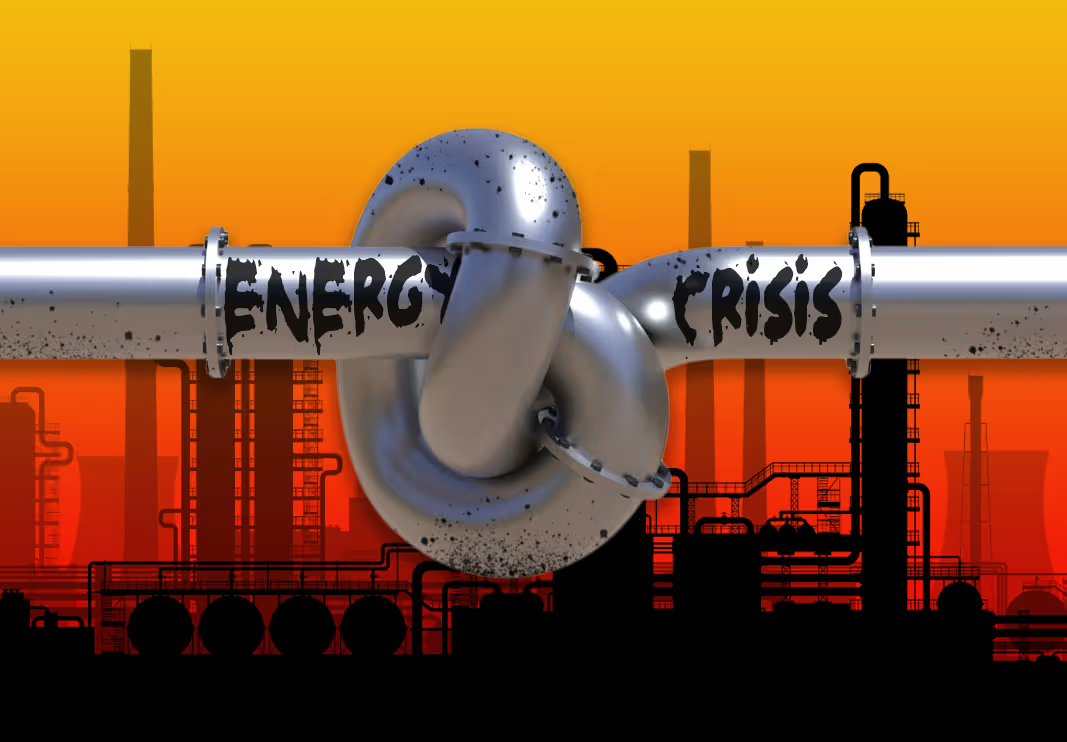
A sharp rise in oil prices is expected to affect Asian economies more severely than other regions, while Europe and the United States are likely to experience a more moderate economic impact, according to analysts at Morgan Stanley.
In a research note sent to clients, the bank explained that Asia is particularly vulnerable because many countries in the region rely heavily on imported energy.
Asia Most Exposed to Higher Oil Prices
According to Morgan Stanley, Asia’s dependence on imported oil makes the region more sensitive to rising energy costs. The bank estimates that a sustained increase of $10 per barrel in oil prices could reduce regional GDP growth by roughly 20 to 30 basis points.
Despite this growth impact, the inflation effect across Asia may remain relatively manageable. Analysts estimate that consumer prices could rise by about 0.4 percentage points if higher oil costs fully pass through to the economy. However, government subsidies and regulated fuel prices in several Asian economies could help limit the overall inflationary impact.
United States Likely to See Limited Economic Impact
The economic consequences in the United States are expected to be more contained. Morgan Stanley believes higher oil prices would temporarily push up headline inflation, but the impact on core inflation is likely to remain limited based on historical trends.
The bank estimates that a sustained 10% increase in oil prices would add roughly 30 basis points to headline inflation over several months before gradually fading.
In terms of economic growth, the overall effect on the U.S. economy is expected to remain modest unless higher energy prices significantly reduce consumer spending or weaken the labor market.
Europe Faces Potential Stagflation Risks
Europe could experience a more complex economic situation if energy prices remain elevated. In the euro area, Morgan Stanley estimates that a sustained $10 increase in oil prices would reduce GDP growth by around 15 basis points while pushing inflation higher by approximately 40 basis points.
These effects could unfold gradually over several quarters, raising concerns about a potential stagflationary environment characterized by slower growth and higher inflation.
Overall, Morgan Stanley said the main risk from the current energy shock may be increased market volatility and economic uncertainty rather than a severe global growth slowdown.