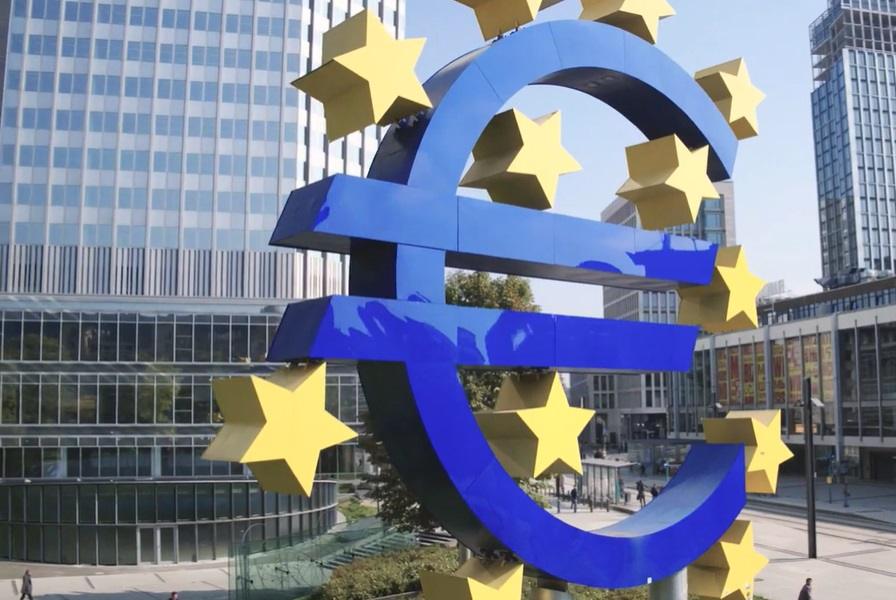
ECB Poised to Hold Rates as Trade Risks Cloud Europe’s “Good Place”
The European Central Bank (ECB) is widely expected to keep interest rates unchanged for a third consecutive meeting on Thursday, maintaining a rare period of low inflation and stable growth despite global trade uncertainty.
The ECB previously cut rates by two percentage points in the year leading up to June but has since held steady, signaling that policymakers are in no rush to adjust monetary policy. Inflation currently sits at the ECB’s 2% target — a “sweet spot” that neither the Federal Reserve, Bank of England, nor Bank of Japan has managed to reach.
Lagarde to Balance Optimism with Caution
Although all 88 economists polled by Reuters expect no rate change this month, ECB President Christine Lagarde is unlikely to rule out further policy easing. Persistent uncertainty around U.S. tariffs continues to pose a risk to growth and inflation, potentially pushing price pressures below target.
Meeting in Florence instead of Frankfurt, Lagarde is expected to reiterate that the ECB remains in a “good place” and will let incoming data guide future decisions. Policymakers, she emphasized, will avoid “overengineering” monetary policy and can tolerate small deviations from target inflation.
Economists at Société Générale noted that the market sees a slightly higher probability of another rate cut in 2026, though the bar for further easing remains high.
Growth Holds Steady, But Risks Persist
Recent data supports the ECB’s projection of modest but consistent growth and stable inflation.
Business activity, measured through PMI surveys, has accelerated, while German sentiment — the eurozone’s largest economy — continues to improve as tariff uncertainty begins to ease.
However, these gains are tempered by weakness in the industrial sector, with exports to the U.S. declining sharply and concerns mounting over Chinese goods flooding European markets.
Will the ECB’s “Good Place” Last?
Analysts remain divided on whether the ECB can sustain this balanced outlook. Bank of America warned that tighter financial conditions and a potential inflation undershoot could force the ECB to revise its forecasts at the December meeting.
A strong euro is also dampening inflation, though recent stabilization and a hawkish stance from Fed Chair Jerome Powell may limit further currency gains.
ECB Chief Economist Philip Lane recently said that an inflation undershoot might justify a “slightly lower” policy rate, echoing market expectations that assign a 50% chance of one final rate cut by next June.
Still, most policymakers expect interest rates to remain steady, supported by robust household savings, German fiscal expansion, and a resilient labor market.
“The stable labor market, a growing service sector, and German fiscal stimulus will provide a tailwind to the eurozone economy in the coming months,” said Felix Schmidt, economist at Berenberg Bank.
While inflation may dip below target next year, it is expected to recover later, and ECB officials have emphasized they can tolerate temporary deviations. The real test, however, will come in December, when the bank releases new projections, including initial forecasts for 2028.