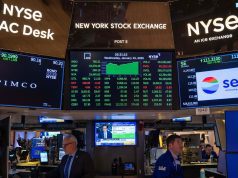
U.S. equities rallied on Friday as markets stabilized after a turbulent week marked by sharp losses in technology shares and a broader reassessment of artificial intelligence–driven investments.
By 11:54 ET (16:54 GMT), the Dow Jones Industrial Average had climbed 2% to 49,872.94, the S&P 500 advanced 1.5% to 6,898.34, and the Nasdaq Composite gained 1.6%. Despite the rebound, the Nasdaq was still on course for its weakest weekly performance since mid-November, down roughly 2.5%.
Market participants described the move as a relief rally rather than a shift in underlying sentiment. Investors appeared to be stepping back into risk assets after recent selloffs left some stocks trading at more attractive valuations, while awaiting clearer signals on earnings and macroeconomic trends.
Amazon slides as AI spending worries persist
Technology stocks remained under pressure overall, as concerns grew about the scale and timing of returns from massive AI investments. Amazon and Alphabet heightened those worries this week after unveiling eye-catching capital expenditure plans.
Amazon said it expects capital spending of around $200 billion in 2026, far exceeding market expectations near $146 billion. The forecast reinforced the view that Big Tech will continue pouring money into AI infrastructure, with Amazon, Microsoft, Google and Meta together projected to spend more than $630 billion this year.
Although Amazon’s AWS cloud unit posted strong growth, with revenue up 24% to $35.6 billion, investors focused on the hefty capex outlook. Amazon shares fell 7.8%, making it one of the biggest percentage decliners across major indexes.
Elsewhere in earnings, Stellantis shares dropped after the automaker flagged roughly $26 billion in charges tied to its shift away from electric vehicles. Under Armour climbed after beating quarterly expectations and issuing upbeat full-year guidance. Biogen gained on stronger-than-expected results and a positive 2026 outlook, while Roblox surged after delivering solid quarterly numbers and raising its full-year bookings forecast.
Economic data and sentiment in focus
Concerns about the U.S. economy lingered despite the equity rebound. Data showed January job cuts at their highest level since the 2009 financial crisis, alongside higher-than-expected weekly jobless claims and weaker job openings figures.
Still, fresh data from the University of Michigan offered some reassurance. Consumer sentiment rose to a six-month high of 57.3, while one-year inflation expectations fell to a 13-month low of 3.5%. The delayed January jobs report is now due next week following the resolution of the federal government shutdown.
Oil prices edge higher but face weekly decline
In commodities, oil prices inched higher after reports that talks between the U.S. and Iran in Oman had been constructive, raising hopes of easing geopolitical tensions. Brent crude rose 1.4% to $68.49 a barrel, while U.S. WTI gained 1.3% to $64.11.
Despite Friday’s gains, both benchmarks were still on track for their first weekly decline in nearly two months, as traders reduced the geopolitical risk premium while monitoring ongoing Middle East developments.