The U.S. dollar hovered near a two-week high on Friday as investors pulled back from riskier assets following a sharp selloff in global equities sparked by concerns over heavy artificial intelligence spending. At the same time, the Japanese yen found some support ahead of a closely watched national election scheduled for Sunday.
The greenback has strengthened since Donald Trump nominated Kevin Warsh as the next Federal Reserve chair last week. Markets expect Warsh to take a less dovish stance on interest rates, easing concerns about aggressive rate cuts and restoring some confidence in central bank independence.
Risk sentiment deteriorated sharply this week as technology stocks slumped, with investors growing uneasy over the scale of Big Tech capital spending on AI and the potential for rapidly advancing AI tools to disrupt entire industries.
Charu Chanana, chief investment strategist at Saxo, said markets were simultaneously digesting multiple shocks. She noted that investors are reassessing Big Tech capital expenditure, grappling with AI-driven disruption beyond productivity gains, and dealing with liquidity pressures linked to forced selling in metals markets.
Despite U.S. Treasury yields slipping after weaker-than-expected labor market data, the dollar continued to benefit from rising risk aversion. Analysts said crowded trades across stocks, commodities, cryptocurrencies and currencies are being unwound as markets shift from a risk-on to a risk-off stance.
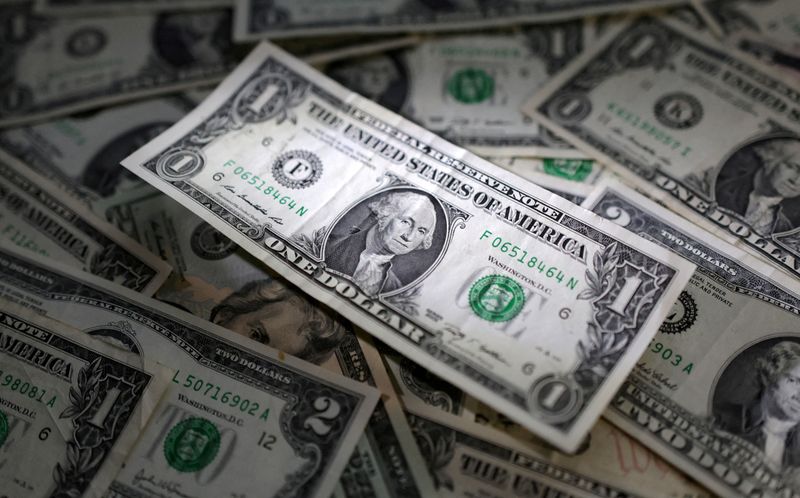
The dollar index, which tracks the greenback against six major currencies, slipped 0.2% to 97.759 but remained close to its highest level since January 23. The index is on track for a weekly gain of about 0.6%, its strongest advance since early January.
Economists at ING said recent signs of slower hiring suggest the Federal Reserve may have underestimated labor market risks at its January meeting. They added that any sharp downward revisions to payroll data next week could revive pressure for future rate cuts, with markets increasingly pricing in the possibility of easing as early as June.
Yen steadies ahead of pivotal election
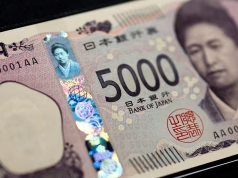
The yen strengthened modestly to 156.83 per dollar ahead of Sunday’s election, where Prime Minister Sanae Takaichi’s party is expected to perform strongly. However, the currency remains under pressure and is still heading for a weekly loss of more than 1%, its steepest decline since October.
Investors remain cautious as concerns over Japan’s rising government debt and expansionary fiscal plans continue to weigh on bond markets and the currency. Analysts warn that renewed fiscal uncertainty could trigger further volatility if funding plans remain unclear.
The yen remains near an 18-month low against the dollar, prompting repeated warnings from Japanese officials about potential market intervention to support the currency.
Elsewhere, the euro edged higher to $1.1799 after the European Central Bank kept interest rates unchanged and downplayed the influence of recent dollar movements on policy decisions.
Sterling rebounded 0.37% to $1.3575 after sharp losses in the previous session, following a closely split vote at the Bank of England that signaled the possibility of rate cuts later this year if inflation continues to ease.
In cryptocurrency markets, bitcoin rose more than 4% to around $65,934 after hitting its lowest level since October 2024 earlier in the session. Despite the bounce, the digital asset remains on track for a weekly decline of about 14%, its steepest drop since November 2022.