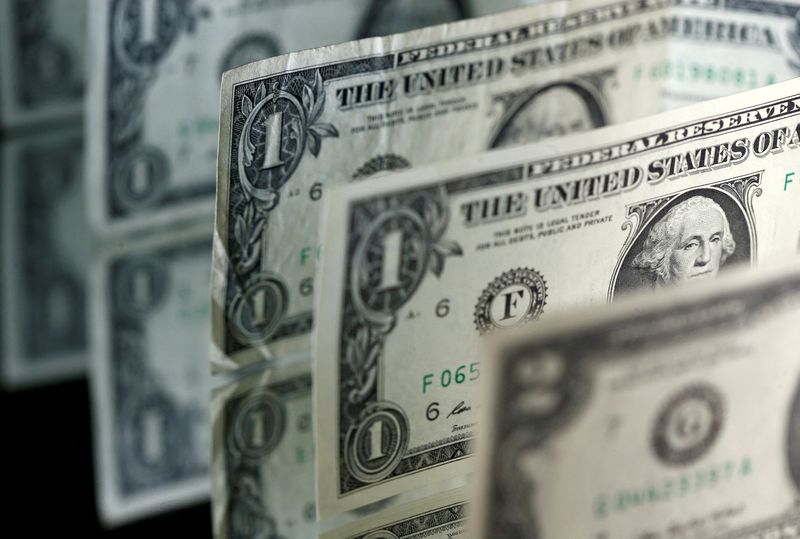
The U.S. dollar paused its recent rally on Tuesday as investors balanced optimism about a potential easing of the U.S.-Israeli conflict involving Iran with concerns that the situation could still escalate.
U.S. President Donald Trump said the war could end sooner than the timeline he initially projected. However, he also warned that the United States would intensify its response if Iran attempted to block oil shipments through the Strait of Hormuz, one of the world’s most important oil transit routes.
Iran’s Revolutionary Guards rejected Trump’s remarks, calling them unrealistic and stating that any blockade would remain in place until U.S. and Israeli attacks stop.
Markets React to Mixed Signals
Despite ongoing tensions, global financial markets showed signs of relief. Equity markets moved higher, while oil prices pulled back from their recent three-year highs. The reaction highlighted how eager investors are to respond to any signals that the conflict could de-escalate.
The traditionally safe-haven U.S. dollar weakened slightly against major currencies. It slipped about 0.1% against the euro to $1.1652 and also declined 0.1% against the Japanese yen to 157.49.
Meanwhile, the dollar index, which tracks the greenback against six major currencies, dropped around 0.3% to 98.6, its lowest level in roughly a week.
Chris Turner, global head of markets at ING, said that the reopening of the Strait of Hormuz and a recovery in oil production across the Middle East would be key developments for financial markets.
According to Turner, until investors see concrete signs that oil shipments are fully restored, the U.S. dollar is unlikely to give back the gains it has made during the past two weeks.
Volatility Likely to Continue
Market analysts believe volatility will remain elevated as geopolitical risks continue to influence investor sentiment.
Rodrigo Catril, senior currency strategist at National Australia Bank, said investors still have good reason to remain cautious. He noted that the situation may not be resolved simply by declaring an end to the war, especially given the uncertainty surrounding Iran’s willingness to de-escalate.
The U.S. dollar has benefited from its status as a safe-haven asset during periods of geopolitical uncertainty. As a major oil producer, the United States is better positioned to withstand rising energy prices compared with economies that depend heavily on imported fuel.
Jefferies chief U.S. economist Thomas Simons explained that higher oil prices can increase income for U.S. energy producers and exporters. This dynamic may also help slow the recent depreciation of the dollar.
Oil Prices and Global Growth Concerns
Investors are increasingly worried that a prolonged surge in fuel prices could weigh on global economic growth. Higher energy costs act as a burden on both businesses and consumers, potentially reducing spending and investment.
At the same time, rising inflation risks could make central banks more cautious about cutting interest rates.
A recent analysis from Deutsche Bank suggested that more significant market shifts away from riskier assets would likely occur only if oil prices remain elevated and central banks begin changing their policy stance. Clear signs of a broader economic slowdown would also be required.
Strategist Henry Allen said financial markets are closer to those conditions than they were a week ago. However, he noted that several indicators still fall short of those thresholds, which helps explain why global equity markets have not yet entered a full bear-market decline similar to the one seen in 2022 after the energy shock triggered by Russia’s invasion of Ukraine.
Meanwhile, the British pound recovered from losses recorded on Monday, rising about 0.2% to trade at $1.3471.