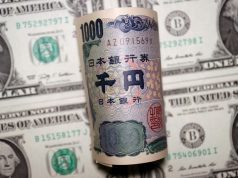
The U.S. dollar remained largely stable during Asian trading on Friday and was on track for its largest weekly gain in more than a year. The greenback benefited from increased demand for safe-haven assets as the escalating conflict in the Middle East unsettled global financial markets.
At the same time, the euro and Japanese yen stayed under pressure. Rising geopolitical tensions have pushed oil prices sharply higher, raising concerns about inflation in countries that depend heavily on energy imports. The surge in energy costs has also complicated expectations for monetary policy among major central banks, including the U.S. Federal Reserve.
Earlier hopes for a possible de-escalation faded as tensions intensified. Iran warned that the United States would “bitterly regret” the sinking of one of its warships. Meanwhile, U.S. President Donald Trump stated that he wanted to play a role in choosing Iran’s next leader after U.S. and Israeli airstrikes killed Supreme Leader Ali Khamenei during the early stage of the conflict.
According to Tony Sycamore, market analyst at IG, a prolonged Middle East conflict could have significant economic consequences. If hostilities continue at their current pace, the world could face higher inflation, a stronger U.S. dollar, and a reduced likelihood of Federal Reserve interest rate cuts.
The U.S. Dollar Index, which tracks the dollar against a basket of major currencies, traded slightly lower at 99.03 but remained on course for a 1.4% weekly gain, its strongest performance since November 2024.
Currency markets showed mixed movements. The euro held near $1.161, but was still heading for a 1.7% weekly decline. The Japanese yen weakened about 0.2% to 157.83 per dollar, while British pound sterling edged slightly higher by 0.02% to $1.3358.
The conflict escalated further on Thursday as U.S. and Israeli fighter jets carried out strikes across Iran, while cities in the Gulf region faced renewed bombardments.
In a phone interview with Reuters, President Trump said that Mojtaba Khamenei, the son of the late Iranian leader who had been viewed as a potential successor, was unlikely to become the next head of state.
Amid the recent market volatility, the U.S. dollar has been one of the few assets showing strength. The geopolitical turmoil has weighed on stocks, bonds, and even traditional safe-haven assets such as gold during several turbulent trading sessions.
According to Nathan Swami, head of FX trading for Japan, Asia North and Australia at Citi in Singapore, investors have been reducing risk exposure across both G10 and emerging market currencies.
When the conflict first erupted, many hedgers and custodians increased their dollar holdings in several onshore markets. Although central bank interventions have so far stabilized Asian currencies, Swami noted that depreciation pressure could increase if the conflict continues.
In Japan, Bank of Japan Deputy Governor Ryozo Himino warned that the weak yen is pushing import costs higher and could eventually influence underlying inflation levels.
Meanwhile, Albert Park, chief economist at the Asian Development Bank, said that if the conflict and any disruption to the Strait of Hormuz lasts only about a month, the impact on economic growth in developing Asian economies may remain limited.
The surge in energy prices linked to the Middle East conflict has revived concerns about global inflation. Overnight index swap (OIS) markets show significant changes in interest-rate expectations for major central banks.
Traders have pushed back expectations for the next Federal Reserve rate cut to either September or October, according to LSEG estimates. At the same time, expectations for Bank of England rate cuts have been reduced, while markets are increasingly pricing in the possibility of European Central Bank rate hikes later this year.
Analysts say investors remain sensitive to inflation risks following the supply shocks seen during the Russia-Ukraine war and the disruptions experienced during the post-pandemic recovery. These concerns are reflected in changes to OIS curves and noticeable repricing in global bond markets.
With geopolitical tensions dominating headlines, currency traders have largely ignored recent economic data. U.S. figures released on Thursday showed that new unemployment claims remained unchanged last week, while layoffs dropped significantly in February, indicating a stable labor market.
Attention is now turning to the U.S. nonfarm payrolls report, scheduled for release later on Friday. Economists surveyed by Reuters expect the economy to have added 59,000 jobs in February, following a 130,000 increase in January. The unemployment rate is expected to remain steady at 4.3%.
In currency markets, the Australian dollar rose 0.36% to $0.7031, while the New Zealand dollar (kiwi) gained 0.17% to $0.5904.
In the cryptocurrency market, Bitcoin declined 0.93% to $70,482.16, while Ethereum fell 0.57% to $2,068.58.