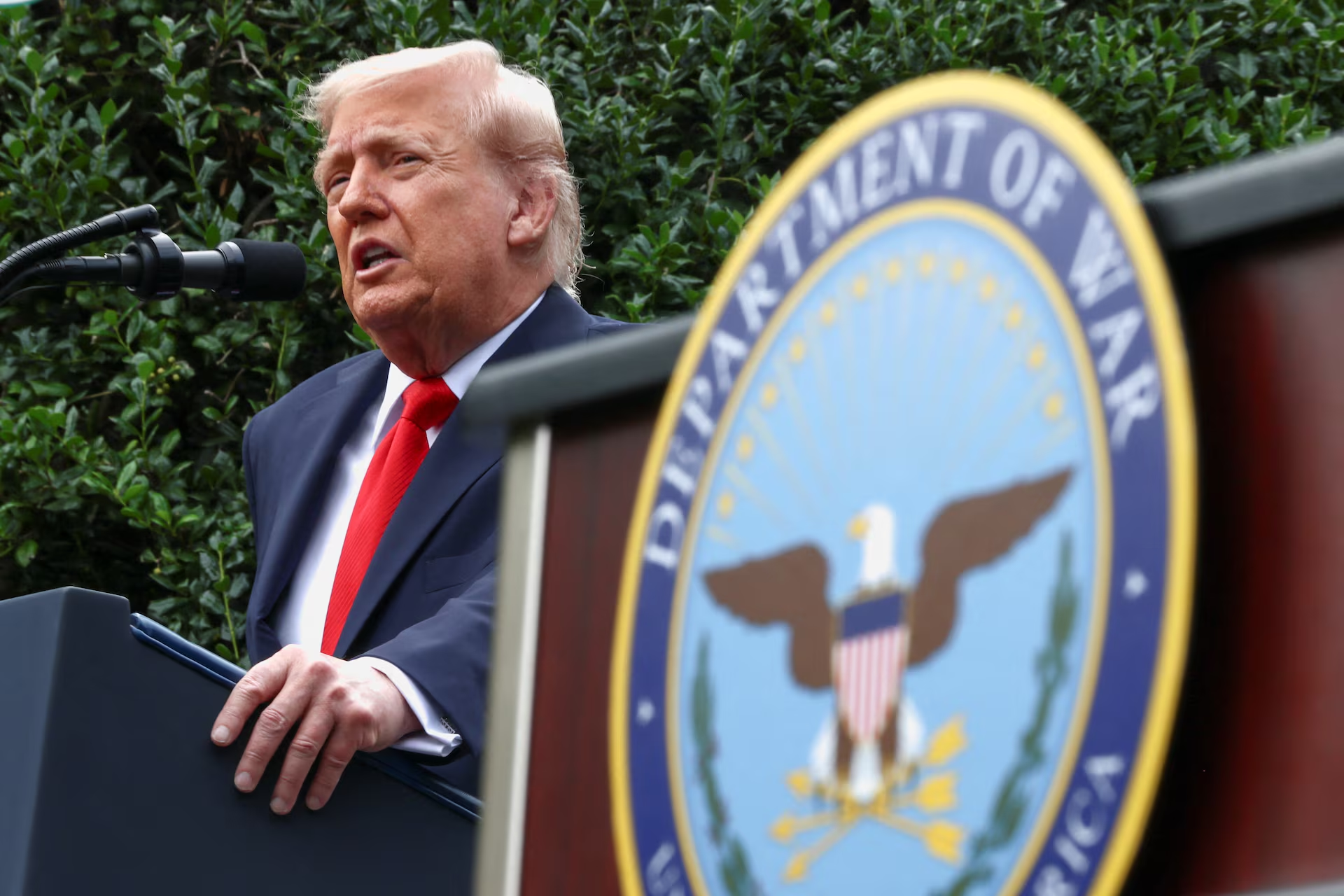
Trump Budget Proposes Defense Surge and Spending Cuts
U.S. President Donald Trump on Friday proposed a major shift in federal spending for the 2027 fiscal year, calling for a 10% reduction in non-defense discretionary programs alongside a massive $500 billion increase in defense spending. The proposal comes as the United States remains engaged in its ongoing conflict with Iran.
Rising Geopolitical Pressure and Economic Concerns
The budget plan arrives at a time of heightened global tensions, with U.S. troops deployed in the Middle East. Meanwhile, Americans at home are feeling the economic strain, particularly from rising fuel prices driven by the conflict.
Congressional Approval Remains a Key Hurdle
The proposed budget must still be approved by Congress, where divisions over spending priorities have already caused significant disruption, including the longest government shutdown in U.S. history.
At the same time, the budget reflects the administration’s political strategy ahead of the November 2026 midterm elections, as Republicans aim to maintain their narrow control of both chambers of Congress.
Defense Spending Set for Historic Increase
The proposal includes a dramatic rise in defense funding to approximately $1.5 trillion, up from around $1 trillion in 2026. This increase also features a planned 5% to 7% pay raise for military personnel, many of whom are currently deployed overseas.
While the plan is expected to gain support from defense-focused lawmakers, it also raises questions about how such a significant expansion will be financed, particularly after recent increases in military spending.
Additional Military and Strategic Investments
The budget outlines several key defense initiatives, including funding for the controversial “Golden Dome” missile defense system, expansion of critical mineral reserves for national security, and $65.8 billion allocated to build 34 new combat and support ships.
Shipbuilding remains a central priority, with funding directed toward submarines and the development of the so-called Trump-class battleship.
Deficit and Mandatory Spending Remain Unaddressed
Notably, the proposal does not tackle the largest components of federal spending, such as Social Security and Medicare, which are often considered politically sensitive areas for reform.
Additionally, the White House did not include projections on how the new spending plan would affect the federal deficit. According to the Congressional Budget Office, the deficit is expected to rise slightly to $1.853 trillion in fiscal 2026.
Political Messaging Ahead of Midterm Elections
While presidential budgets are often treated as guiding frameworks, Trump’s proposal is likely to intensify debates in Washington, particularly with Democrats who oppose cuts to key federal programs.
The administration stated that savings would come from eliminating what it described as “wasteful” and “politicized” initiatives, while shifting certain responsibilities back to state and local governments.
Cuts, Security Spending, and Policy Priorities
The budget includes reductions in areas such as green energy programs and the elimination of nearly 30 Justice Department initiatives deemed unnecessary. It also proposes cutting funding for organizations like the National Endowment for Democracy.
At the same time, funding for law enforcement and security is set to rise. The Justice Department would see a 13% increase to strengthen efforts against violent crime, while $2.2 billion is allocated for immigration enforcement, including expanded detention capacity.
Infrastructure and Additional Investments
Beyond defense and security, the proposal includes $481 million to hire more air traffic controllers, addressing concerns over staffing shortages and aviation safety.
It also allocates $10 billion toward the creation of the “Presidential Capital Stewardship Program,” aimed at funding infrastructure and beautification projects in and around Washington, D.C.