DeepSeek R1 Challenges AI Development Assumptions with Low-Cost, High-Performance Model
The release of DeepSeek R1, an open-source large-language AI model, has shocked the global AI community and upended traditional beliefs about the cost and complexity of AI development.
According to the DeepSeek research paper, the project required just $6 million to train, yet its performance rivals that of leading AI models. This has sparked significant discussion about the efficiency and scalability of AI development.

Breaking Long-Held Assumptions About AI
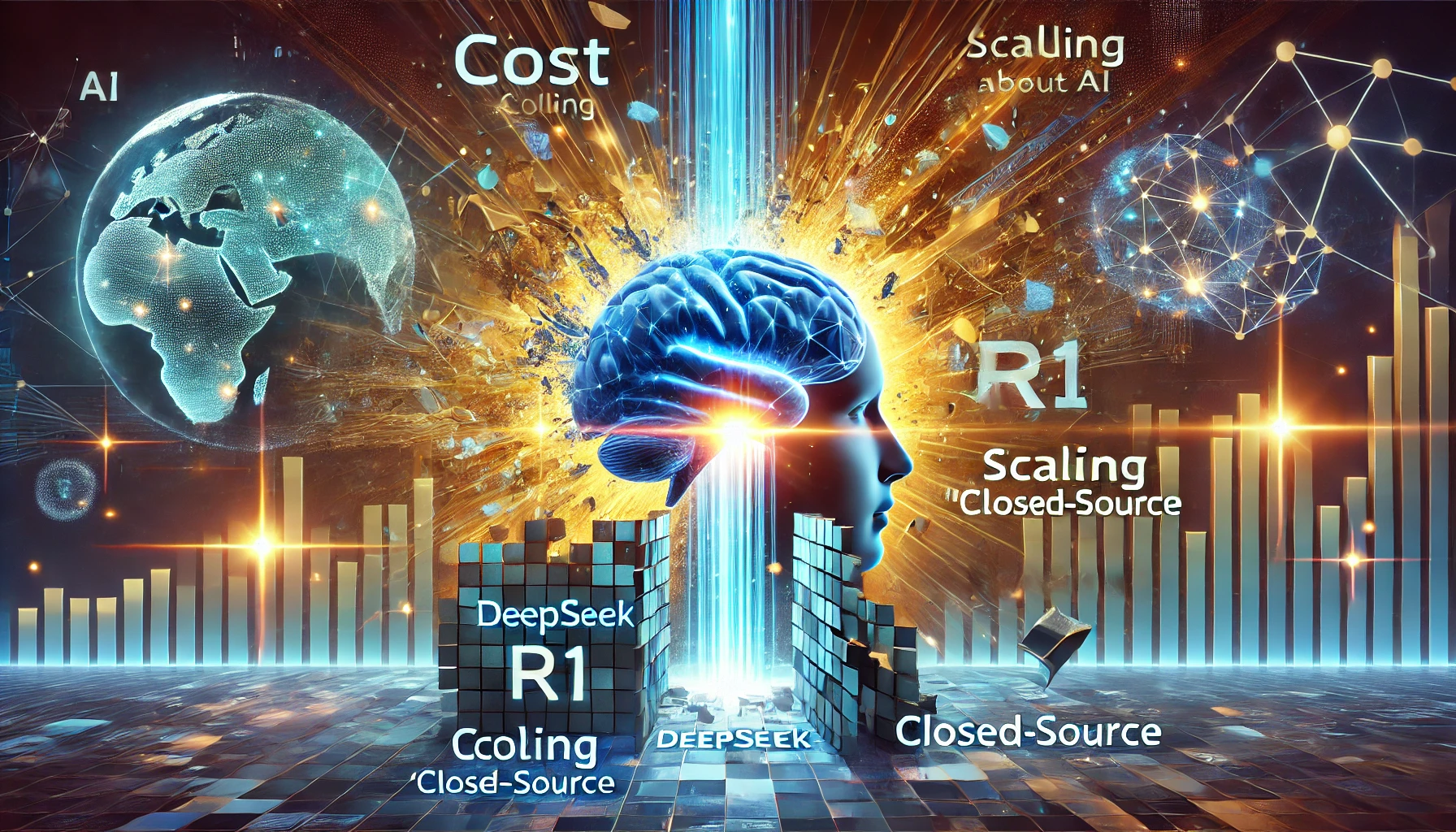
Venture capitalist Nic Carter highlighted how DeepSeek R1, developed in China, defies expectations that China would primarily focus on closed-source AI models. The model has challenged assumptions about Silicon Valley’s dominance in AI innovation, proving that OpenAI’s leadership is not unassailable.
Carter also pointed out that DeepSeek undermines beliefs regarding the high cost, scaling barriers, and value accumulation typically associated with cutting-edge AI models.
China’s rapid deployment of DeepSeek contradicts previous reports suggesting the country was six months behind the U.S. in AI development, further intensifying the global AI arms race.
China Overcomes AI Chip Restrictions
Despite facing U.S. restrictions on AI chip exports, imposed in October 2022, Chinese companies found ways to circumvent these limitations. They turned to domestic chip manufacturing and cloud-computing platforms, such as Amazon Cloud Services, to access high-performance computing power.
Additionally, in August 2023, China eased its AI development regulations, removing financial penalties for firms that deviate from industry standards, fostering a more innovation-friendly environment.
Global AI Arms Race Accelerates
Both the United States and China are taking significant steps to solidify their positions in the global AI landscape.
President Donald Trump has made AI a central part of his administration’s goals, aiming to establish the U.S. as the AI capital of the world. Speaking at the World Economic Forum in Davos, Trump emphasized deregulating the energy sector to fuel AI development and announced the $500 billion “Stargate” AI infrastructure initiative. This plan includes investments from OpenAI, Oracle, and SoftBank to build advanced AI and data centers in the U.S., creating 100,000 jobs.

Similarly, U.K. Prime Minister Keir Starmer announced plans to fast-track AI infrastructure development to ensure the U.K. remains competitive in the global AI race.
Conclusion
DeepSeek R1’s release highlights China’s ability to rapidly innovate despite restrictions and presents a serious challenge to assumptions about the dominance of Western AI developers. As the AI arms race intensifies, countries like the U.S., China, and the U.K. are ramping up investments and regulatory changes to secure their positions in this rapidly evolving industry.