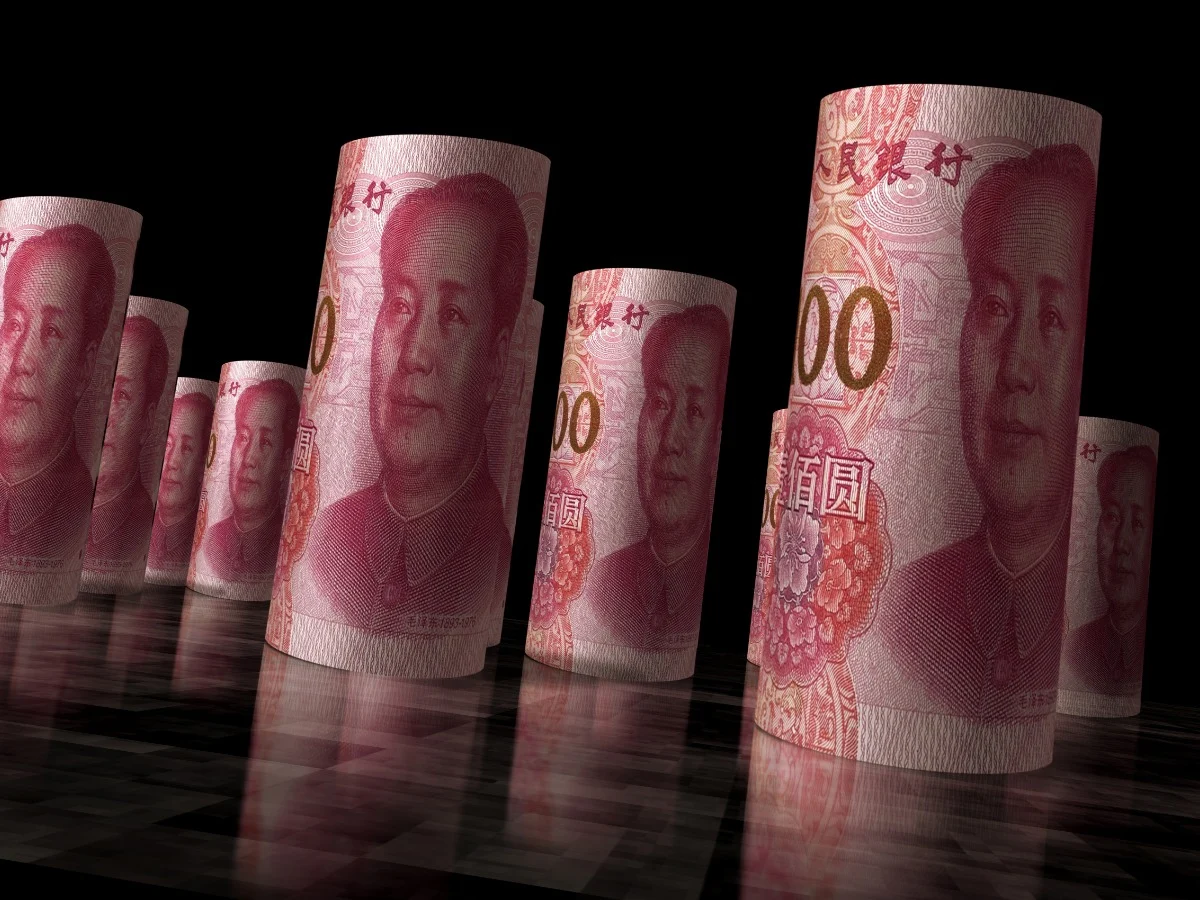
Investors are increasingly turning to yuan-denominated credit, with rapid growth in yuan lending set to rival and potentially overtake overseas dollar loans at Chinese banks. Competitive pricing is helping fuel Beijing’s long-term strategy to elevate the yuan’s role in global finance.
China’s overseas bank lending has tripled over the past four years to 2.52 trillion yuan, while issuance of onshore and offshore yuan debt has reached or approached record levels for the second consecutive year. Bankers say low borrowing costs are a key driver, but the market is also gaining momentum as demand to hold and transact in yuan continues to deepen. This trend suggests China’s push to globalise its currency is progressing even without full capital account liberalisation.
Samuel Fischer, Deutsche Bank’s head of China onshore debt capital markets, said the current phase is increasingly driven by genuine demand for renminbi funding. He noted that more international investors are making dedicated yuan allocations rather than pursuing short-term arbitrage, supported by large anchor orders from outside China. Fischer added that diversification away from the dollar is gaining traction at a critical moment for global currency markets.
China has spent years promoting the yuan as a currency for international trade and financing. Its share of global foreign exchange turnover has steadily increased from a low base, reaching around 8.5% in April, according to the Bank for International Settlements, compared with the dollar’s dominant 89% share.
So far this year, non-Chinese issuers raised 169.7 billion yuan in onshore markets during the 11 months to the end of November. Offshore markets saw a record 801.9 billion yuan raised by all issuers, supported by strong demand. While this remains small relative to the $9.57 trillion raised globally this year, data from China’s central bank shows that foreign issuance of yuan debt, both onshore and offshore, has more than doubled over the past three years.
In the loan market, foreign currency lending, largely denominated in dollars, fell to $375 billion by the end of November from a 2022 peak of $587 billion. Over the same period, yuan lending climbed to $357 billion, highlighting the narrowing gap.
Pricing advantage drives demand
Lower funding costs remain a major attraction for issuers. Yuan borrowing rates have stayed below dollar rates since 2022, as U.S. interest rates rose to curb inflation while Chinese rates were cut to counter deflationary pressures. The yield gap between 10-year Chinese government bonds and U.S. Treasuries widened to nearly 315 basis points earlier this year, with even Japanese government bond yields sitting above China’s.
According to S&P Global, three-year panda bonds were issued this year at yields between 1.7% and 2.7%, well below the roughly 3.5% yield on comparable U.S. Treasuries. The rating agency also said the yuan’s relative stability against a more volatile dollar and euro reduces exchange rate risk for foreign issuers by limiting the need for costly currency hedging.
Beyond pricing, geopolitical tensions and rising trade barriers are accelerating regional trade patterns and boosting demand for yuan liabilities, said Terence Lau, a capital markets partner at Linklaters. He added that China’s Belt and Road Initiative is likely to benefit, as infrastructure funding can often be recycled to Chinese firms and settled in yuan.
This year, issuers such as Indonesia and the Development Bank of Kazakhstan tapped offshore yuan markets with so-called dim sum bonds. Indonesia raised 6 billion yuan in October, while Kazakhstan issued 2 billion yuan in September. Kenya converted dollar-denominated railway loans into yuan, Ethiopia is exploring a similar move, and China Development Bank signed its first yuan-denominated financing cooperation deal with the Development Bank of Southern Africa.
Lau noted that countries deepening economic ties with China increasingly need renminbi not just for funding, but for real economic use.
Defensive shift away from dollar dependence
For investors, yuan credit offers higher yields than sovereign bonds and an alternative destination for capital, especially as Asia’s debt markets have shrunk following China’s property downturn. Florian Neto, head of Asia investments at Amundi, said interest from global fixed income investors outside Asia has been steadily rising and is likely to continue.
Strong demand has also been evident in recent offshore yuan bond deals, which have drawn robust order books and encouraged more issuers to consider the yuan as a funding channel. The currency’s managed stability is another appeal, with some investors targeting unhedged returns of 4% to 5%.
Despite the growth, international yuan debt still represents only about 0.2% of China’s domestic debt market and remains small compared with dollar- and euro-denominated debt. A stronger yuan, which has risen around 3.6% against the dollar this year, can also weigh on borrowers. However, China has actively limited currency gains, with state banks intervening to smooth volatility.
Wei He, an economist at Gavekal Dragonomics, said a shift away from this cautious currency stance could slow overseas lending growth, but the more likely outcome is continued expansion to new highs.
Analysts emphasise that China is not aiming to replace the dollar outright. Instead, it is building the foundations of a parallel capital market less exposed to dollar dominance. BNP Paribas Asset Management strategist Chi Lo said the process is unfolding through thousands of trade and payment decisions rather than direct confrontation, describing it as a defensive strategy to reduce vulnerability to the dollar-based financial system.