China’s Critical Mineral Exports Plunge Amid Smuggling Crackdown and Export Controls
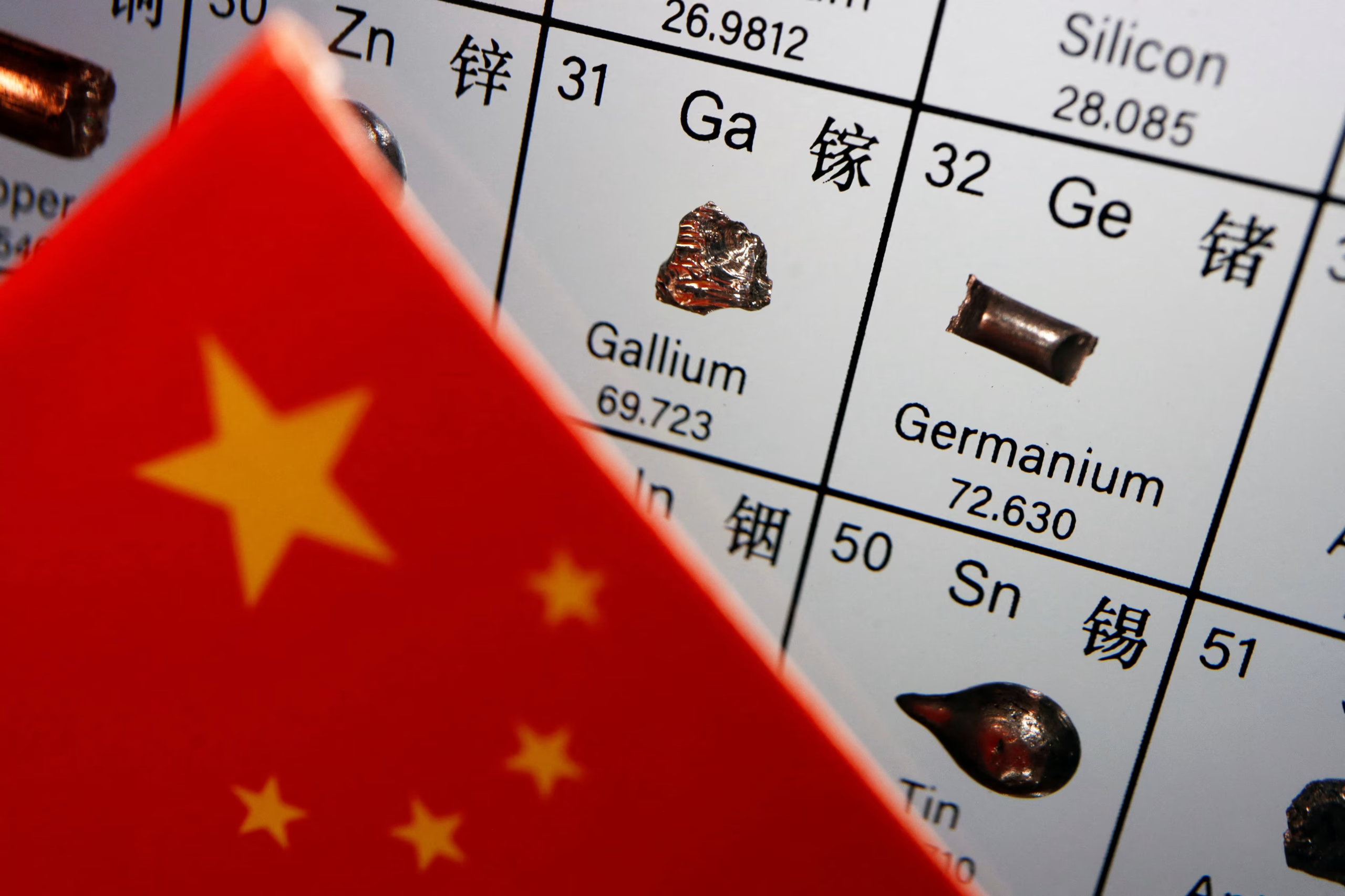
China’s exports of two strategically important minerals—antimony and germanium, used in weapons systems, telecommunications, and solar technologies—have plummeted over the past three months due to a sweeping crackdown on smuggling and transshipment. The campaign has involved China’s top intelligence agency.
According to customs data released Sunday, antimony exports in June dropped 88% and germanium exports fell 95% compared to January. As with rare earths, China dominates global mining and refining of both materials.
The two minerals were added to China’s export control list in 2023 and 2024, with shipments to the U.S. banned in December as retaliation against American chip restrictions.
Rare earths, which were placed under similar controls in April, initially saw a dramatic drop in exports that disrupted car manufacturing in the U.S. and Europe. However, exports rebounded last month after a deal between Beijing and Washington.
In contrast, germanium and antimony exports have continued to fall, hitting some of the lowest levels ever recorded.
This sharp decline aligns with China’s intensified enforcement against efforts to evade export rules. Last week, the Ministry of State Security reported detecting attempts to reroute critical mineral shipments through third countries—a tactic known as transshipment.
A recent Reuters report noted suspiciously high levels of antimony exports to the U.S. from Thailand and Mexico, suggesting Chinese firms were using those countries to sidestep restrictions.
Following that, China’s antimony exports to Thailand dropped 90%, after peaking in April, and exports to Mexico have ceased entirely since then.
Meanwhile, market prices have surged: high-purity germanium prices have more than doubled since China imposed export restrictions in July 2023, and antimony prices have nearly quadrupled since May of last year.