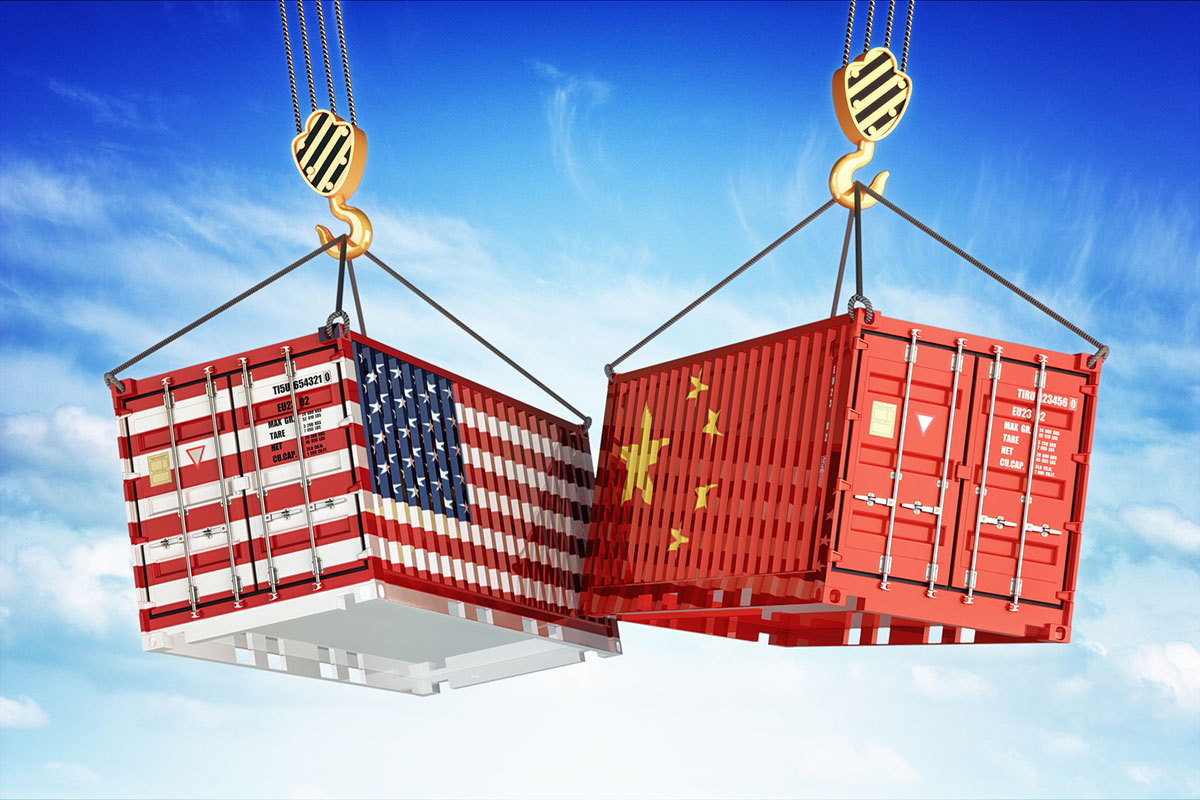
China said it is conducting a “full assessment” of the recent U.S. Supreme Court ruling on tariffs and called on Washington to remove what it described as unilateral trade measures. Beijing warned that escalating tensions between the two countries would be harmful for both sides.
The statement from China’s Commerce Ministry came shortly after the U.S. Supreme Court struck down several tariffs introduced by President Donald Trump as part of his broader global trade strategy, including duties targeting China.
Within hours of the ruling, President Donald Trump announced a new 10% tariff on imports from all countries, scheduled to take effect the following day. He later raised the rate to 15%, a move that reportedly surprised some officials.
China criticizes unilateral U.S. tariffs
China’s Commerce Ministry argued that unilateral tariffs violate international trade rules as well as U.S. domestic law. According to the ministry, such measures do not serve the interests of any party involved.
Beijing emphasized that cooperation between China and the United States benefits both economies, while confrontation damages growth and stability.
Trade policy is expected to dominate discussions ahead of President Donald Trump’s planned visit to China in late March and early April, where he is scheduled to meet President Xi Jinping. The outcome of those talks could shape the next phase of U.S.-China trade relations.
Section 122 tariffs raise legal questions
Trump’s proposed new tariffs are based on Section 122 of U.S. trade law. This provision allows tariffs of up to 15% for 150 days but requires congressional approval for any extension. No previous president has invoked Section 122, and its use may trigger additional legal challenges.
China signaled it would closely monitor developments and take necessary steps to protect its economic interests.
Chinese researchers have also criticized the U.S. tariff strategy. Gao Lingyun of the Chinese Academy of Social Sciences described recent decisions as arbitrary and politically driven. He stressed that tariff policy should be grounded in careful economic analysis rather than political considerations.
The Supreme Court ruling invalidated tariffs imposed on several major Asian exporters, including China, South Korea, Japan and Taiwan. These economies play a central role in global technology and semiconductor supply chains.
Global trade uncertainty spreads
South Korea said it would continue consultations with Washington to maintain a balance of interests. Officials expressed concern across key industries such as automotive manufacturing, batteries and semiconductors. Authorities emphasized the need to strengthen export competitiveness and diversify markets.
India also postponed plans to send a trade delegation to Washington, citing renewed tariff uncertainty. Under earlier discussions, U.S. tariffs on Indian goods were set to be reduced to 18%, while India committed to purchasing $500 billion in U.S. goods over five years, including energy, aircraft, precious metals and technology products.
In Europe, European Central Bank President Christine Lagarde warned that businesses require predictability rather than ongoing legal disputes. She stated that any new tariff measures must be clearly defined and consistent with U.S. constitutional requirements to avoid further disruption.
Lagarde cautioned that renewed changes to trade policy could create additional instability in global markets, underscoring the broader economic risks tied to escalating tariff tensions.