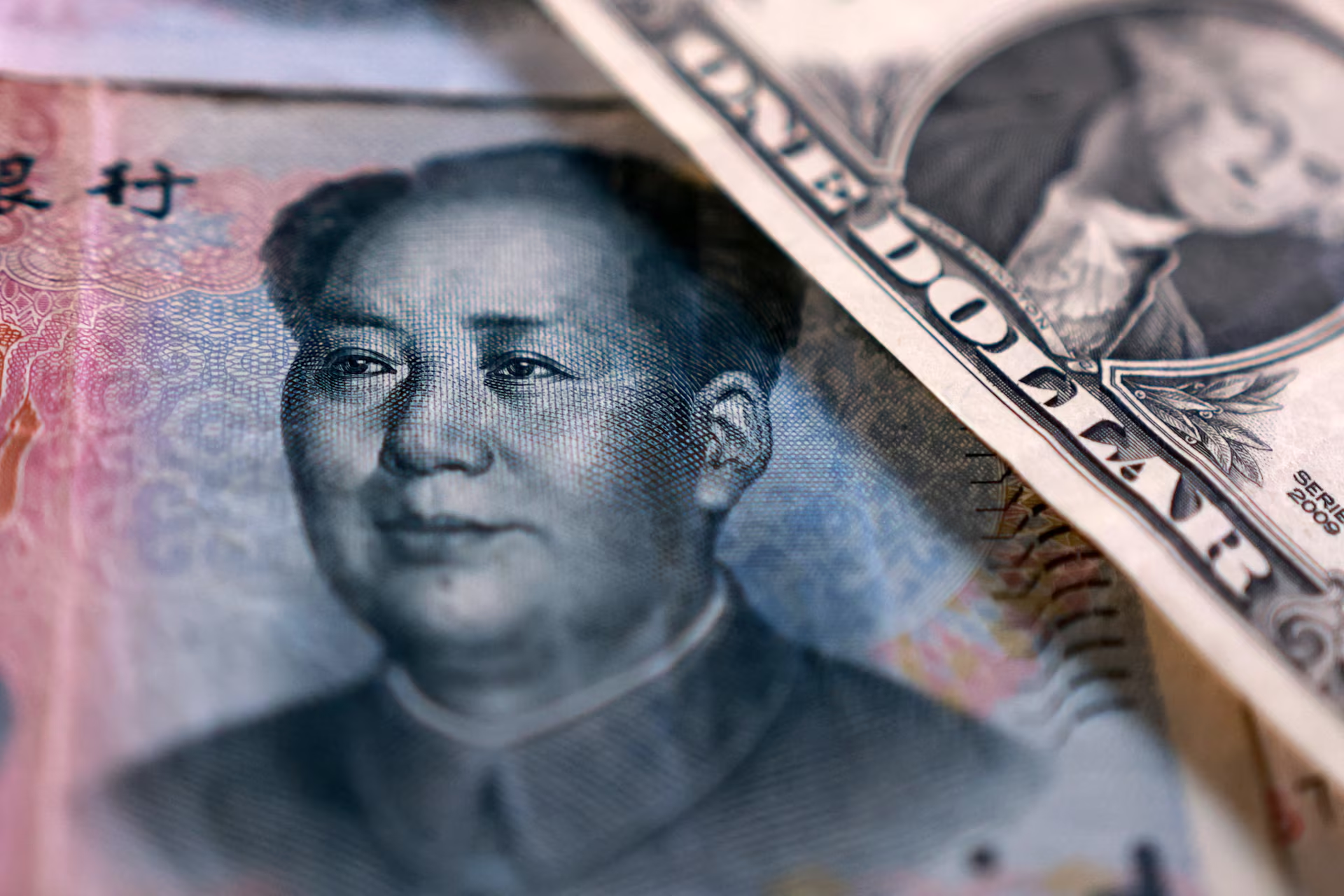
China’s central bank stepped in on Friday to slow the rapid rise of the yuan, removing the 20% risk reserve requirement on foreign exchange forward contracts. The move is designed to encourage dollar buying, as Chinese exporters begin to feel pressure from the stronger currency.
The decision followed the yuan’s climb to a near three-year high against the U.S. dollar on Thursday. The currency eased slightly on Friday, pausing a rally that has been largely driven by a surge in exports. Since April last year, the yuan has gained more than 7% against the dollar.
In addition to scrapping the reserve requirement, the People’s Bank of China (PBOC) also set the daily trading band midpoint weaker than expected. Together, these steps mark the clearest signal yet that authorities are pushing back against the currency’s sustained appreciation.
Analysts say the PBOC is acting because the yuan’s rise has been too rapid. However, some believe the measures will only slow the pace of appreciation rather than reverse it, especially if the U.S. dollar remains broadly weak. The central bank stated that it aims to keep the yuan at a “reasonable and balanced level.”
Market observers note that removing the reserve requirement makes it less costly for traders and companies to take positions against the yuan in the forward market. This could help balance supply and demand in foreign exchange markets.
While a stronger yuan can attract foreign investment and reduce import costs, it poses challenges for exporters whose revenues are mostly denominated in dollars. Several Chinese companies have already reported negative impacts from currency strength.
Beijing Ultrapower Software Co said the yuan’s appreciation contributed to a 28% drop in its 2025 profit, citing foreign exchange conversion losses as the dollar weakened. Other firms, including Suzhou Junchuang Auto Technologies, have also reported profit declines linked to the stronger currency.
The PBOC’s move comes as exporters rush to sell dollars in both spot and forward markets, while importers delay greenback purchases. Official data showed net foreign exchange inflows of $79.9 billion in January, the third-largest monthly figure on record, following record inflows in December.
Some analysts believe the central bank’s relatively moderate response suggests it sees limited risk of a sharp yuan depreciation. Instead, policymakers may simply be aiming to smooth volatility and prevent excessive currency gains.
Last year, the yuan posted its strongest annual performance against the dollar since 2020, and upward momentum has continued into the new year. Chinese exporters have managed to expand sales in markets beyond the United States after Washington increased tariffs, helping to offset weak domestic demand.
Economists argue that the yuan’s resilience, even as the dollar remains stable, reflects strong market confidence in China’s economic outlook. At the same time, the currency’s strength is increasing pressure on companies to improve their foreign exchange hedging strategies.