Asian Markets Drop as Wall Street Losses and Tariff Fears Hit Sentiment
Most Asian stock markets fell sharply on Friday, following overnight declines on Wall Street. Renewed worries over U.S. regional banks shook investor confidence, while Chinese equities led regional losses amid growing trade tensions with Washington.
Regional Markets Set for Weekly Losses
Most major Asian indices were heading for weekly declines. The drop came after President Donald Trump announced new tariffs on Chinese imports, increasing concerns about global trade stability.
Wall Street also slipped on Thursday after Zions Bancorp (NASDAQ:ZION) and Western Alliance Bank (NYSE:WAL) revealed troubled loan portfolios. These disclosures reignited fears about the financial health of regional banks and raised the risk of deeper hidden losses.
The KBW Regional Banking Index plunged more than 6%, dragging broader markets lower and dampening sentiment across Asia.
Japan, Singapore, and Australia Retreat
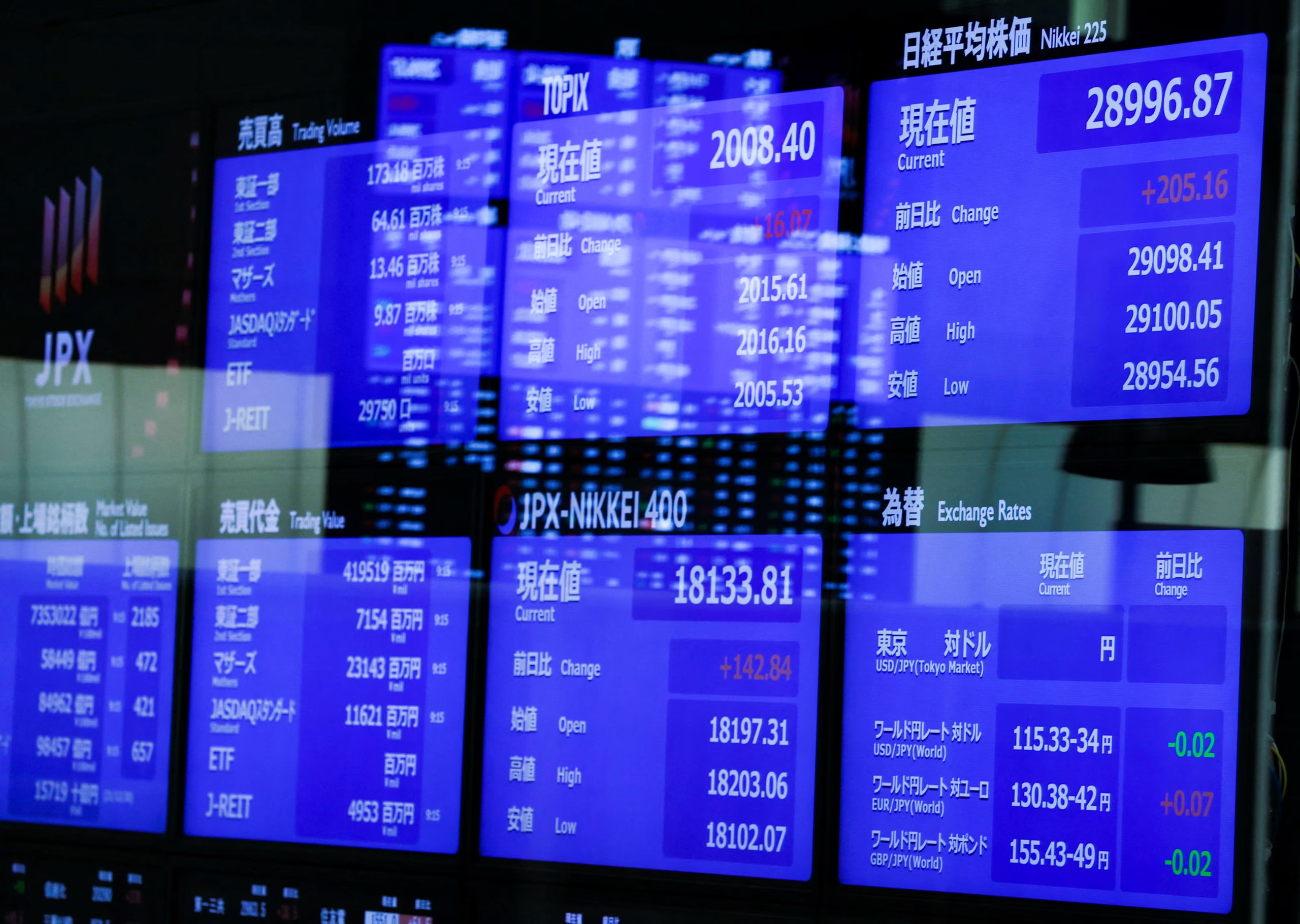
In Japan, the Nikkei 225 slid 1.3% on Friday after two strong sessions, putting it on track for a 1% weekly drop. The broader TOPIX index also eased 1%.
Singapore’s Straits Times Index fell 0.5%, heading for more than a 2% weekly loss.
Australia’s S&P/ASX 200 slipped 0.8% after reaching a record high in the previous session. The decline followed a weak jobs report that fueled expectations of further policy easing by the Reserve Bank of Australia (RBA).
China and Hong Kong Lead the Regional Decline
Chinese shares suffered the heaviest losses. Rising trade tensions between Beijing and Washington intensified after President Trump threatened to impose 100% tariffs on Chinese imports starting November 1. The move followed Beijing’s expanded restrictions on rare earth exports.
These renewed frictions have reignited fears of another U.S.-China trade war, despite earlier agreements that prevented steeper tariffs this year.
The CSI 300 index dropped 1.3%, while the Shanghai Composite fell 1%. Hong Kong’s Hang Seng index slumped 1.8%, putting it on pace for nearly a 3% weekly loss.
South Korea Briefly Defies the Trend
South Korea’s KOSPI index initially rose 1.2% to hit a new record high of 3,794.87 points before surrendering gains later in the session. Optimism over a potential U.S.-South Korea trade agreement briefly lifted sentiment.
South Korea’s presidential policy adviser said on Thursday he remained “optimistic” about finalizing the deal.
U.S. Treasury Secretary Scott Bessent confirmed ongoing negotiations, telling CNBC, “We are about to finish up with Korea.”
Both countries are reportedly working to ease disputes over tariffs and strengthen supply chain cooperation, especially in the semiconductor and electric vehicle sectors.