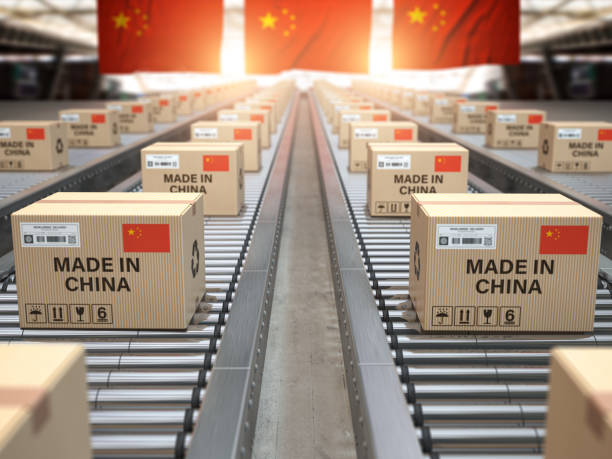
China’s manufacturing sector shrank for a sixth straight month in September, according to official data released Tuesday. The survey showed producers are waiting for more government stimulus to boost domestic demand and clarity on a U.S. trade agreement.
The official Purchasing Managers’ Index (PMI) rose to 49.8 in September, up from 49.4 in August and slightly higher than the 49.6 forecast in a Reuters poll. Still, the index remained below the 50 mark, which separates growth from contraction.
This prolonged weakness highlights the dual challenges facing China’s economy. Domestic demand has struggled to recover since the pandemic, while U.S. President Donald Trump’s tariffs continue to pressure Chinese factories and international buyers of Chinese components.
However, a separate private survey painted a different picture. The S&P Global PMI, also known as the RatingDog General PMI, climbed to 51.2 in September from 50.5 in August, marking the fastest expansion since March. Rising new orders, stronger export demand, and accelerated production helped lift sentiment among private exporters.
The National Bureau of Statistics (NBS) survey focused more on large and medium-sized firms targeting domestic sales. In contrast, the S&P Global survey included smaller, export-driven companies. According to Xu Tianchen, senior economist at the Economist Intelligence Unit, the rebound in the official PMI reflected seasonal factors and stronger government support.
China’s economy remains volatile. It saw strong momentum in the first quarter due to early stimulus, slowed midyear, and is now expected to rebound in the fourth quarter as policymakers roll out further support. Markets stayed steady following the PMI release, with investors watching closely for stimulus announcements and the upcoming Communist Party meeting in October, which will outline China’s five-year development plan.
In August, policymakers introduced consumer loan subsidies to support household spending. Still, People’s Bank of China Governor Pan Gongsheng stressed that a wide range of monetary policy tools remained available, even though the central bank has yet to follow the U.S. Federal Reserve in cutting rates. Analysts at ING expect further easing before the end of the year, including a rate cut and a reduction in banks’ reserve requirements.
Despite these measures, signs of slowdown persist. The non-manufacturing PMI, which covers services and construction, fell to 50.0 in September, its weakest level since November. The composite PMI, which combines both surveys, edged up slightly to 50.6. Meanwhile, new export orders declined for the 17th consecutive month, and factory prices stayed weak, fueling deflation risks.
Exports to India, Africa, and Southeast Asia hit record highs this year, but the U.S. remains China’s largest market, with over $400 billion in annual sales. On September 19, Chinese President Xi Jinping spoke with President Trump for the first time in three months. While the call eased tensions, uncertainty remains over the TikTok deal, a key part of broader trade negotiations. Talks continued last week, but disagreements on technical details slowed progress ahead of the Madrid summit.
Economists remain cautious. Zichun Huang of Capital Economics warned that overcapacity and falling output prices point to entrenched deflationary pressures. Without stronger demand and policy action, a sustained rebound in China’s manufacturing activity may be difficult to achieve.