Central Banks Hold Rates but Signal Readiness to Act
Most major central banks in developed economies kept interest rates unchanged this week. However, policymakers emphasized their willingness to tighten monetary policy if rising energy prices—driven by the ongoing Middle East conflict—lead to broader inflation pressures.
Since the conflict escalated, financial markets have significantly reduced expectations for interest rate cuts by the Federal Reserve, while increasingly pricing in potential rate hikes from other major central banks, including the European Central Bank and the Bank of England.
Markets Shift Toward Rate Hike Expectations
Investor sentiment has shifted notably in recent days. Traders now anticipate tighter monetary policy across several regions, as energy-driven inflation risks intensify.
Australia has already moved in this direction, with its central bank continuing to raise borrowing costs.
Australia Leads with Continued Rate Hikes
The Reserve Bank of Australia raised its benchmark interest rate to 4.1%, marking its second consecutive increase. Policymakers warned that the ongoing conflict poses a significant risk to inflation.
Core inflation has been rising steadily, reaching a 16-month high of 3.4% in January. Markets expect at least two to three additional rate hikes this year.
Norway Signals Potential Tightening Ahead
Norway’s central bank is expected to maintain a cautious stance when it meets next week. Persistent inflation has limited its ability to ease policy, and markets are now pricing in a possible rate hike in the coming months.
Bank of England Turns More Hawkish
The Bank of England held its key rate steady at 3.75% but delivered a more hawkish message. Traders now see a growing likelihood of rate hikes in the near term, with multiple increases possible by the end of the year.
Policymakers highlighted concerns that inflation expectations could become entrenched, even as economic growth risks remain.
Federal Reserve Holds Steady but Warns on Inflation
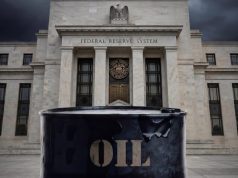
The Federal Reserve kept interest rates unchanged within the 3.50%–3.75% range. However, Chair Jerome Powell’s tone signaled caution, prompting markets to push back expectations for rate cuts to 2027.
The Fed also raised its inflation outlook, citing ongoing challenges such as tariff-related price increases and rising energy costs linked to the conflict.
New Zealand and Canada Eye Future Rate Increases
The Reserve Bank of New Zealand, which had previously cut rates aggressively, is now expected to reverse course, with markets anticipating rate hikes later this year.
Similarly, the Bank of Canada maintained its policy rate at 2.25% but indicated it could raise rates if higher energy prices lead to persistent inflation.
European Central Bank Faces Pressure to Act
The European Central Bank left rates unchanged but acknowledged growing risks from rising energy costs. Markets now expect multiple rate hikes this year, as policymakers aim to avoid repeating past delays in addressing inflation.
Sweden and Japan Maintain Cautious Approach
Sweden’s central bank kept its key rate unchanged, highlighting ongoing uncertainty. Meanwhile, the Bank of Japan maintained its rate at a multi-decade high but signaled increased concern about inflation risks, supporting expectations of future tightening.
The Japanese yen strengthened following these remarks.
Switzerland Maintains Ultra-Low Rates
The Swiss National Bank held its policy rate at 0%, the lowest among major economies. It also indicated readiness to intervene in currency markets to manage the strength of the Swiss franc.
With inflation remaining extremely low, the central bank faces the challenge of preventing excessive currency appreciation from pushing prices even lower.