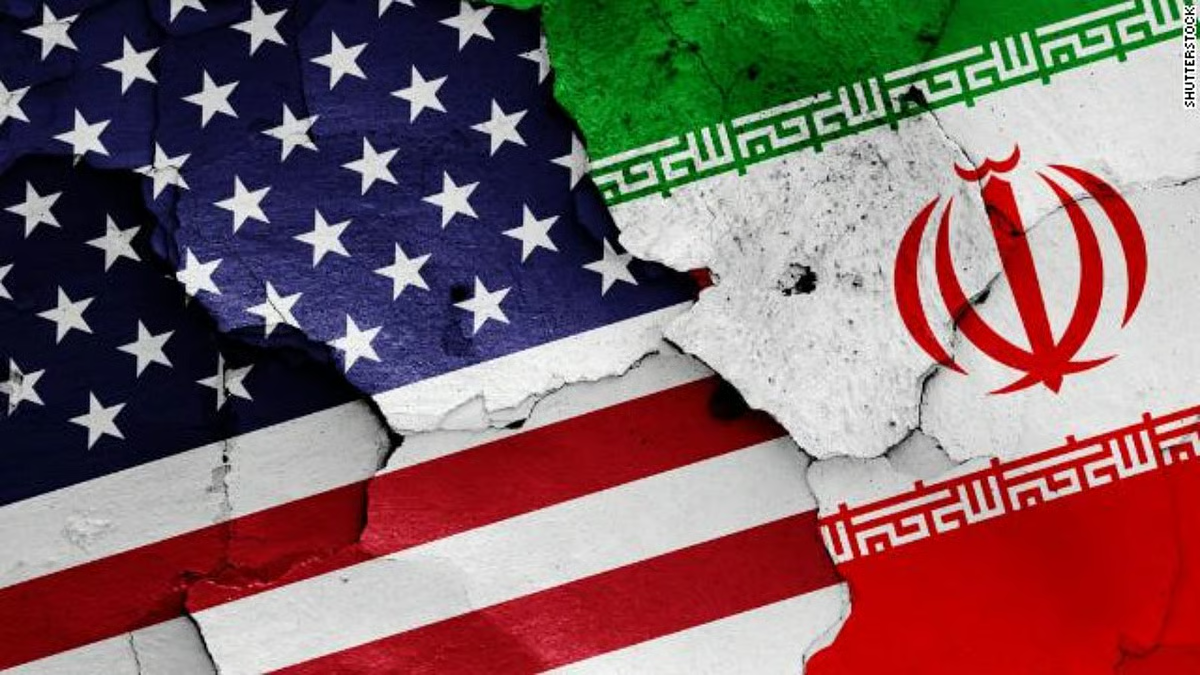
Iran Calls Ceasefire “Unreasonable” After Alleged Violations
Iran on Wednesday accused the United States of breaching three clauses of a 10-point peace proposal put forward by Tehran. Officials stated that under such circumstances, continuing with a ceasefire would be “unreasonable.”
The comments came shortly after both sides agreed to a temporary two-week truce aimed at halting hostilities.
Dispute Over Lebanon Fuels Tensions
Iran also accused Israel of violating the ceasefire through continued strikes on Lebanon, targeting Hezbollah forces. However, U.S. officials clarified that Lebanon was not included in the agreement.
U.S. Vice President JD Vance stated that there had been no commitment to include Lebanon in the ceasefire terms, highlighting a key misunderstanding between the parties.
US Officials Claim Military Success
U.S. Defense Secretary Pete Hegseth described recent military operations as a “decisive” victory, claiming that Iran’s missile capabilities had been significantly weakened.
He added that Iran’s military infrastructure had been severely degraded, limiting its ability to rebuild its missile program in the near future.
Trump Signals Willingness for Further Cooperation
In a statement following the ceasefire, President Donald Trump indicated that the U.S. is open to working with Iran toward a broader agreement. He reiterated demands for Iran to halt uranium enrichment and allow the removal of nuclear-related materials.
Trump also emphasized that sanctions relief and trade discussions could be part of future negotiations.
Pakistan to Host US-Iran Talks
Diplomatic efforts are set to continue, with U.S. and Iranian officials scheduled to meet in Islamabad, Pakistan. The delegation will include Vice President JD Vance, Middle East envoy Steve Witkoff, and Jared Kushner.
The talks aim to explore the framework for a more permanent agreement, although significant differences between the sides remain.
Fragile Truce Amid Ongoing Conflict
Despite the ceasefire, tensions remain high. Reports of continued strikes and drone activity across the Persian Gulf have raised concerns about the stability of the agreement.
Officials have warned that the success of the ceasefire will depend on both sides engaging in negotiations in good faith.
Strait of Hormuz Remains a Key Focus
The Strait of Hormuz continues to play a central role in the conflict. Iran has indicated that safe passage through the critical shipping route will depend on coordination with its military.
The U.S. has pledged to help ensure safe navigation, while maintaining a military presence in the region to enforce the ceasefire.
Oil Markets and Global Impact
Oil prices reacted sharply to developments, initially falling below $100 per barrel following ceasefire optimism, but remaining elevated compared to pre-conflict levels.
Analysts warn that continued uncertainty over shipping routes and energy infrastructure could keep markets volatile in the near term.
Markets Rally but Risks Persist
Equity markets in Asia, Europe, and the United States rose on optimism surrounding the ceasefire. However, investors remain cautious, closely monitoring geopolitical developments and energy supply flows.
Future market direction will largely depend on whether diplomatic talks lead to a lasting agreement and normalization of conditions in the Strait of Hormuz.