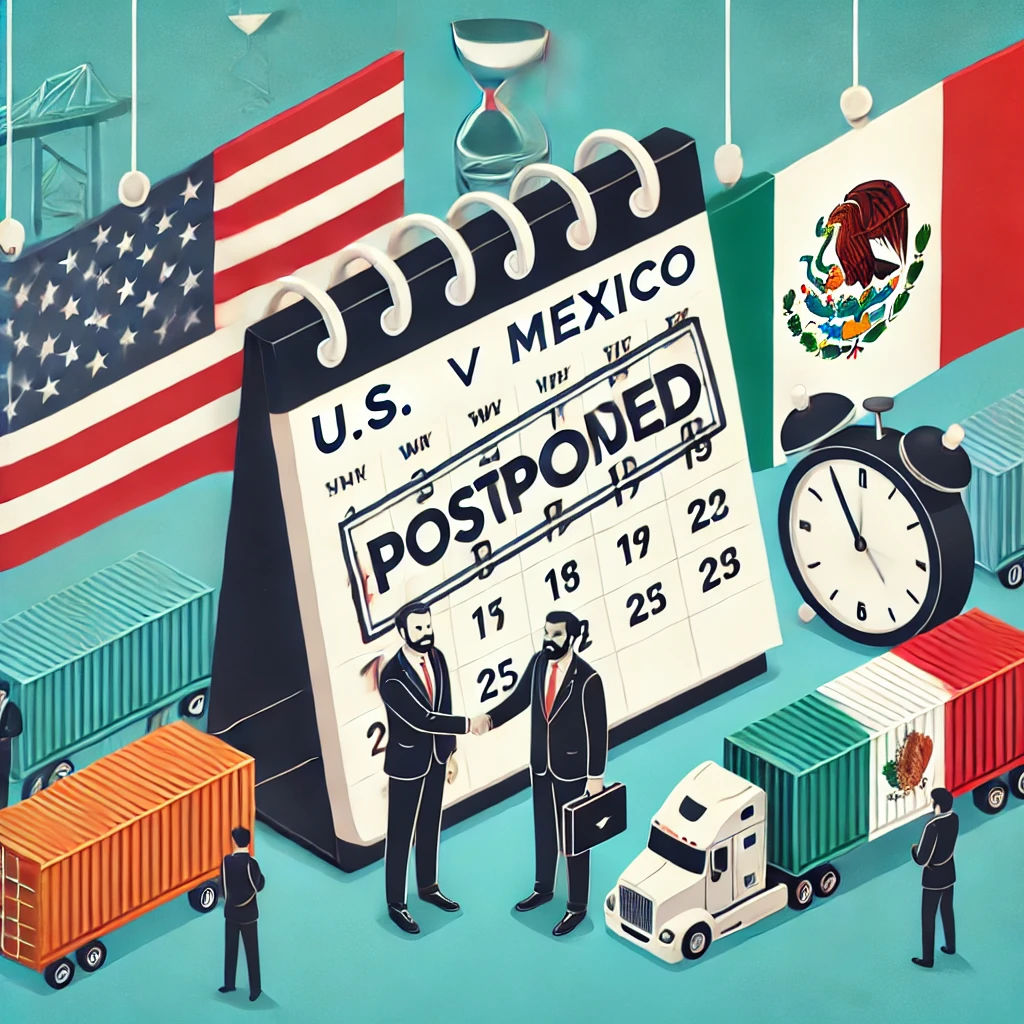
U.S. and Mexico Postpone Trump’s Tariffs for One Month to Negotiate Trade and Border Security
Key Points:
- The U.S. and Mexico agree to delay new tariffs for a month as negotiations continue.
- Mexico to deploy 10,000 troops to curb drug trafficking at the northern border.
- Global stock markets decline amid ongoing trade tensions; S&P 500 falls 1.5%.
- Bitcoin rebounds to $99,074.51 as investors shift focus to cryptocurrency.
U.S. and Mexico Agree to Temporary Trade Deal
The United States and Mexico have reached an agreement to postpone new tariffs on Mexican goods for a month. The decision followed discussions between U.S. President Donald Trump and Mexican President Claudia Sheinbaum. As part of the arrangement, Mexico has committed to deploying 10,000 troops to its northern border to combat drug trafficking.
Financial markets responded to the uncertainty, with global stocks falling while the cryptocurrency market showed signs of recovery.
Tariff Suspension and Negotiation Plans
President Trump had initially announced a 25% tariff on Mexican and Canadian imports, along with a 10% tariff on Chinese goods, set to take effect on Tuesday. However, after diplomatic talks, the White House confirmed that the Mexican tariffs would be postponed for one month to allow for further negotiations.
Trump confirmed the agreement via social media, stating that both countries had agreed to a temporary suspension of the tariffs while trade discussions took place. The negotiations will involve senior officials, including U.S. Secretary of State Marco Rubio and Mexican trade representatives.
Sheinbaum also acknowledged the discussions, emphasizing mutual respect and sovereignty. She confirmed that Mexico would reinforce its border security, while the U.S. pledged to curb the flow of high-powered weapons into Mexico.
Global Stock Market Decline Amid Trade War Concerns
Financial markets reacted negatively to the uncertainty surrounding trade policies. U.S., European, and Asian stocks experienced declines, with Wall Street opening lower. The S&P 500 dropped 1.5% as investors worried about the potential for a prolonged trade dispute.
Canada responded by announcing a 25% retaliatory tariff on American goods, with an expanded list of affected imports expected in the coming weeks. Meanwhile, China declared its intention to implement countermeasures and file a complaint against the U.S. with the World Trade Organization.
Trump also suggested the possibility of new tariffs on the European Union, stating in an interview that such measures were likely, though no official confirmation has been given. European leaders warned that additional tariffs could further destabilize global trade.
Mexico Deploys Troops to Strengthen Border Security
As part of the agreement, Mexico will send 10,000 soldiers to its northern border to address drug trafficking, particularly the fentanyl trade. This move aligns with the U.S. administration’s concerns about border security.
Sheinbaum confirmed that the troops would begin operations immediately, focusing on security and trade enforcement. Additionally, the U.S. agreed to enhance efforts to prevent firearms from reaching criminal groups in Mexico.
This military deployment mirrors previous agreements between the two countries during Trump’s first term when Mexico stationed forces to control migration flows. The move is expected to play a role in shaping future trade negotiations between the two nations.
Cryptocurrency Market Bounces Back
While traditional financial markets experienced declines, the cryptocurrency market showed signs of recovery. Bitcoin, which had dropped in recent days, rebounded to $99,074.51, with a 24-hour trading volume exceeding $113 billion.
Ethereum and other cryptocurrencies, including XRP and Dogecoin, also experienced slight recoveries after recent losses. Analysts suggest that investors may be turning to digital assets as a hedge against uncertainty in traditional financial markets.