BOJ Holds Rates, Slows Bond Taper Pace Amid Mounting Global Risks
The Bank of Japan (BOJ) left interest rates unchanged on Tuesday and announced a slower pace of balance sheet reduction for next year, highlighting its cautious approach to unwinding over a decade of massive monetary stimulus.
The move comes as intensifying geopolitical tensions in the Middle East and new U.S. trade tariffs complicate the central bank’s efforts to gradually raise interest rates and shrink a balance sheet that now matches the size of Japan’s entire economy.
“There are numerous uncertainties facing the economic outlook, particularly around global trade policies and their potential impact on overseas economies and inflation,” the BOJ said in its policy statement.
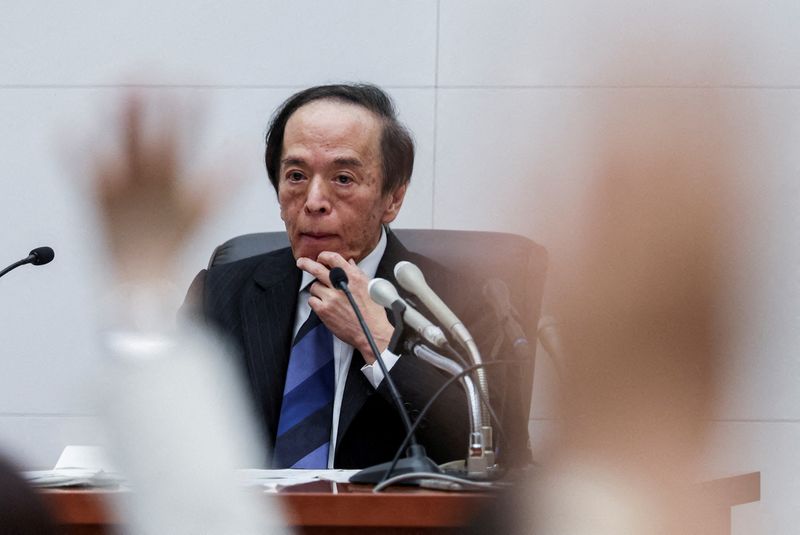
Investors are now closely watching BOJ Governor Kazuo Ueda’s post-meeting remarks for insights into how the central bank might balance domestic inflation risks against growing external pressures like U.S. tariffs.
As expected, the BOJ unanimously held its short-term interest rate target at 0.5% following the conclusion of its two-day policy meeting.
BOJ Slows Long-Term Taper Plan
The central bank made no changes to its current bond taper plan, which reduces government bond purchases by 400 billion yen ($2.76 billion) per quarter, aiming to bring monthly buying down to 3 trillion yen by March 2026.
However, the BOJ introduced a slower taper schedule starting in fiscal 2026, halving the quarterly reduction to 200 billion yen. Under this plan, bond purchases would fall to approximately 2 trillion yen monthly by March 2027. This adjustment aligns with feedback from market participants during recent consultations.
Board member Naoki Tamura dissented on this particular point, advocating for the original pace of tapering to continue into fiscal 2026.
The slower reduction reflects concerns over market volatility, especially after a recent spike in yields on long-term Japanese government bonds (JGBs).
“This is a market-friendly move,” said Saisuke Sakai, senior economist at Mizuho Research & Technologies. “By easing the taper pace, the BOJ can help keep long-term interest rates in check.”
Following the announcement, JGB yields rose, with the benchmark 10-year yield briefly hitting 1.485%—the highest since June 4—as expectations for short-term JGB support eased.
In its quarterly bond-buying schedule for July through September, the BOJ said it would scale back purchases of shorter-term bonds but maintain its buying of those maturing beyond 10 years.
The central bank will conduct a review of its fiscal 2026 taper plan at the June 2025 policy meeting. It also reaffirmed its commitment to respond swiftly to any sharp increase in long-term interest rates, including by temporarily increasing bond purchases if necessary. The BOJ projects its JGB holdings will decline by 16–17% by March 2027 compared to June 2024 levels.
Inflation Concerns Mount
The BOJ began moving away from its ultra-loose policy stance last year, ending yield curve control and initiating gradual bond tapering. In January, it raised short-term rates for the first time in years, citing steady progress toward its 2% inflation goal.
However, Japan’s policy path is now uncertain. U.S. tariffs are weighing on its export-driven economy, leading the BOJ to lower its growth and inflation forecasts at the May 1 meeting.
Prime Minister Shigeru Ishiba and President Donald Trump recently met to advance trade negotiations but failed to make progress on lifting tariffs that threaten key Japanese exports.
Meanwhile, rising tensions between Iran and Israel present further challenges, as they could push up oil prices and increase market volatility, complicating inflation forecasts.
Still, delaying further rate hikes risks falling behind on inflation control, especially as businesses pass on higher costs for labor and materials.
Japan’s core inflation surged to a 3.5% year-on-year rate in April—its highest in over two years—driven largely by a 7% jump in food prices, well above the BOJ’s 2% target.
The BOJ reiterated that it expects inflation to rise gradually, supported by ongoing labor shortages.
“We believe the BOJ needs to normalize policy because inflation is clearly running above its target,” said Khoon Goh, head of Asia Research at ANZ in Singapore. “A weaker yen is contributing to price pressures, and recent oil price increases due to geopolitical risk add further short-term inflation upside, especially given Japan’s dependence on energy imports.”