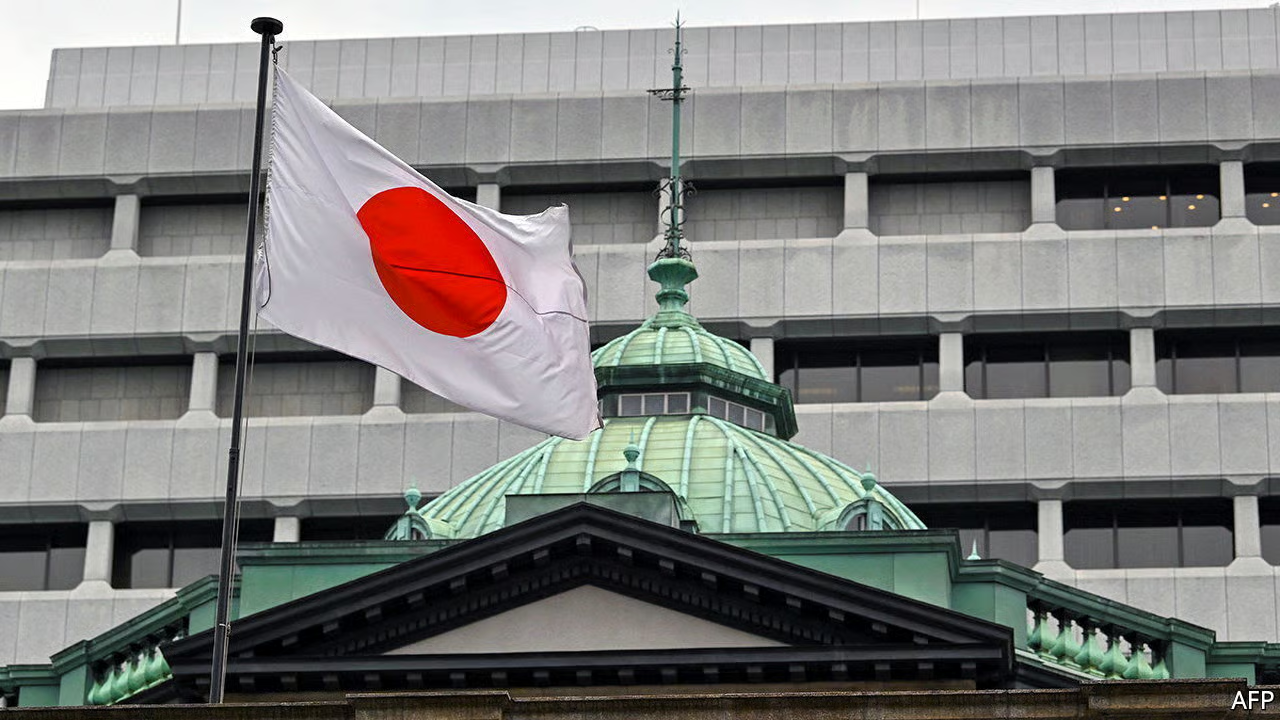
The Bank of Japan (BOJ) is widely expected to keep interest rates unchanged at its March 19 meeting. However, persistent inflation pressures and recent weakness in the Japanese yen could push the central bank toward a more hawkish outlook.
BOJ expected to hold rates steady
The BOJ is likely to maintain its short-term policy rate at around 0.75%, following a 25 basis point increase in December. Since then, policymakers have reiterated that further rate hikes will depend on improvements in inflation and economic growth in line with their forecasts.
Inflation outlook and energy risks
Inflation in Japan has softened in recent months, with core inflation slipping below the BOJ’s 2% target due to subdued consumer spending. However, the central bank expects price pressures to pick up later this year, driven in part by rising energy costs linked to the ongoing U.S.-Israel conflict with Iran.
Yen weakness adds pressure on policy
The Japanese yen has weakened sharply amid the geopolitical tensions, largely due to Japan’s heavy reliance on oil imports. Continued currency weakness could prompt the BOJ to adopt a more hawkish tone, as a weaker yen typically fuels imported inflation.
Strong economy supports future rate hikes
Japan’s economy performed better than expected in the fourth quarter of 2025, entering the new year with solid momentum. This economic strength provides the BOJ with more flexibility to raise interest rates in the future.
However, near-term uncertainty around wage growth—particularly during ongoing spring wage negotiations—is expected to keep the central bank on hold for now.
BOJ signals mixed policy stance
BOJ Governor Kazuo Ueda recently stated that underlying inflation is gradually moving back toward the 2% target, supported by rising wages. Still, he stopped short of reaffirming a clear commitment to further rate hikes.
At the same time, the government, led by Prime Minister Sanae Takaichi, has urged the central bank to maintain accommodative monetary conditions to support economic growth.
Analysts at ANZ expect the BOJ to emphasize its commitment to price stability while signaling readiness to tighten policy if needed. The bank forecasts a potential 25 basis point rate hike in April. Since early 2024, the BOJ has raised rates by a total of 85 basis points after ending its ultra-loose policy stance.
Impact on Nikkei 225
Japanese equities are likely to absorb a rate hold without major volatility. However, a strongly hawkish tone from the BOJ could pressure stocks, particularly if further tightening is signaled.
The Nikkei 225 has gained 5.9% so far in 2026, supported by softer inflation data. Any downside in equities may be limited if the BOJ highlights economic strength. Additionally, higher interest rates could benefit banking stocks, which make up a significant portion of the index.
USD/JPY outlook
The USD/JPY pair recently climbed to near a two-year high, driven mainly by rising oil prices linked to the Iran conflict. The yen’s weakness has prompted warnings from Japanese officials about excessive speculation.
A more hawkish stance from the BOJ could help stabilize the currency, as policymakers aim to curb inflationary pressures caused by a weaker yen.