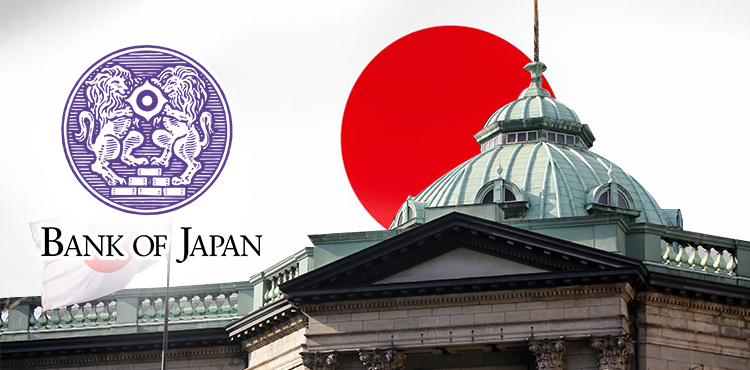
The Bank of Japan kept interest rates unchanged on Friday, a widely anticipated move, while upgrading its outlook for economic growth and inflation amid expectations of stronger fiscal support from the government.
The BOJ maintained its benchmark overnight call rate at 0.75%, with eight of the nine members of the policy board backing the decision. Board member Hajime Takata dissented, voting instead for a 25 basis point rate increase.
The pause followed a 25 bps rate hike in December, and markets broadly expected the central bank to hold fire until there is greater clarity on economic growth and wage trends.
In its policy statement, the BOJ reiterated that interest rates are likely to continue rising as economic activity and inflation progress in line with forecasts, with the central bank aiming to sustainably anchor inflation around its 2% annual target. Attention now turns to comments from BOJ Governor Kazuo Ueda, who is scheduled to hold a press conference later in the day.
BOJ upgrades growth and inflation forecasts
The central bank raised its projections for both growth and inflation for fiscal years 2025 and 2026. It now expects real gross domestic product to expand by 0.8% to 0.9% in fiscal 2025, up from a previous estimate of 0.6% to 0.8%.
For fiscal 2026, GDP growth was revised higher to a range of 0.8% to 1.0%, compared with the earlier forecast of 0.6% to 0.8%.
The BOJ slightly lowered its core consumer price inflation forecast for fiscal 2025, but increased its outlook for fiscal 2026. Core CPI is now seen rising between 1.9% and 2.0%, up from the prior range of 1.6% to 2.0%.
The central bank said it expects household spending and private consumption to strengthen, supported by government measures to reduce energy costs and planned tax reforms in 2026.
Analysts at Capital Economics said further tightening appears inevitable, noting that Japan’s real policy rate remains deeply negative. They expect the BOJ to raise rates again before July, despite near-term disinflation risks.
The policy decision followed data released earlier on Friday showing headline Japanese inflation fell to a near four-year low in December, although underlying inflation remained above the BOJ’s 2% target. The central bank said it expects inflation to cool in the first half of 2026 before firming again later in the year, while also forecasting continued tightness in the labor market as economic momentum improves.
The BOJ’s more optimistic outlook comes as Prime Minister Sanae Takaichi prepares to roll out higher fiscal spending and potential tax cuts. However, uncertainty over how these measures will be funded—particularly given Japan’s heavy debt burden—has triggered a sharp sell-off in Japanese government bonds in recent weeks.
The yen weakened slightly following the BOJ decision, while Japanese equities pared earlier gains. The Nikkei 225 was trading flat by early Asian hours.