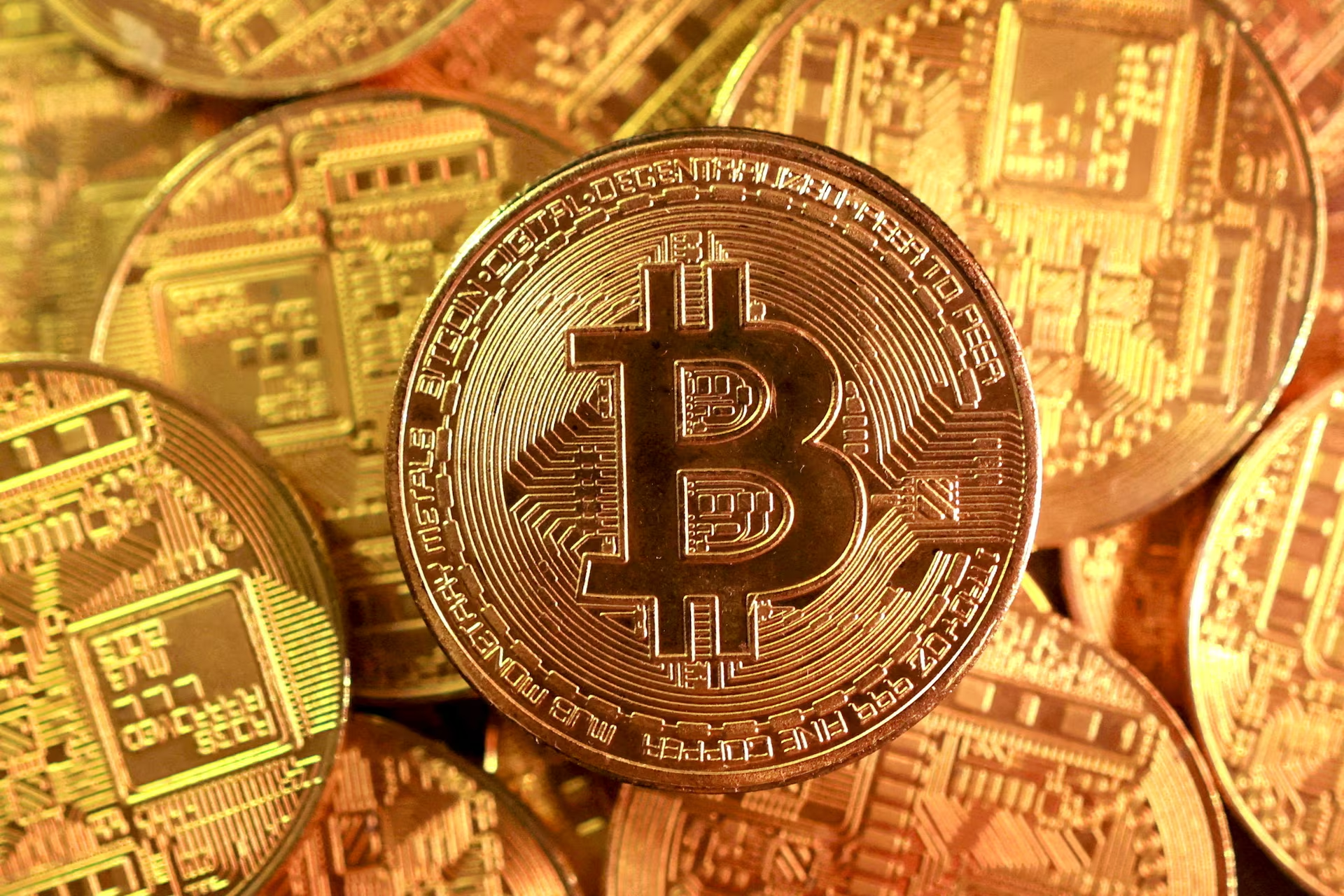
Bitcoin Rebounds After Trump Delays Iran Strikes
Bitcoin moved higher on Monday, recovering from earlier losses during Asian trading after Donald Trump announced that the United States would postpone planned attacks on Iran’s power infrastructure.
The world’s largest cryptocurrency climbed 4.1% to $71,060 by 07:34 ET (11:34 GMT), after briefly dropping to $67,363 earlier in the session.
Conflicting Signals From Iran and the U.S.
Despite the announcement, Iran’s Fars News Agency reported that no direct or indirect communication had taken place with Washington. The outlet added that the U.S. decision followed a warning from Tehran, which threatened to target energy infrastructure across West Asia if strikes were carried out.
Geopolitical Tensions Weigh on Crypto Markets
Bitcoin had come under pressure in the previous week as risk-sensitive assets were impacted by growing uncertainty surrounding the potential economic fallout of the Iran conflict, particularly regarding inflation and interest rate expectations.
Trump Signals Temporary Pause in Military Action
Cryptocurrency markets found support after Trump indicated a potential de-escalation. In a post on Truth Social, he described recent discussions as “very good and productive,” suggesting a path toward easing tensions in the Middle East.
He confirmed that planned strikes on Iranian infrastructure would be delayed for five days.
However, Iranian sources denied any negotiations, reiterating that the delay was driven by Tehran’s warning of retaliation targeting regional energy assets.
Rising Tensions Around the Strait of Hormuz
Prior to the delay, Bitcoin had been trading lower alongside global markets. Over the weekend, Trump warned that Iran had 48 hours to reopen the Strait of Hormuz or face U.S. military action targeting critical energy facilities.
In response, Tehran threatened to fully close the strategic waterway and strike key infrastructure across Gulf nations if provoked.
Bitcoin Outperforms Gold Amid Market Uncertainty
Over the past month, Bitcoin has shown relative strength compared to gold and other precious metals. While geopolitical risks typically support safe-haven assets, gold has struggled to attract sustained demand.
Bitcoin gained approximately 9% over the past month, whereas gold declined around 12% during the same period.
Gold prices came under pressure after hitting record highs in late January, as profit-taking and the unwinding of long positions weighed on the market. Additionally, concerns over persistent inflation and higher interest rates limited its appeal despite ongoing geopolitical tensions.
In contrast, Bitcoin benefited from improving regulatory sentiment in the United States and renewed interest from bargain hunters after a significant correction from its previous highs.
However, on a year-to-date basis, Bitcoin still trails gold, with the cryptocurrency down more than 19%, while gold remains relatively stable.
Altcoins Follow Bitcoin Higher
The broader cryptocurrency market also rebounded alongside Bitcoin.
Ethereum, the second-largest digital asset, rose 4.5% to $2,172.92, while XRP gained 2.8% to $1.42.
Other major tokens showed mixed performance. BNB, Solana, and Cardano recorded declines ranging between 2% and 3.5%. Among memecoins, Dogecoin increased by 2.2%, while $TRUMP advanced 3.3%.