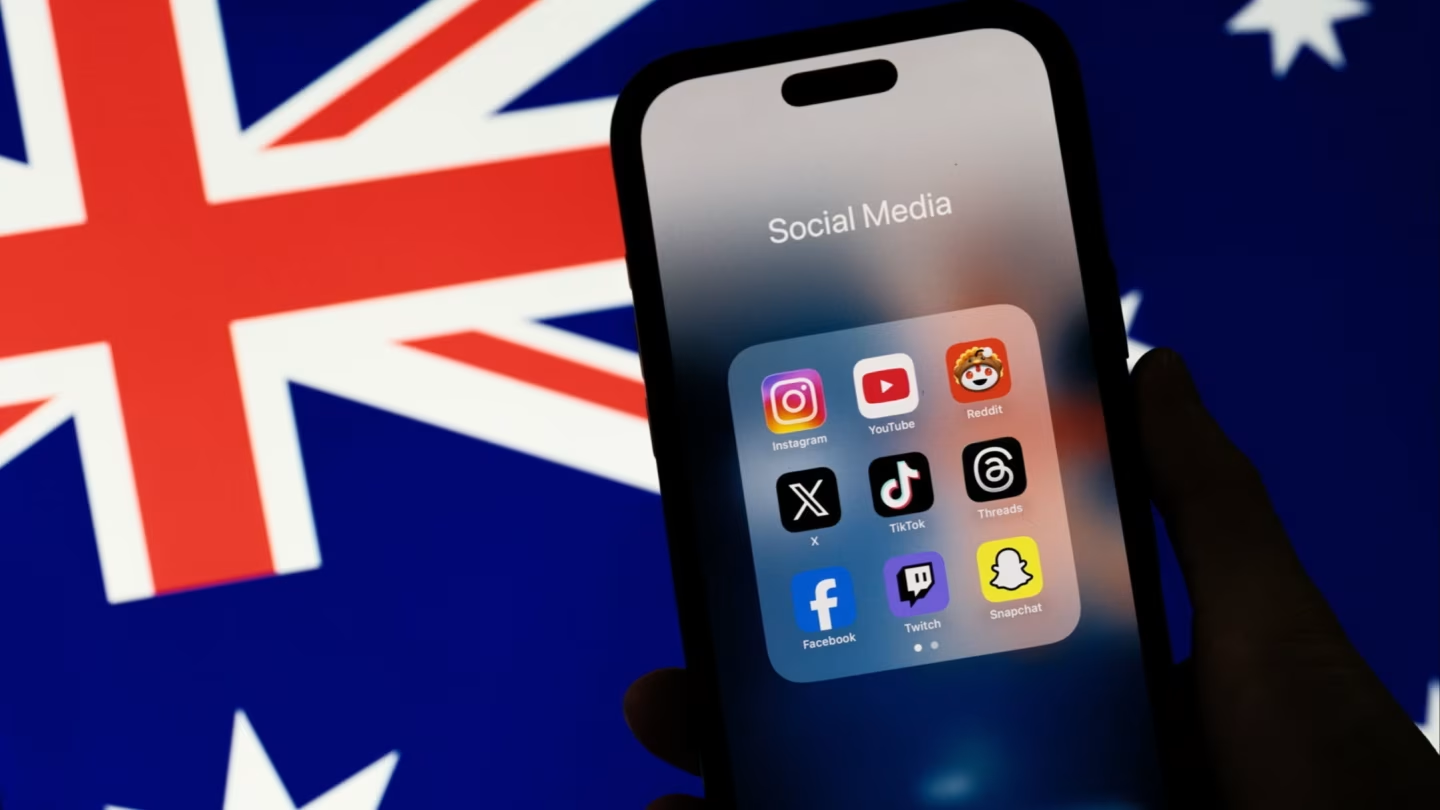
Australia has become the first country in the world to ban social media use for children under 16. The new rules, which took effect on Wednesday, require major platforms to block underage users or face steep fines. The move has been welcomed by many parents and child-safety advocates but strongly criticized by technology companies and free-speech groups.
Starting at midnight (1300 GMT Tuesday), ten of the largest platforms — including TikTok, YouTube, Instagram and Facebook — were legally required to restrict access for children under 16. Companies that fail to comply face penalties of up to A$49.5 million ($33 million). Regulators around the world are closely watching Australia’s rollout.
Prime Minister Anthony Albanese described the moment as “a proud day” for families, saying the law demonstrates that governments can respond to online harms that traditional safeguards have failed to address.
“This will make an enormous difference,” he said. “It is one of the biggest social and cultural changes our nation has faced and will continue to influence countries worldwide.”
Albanese encourages teens to read or try new activities
In a video message, Albanese urged young people to step away from screens and use their time for new hobbies or books ahead of the summer school break. Reactions among teenagers were mixed. Some expressed anxiety about losing access, while others felt indifferent.
“I’m not really that emotional about it,” said 14-year-old Claire Ni. Fifteen-year-old Luna Dizon said she still had access to her accounts but worried about the “culture shock” once enforcement strengthens. Still, she expected teens would eventually adapt.
Thousands of accounts already shut down
The government acknowledged the ban will not operate perfectly. Even so, around 200,000 TikTok accounts were deactivated by Wednesday, with hundreds of thousands more expected to be blocked soon. Many of the estimated one million children affected posted farewell messages such as “#seeyouwhenim16,” while others promised to seek workarounds.
Some teens openly questioned the effectiveness of the law. “We’re just going to create new ways to get on these platforms,” said Claire Ni, highlighting the challenge ahead.
A global test case for restricting youth access
Australia’s rollout follows a year of debate about whether any government can practically prevent children from using platforms deeply embedded in daily life. It is now seen as a test case for countries frustrated by tech firms’ slow progress on reducing online harm.
European lawmaker Christel Schaldemose said she supports stronger protections for young people and will watch Australia’s results closely. Several nations — including Denmark, New Zealand and Malaysia — have indicated they may study or even emulate the model.
The Albanese government introduced the ban after research linked excessive social media use among teens to mental health problems, cyberbullying, misinformation and negative body-image pressures.
Support from global advocates and growing parental demand
Julie Inman Grant, Australia’s eSafety Commissioner, said many U.S. parents are calling for similar protections. She added that families want governments to prioritize child safety over tech-industry profits.
Platforms comply — even reluctantly
X, owned by Elon Musk, was the last major platform to comply. The company said it would act as required by law, adding: “It’s not our choice.” Australia expects the list of covered services to evolve as new apps emerge and young users shift platforms.
Tech companies have told the government they will use a mix of age-inference tools, selfie-based age estimation and, in some cases, ID verification to enforce access restrictions. For the industry, the ban comes at a time when user growth has slowed and time spent on platforms has begun to decline.
While platforms earn relatively little from advertising to under-16s, they warn that the ban disrupts the pipeline of future users. Before the law took effect, 86% of Australians aged eight to fifteen were active on social media.