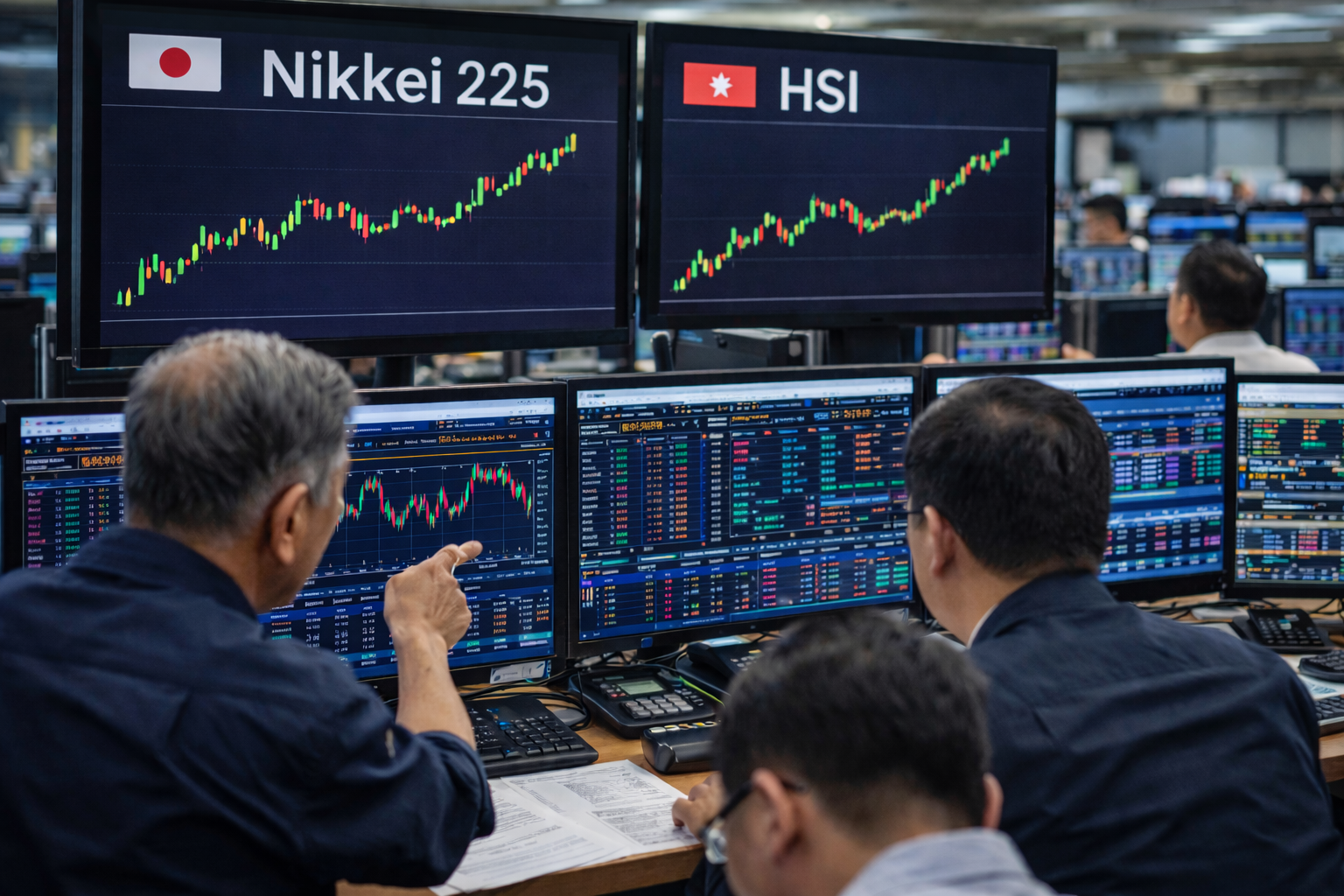
Asian stock markets showed mixed performance on Friday but remained on track for significant weekly losses, as escalating tensions in the Middle East and sharply rising oil prices continued to pressure investor sentiment across the region.
During Asian trading hours, Wall Street futures were mostly unchanged after major U.S. stock indexes extended their declines overnight.
Middle East conflict weighs on Asian markets
Market confidence has been shaken by the intensifying conflict involving Iran, Israel, and the United States, which entered its seventh day on Friday with no clear signs of easing.
The situation has raised concerns about potential disruptions to global energy supplies, particularly through the Strait of Hormuz, a key shipping route responsible for transporting nearly 20% of the world’s oil supply.
As a result, oil prices surged more than 15% this week, as traders priced in the risk of supply interruptions from the Middle East.
The sharp rise in crude prices has weighed heavily on Asian equities and currencies, especially in economies that rely heavily on energy imports, such as South Korea.
South Korea’s KOSPI index dropped 1% on Friday and was heading for a steep weekly decline of nearly 12%.
Japan’s Nikkei 225 gained 0.6% during Friday’s session, but the benchmark index was still on track to record a weekly loss of around 6%.
In China, both the Shanghai Composite Index and the CSI 300 were expected to finish the week more than 1% lower.
Meanwhile, Hong Kong’s Hang Seng Index rose 2% on Friday, though it remained set for a weekly drop of approximately 3%.
Oil price surge raises inflation concerns
The rapid increase in oil prices has also triggered renewed worries about global inflation, which could complicate the outlook for central banks such as the U.S. Federal Reserve.
Higher energy costs often translate into broader price pressures throughout the economy. This may make policymakers more cautious about cutting interest rates in the near future.
Investors are also monitoring developments on Wall Street, where stock markets have declined during the week amid geopolitical tensions and rising bond yields.
Market attention is now shifting toward key U.S. economic data, particularly the February nonfarm payrolls report, scheduled for release later on Friday. The employment figures could offer new insights into the strength of the U.S. economy and influence expectations for future Federal Reserve policy.
Elsewhere in Asia, India’s Nifty 50 index slipped slightly and was on track for a weekly loss of around 2%.
Australia’s S&P/ASX 200 index fell 1%, while Singapore’s Straits Times Index remained largely unchanged.