Most Asian currencies slipped on Monday, easing back after the sharp gains seen late last week when Federal Reserve Chair Jerome Powell signaled a possible interest rate cut in September.
The U.S. Dollar Index recovered slightly, rising 0.2% in Asian trading hours, after plunging nearly 1% to a four-week low on Friday following Powell’s dovish remarks.
Powell’s dovish tone boosts Asian currencies
At the Jackson Hole symposium on Friday, Powell highlighted growing risks to the labor market and suggested that the “shifting balance of risks may warrant adjusting our policy stance.” His comments fueled expectations of a quarter-point cut at the Fed’s September 16–17 meeting, with markets now pricing in more than an 85% chance of a rate reduction.
The weaker dollar sparked a strong rally in Asian currencies on Friday, but traders turned cautious on Monday, reassessing Powell’s words and waiting for further economic data before extending positions. ING analysts noted that “as soon as FX traders saw the headline reference to ‘adjusting policy,’ the dollar came off sharply, falling nearly 1% against major currencies.”
Regional moves and U.S.-India tariff tensions
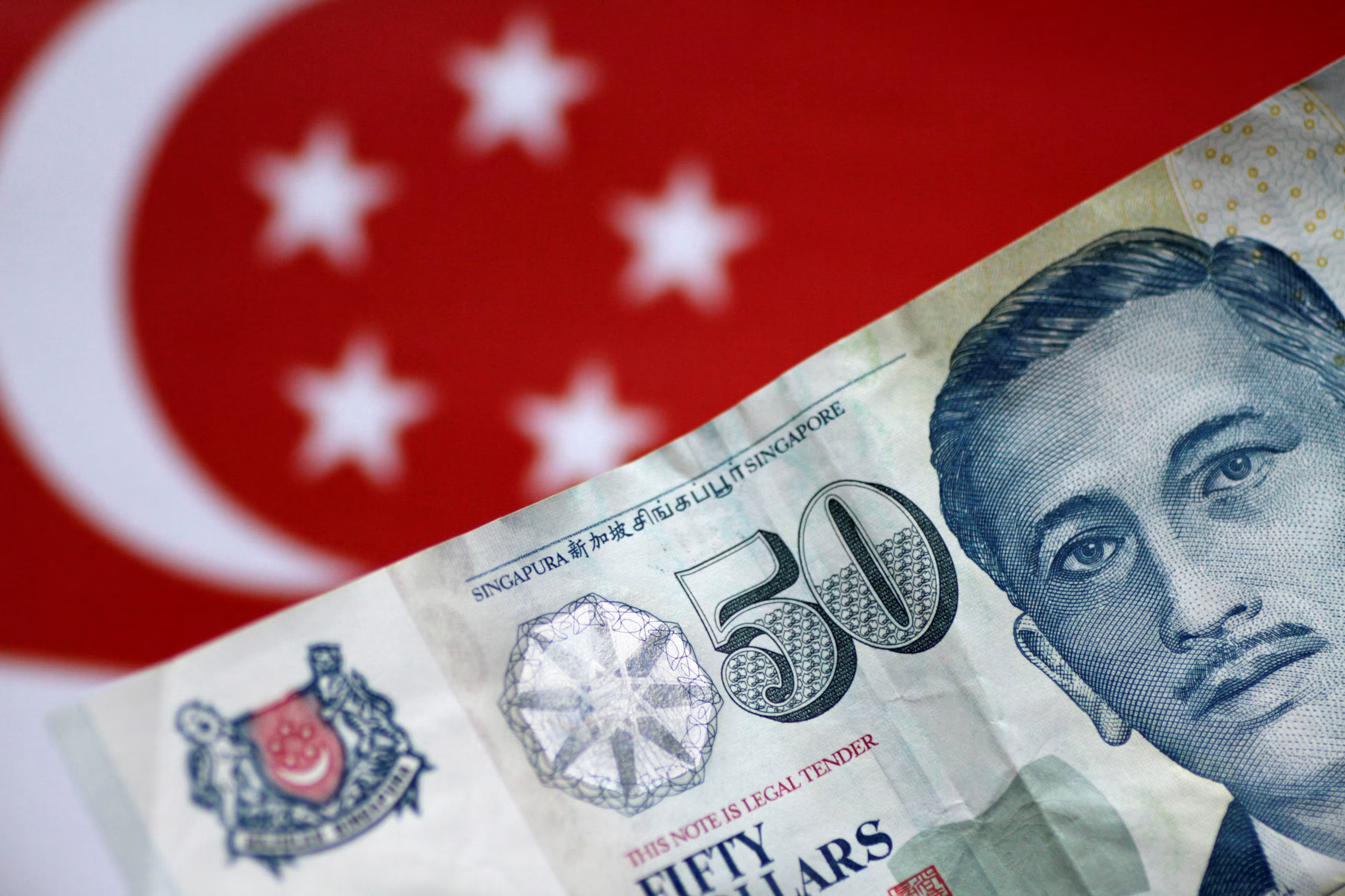
On Monday, the Japanese yen’s USD/JPY pair gained 0.3%, while the South Korean won’s USD/KRW rose 0.2%. Both had surged nearly 1% on Friday. The Chinese yuan was little changed, with USD/CNY steady onshore and USD/CNH down 0.1% offshore. The Australian dollar’s AUD/USD edged 0.1% lower, while the Singapore dollar’s USD/SGD rose 0.2% and the Indonesian rupiah’s USD/IDR climbed 0.4%.
The Indian rupee, however, came under pressure amid renewed trade friction with the U.S. Washington is preparing to impose an additional 25% tariff on Indian goods starting August 27 in response to India’s increased purchases of Russian oil. Indian officials expressed concern, stressing that while trade talks are ongoing, the government must prioritize protecting farmers and small producers.