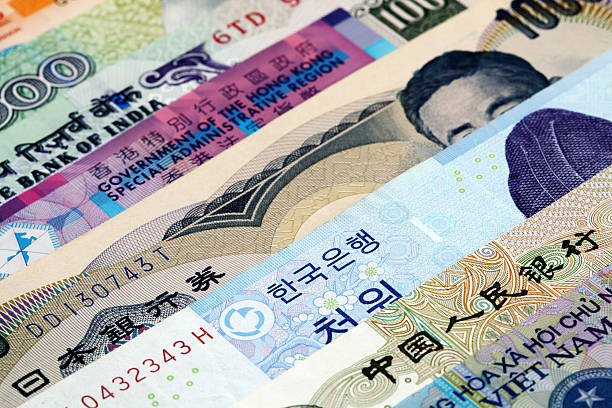
Most Asian currencies and the U.S. dollar held steady on Tuesday as investors remained cautious ahead of a potential U.S. government shutdown. The Australian dollar, however, strengthened after the Reserve Bank of Australia (RBA) kept interest rates unchanged.
Regional markets also digested weak factory output from Japan and mixed business activity readings from China.
The U.S. Dollar Index, which tracks the greenback against a basket of major currencies, edged 0.1% higher. Dollar Index futures were mostly flat as of 04:30 GMT.
RBA keeps rates steady; Aussie dollar gains
The RBA held its cash rate at 3.60% on Tuesday, matching expectations. Officials said they will wait for clearer signals from inflation and labor market data before making further moves. This pause follows three cuts earlier in 2025, as policymakers balance inflation risks with slowing economic momentum.
After the decision, the AUD/USD pair rose 0.5%, reflecting stronger demand for the Australian dollar.
U.S. government shutdown risk
Congress faces a Tuesday deadline to pass funding and avoid a shutdown. Such a closure could halt the release of key economic reports, including Friday’s nonfarm payrolls. The Labor Department has warned that the Bureau of Labor Statistics may be unable to publish jobs data if the shutdown begins.
This week’s calendar also features the JOLTS job openings report on Tuesday, jobless claims on Thursday, and the September payrolls report on Friday. Traders across Asia stayed cautious, avoiding major moves ahead of clarity on U.S. economic data and Federal Reserve policy.
Currency moves in Asia
The Japanese yen traded flat, while the Singapore dollar edged 0.1% higher. The South Korean won gained 0.2%, the Indian rupee was little changed, and the Chinese yuan also saw marginal moves, with the onshore rate up 0.1% and the offshore rate steady.
Japan and China data in focus
Japan’s factory output fell 1.2% in August from the previous month, marking a second straight decline and underlining industrial weakness. Retail sales also dropped at the fastest pace in four years, pointing to sluggish consumer demand.
In China, official PMI data showed manufacturing activity contracted for a sixth straight month, with services also weakening. However, a private survey from RatingDog suggested improvement, reporting the fastest manufacturing growth since March, driven by stronger new orders and export demand.