Asian Markets Trade Flat as Iran War Uncertainty Weighs
Asian stock markets moved within a narrow range on Thursday, as investors assessed mixed signals surrounding the conflict involving the United States, Israel, and Iran. A rebound in oil prices also added pressure to regional equities.
Despite positive cues from Wall Street overnight, sentiment remained cautious after Iran signaled it was reviewing a U.S. ceasefire proposal while ruling out direct negotiations.
Wall Street Momentum Fades
U.S. markets ended Wednesday below their session highs, reflecting uncertainty around geopolitical developments. Futures tied to the S&P 500 were slightly lower, indicating limited confidence heading into the next trading session.
South Korea Leads Losses as Chip Stocks Drop
South Korea’s KOSPI index was the weakest performer in the region, falling as much as 3%. The decline was largely driven by sharp losses in major semiconductor stocks.
Shares of Samsung Electronics and SK Hynix dropped around 4% and 5%, respectively.
The sell-off followed news that Google, part of Alphabet, introduced a new AI compression technology called TurboQuant, which could significantly reduce memory requirements for artificial intelligence models. If widely adopted, the technology may weaken demand for advanced memory chips.
Japanese Stocks Reverse Gains as Oil Measures Begin
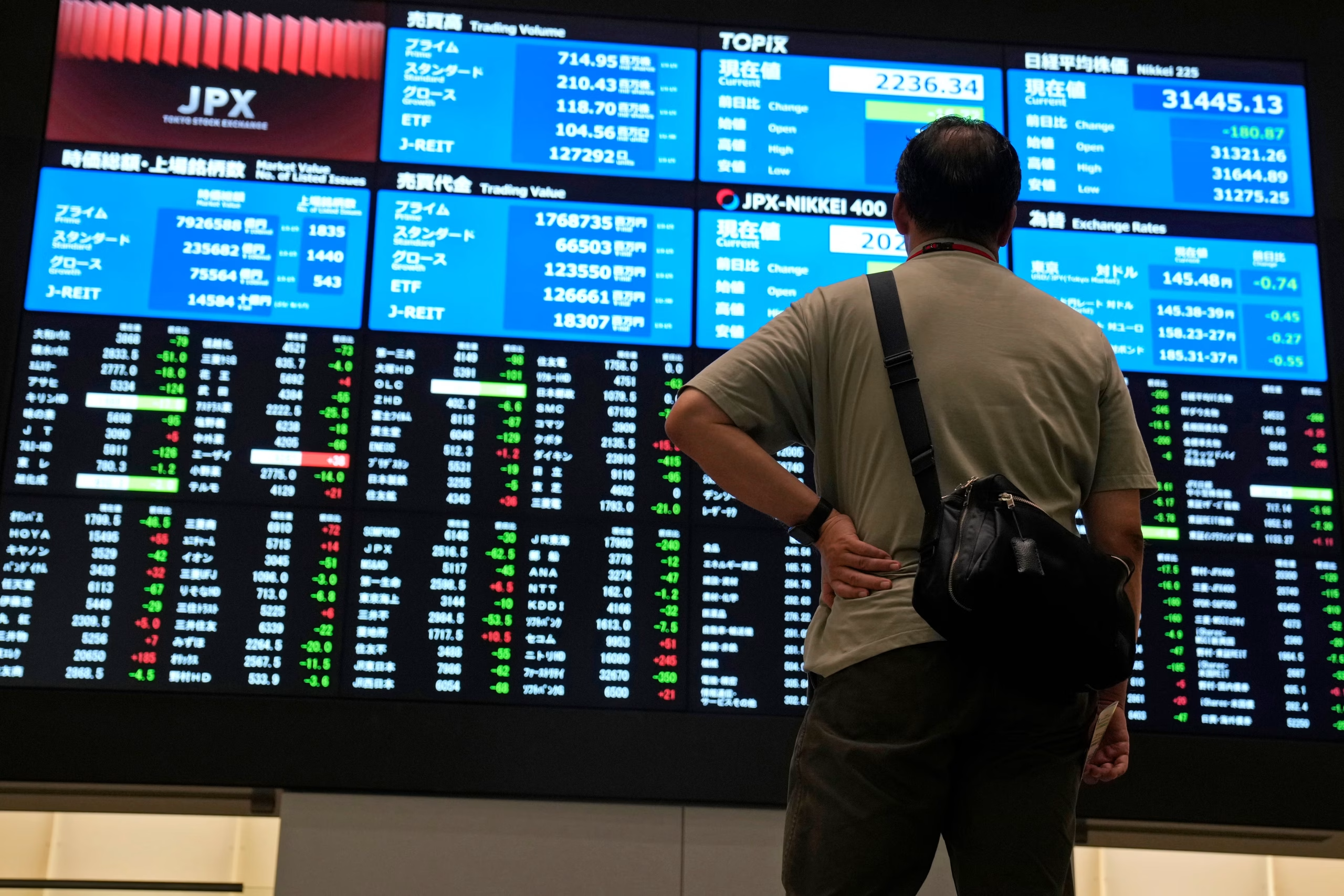
In Japan, both the Nikkei 225 and TOPIX indexes turned lower after early gains, declining by 0.2% and 0.6%, respectively.
The move came as the government began releasing oil from its emergency reserves to ease supply disruptions linked to the Iran conflict. Prime Minister Sanae Takaichi announced plans to release approximately 80 million barrels to domestic refiners.
Energy Concerns Weigh on Regional Outlook
The coordinated release of oil reserves reflects growing concern among global economies over energy supply disruptions. Many Asian countries remain particularly vulnerable due to their reliance on imported energy.
Ongoing tensions have already led to several weeks of losses across regional markets, as investors worry about the broader economic impact.
Broader Asian Markets Show Mixed Performance
Elsewhere in Asia, Australia’s ASX 200 declined 0.2%, while China’s Shanghai Composite and CSI 300 indexes fell around 0.3%. Hong Kong’s Hang Seng index dropped 1.4%.
Singapore’s Straits Times index stood out as a relative outperformer, rising 0.4%.
Strait of Hormuz Remains Key Risk Factor
The conflict has now entered its fourth week with little sign of resolution. Iran continues to restrict activity in the Strait of Hormuz, a critical passage that accounts for roughly 20% of global oil and gas flows.
While markets briefly found support after the U.S. proposed a 15-point ceasefire plan, Iran initially rejected the offer and later indicated it would review it—while still refusing direct negotiations with Washington.