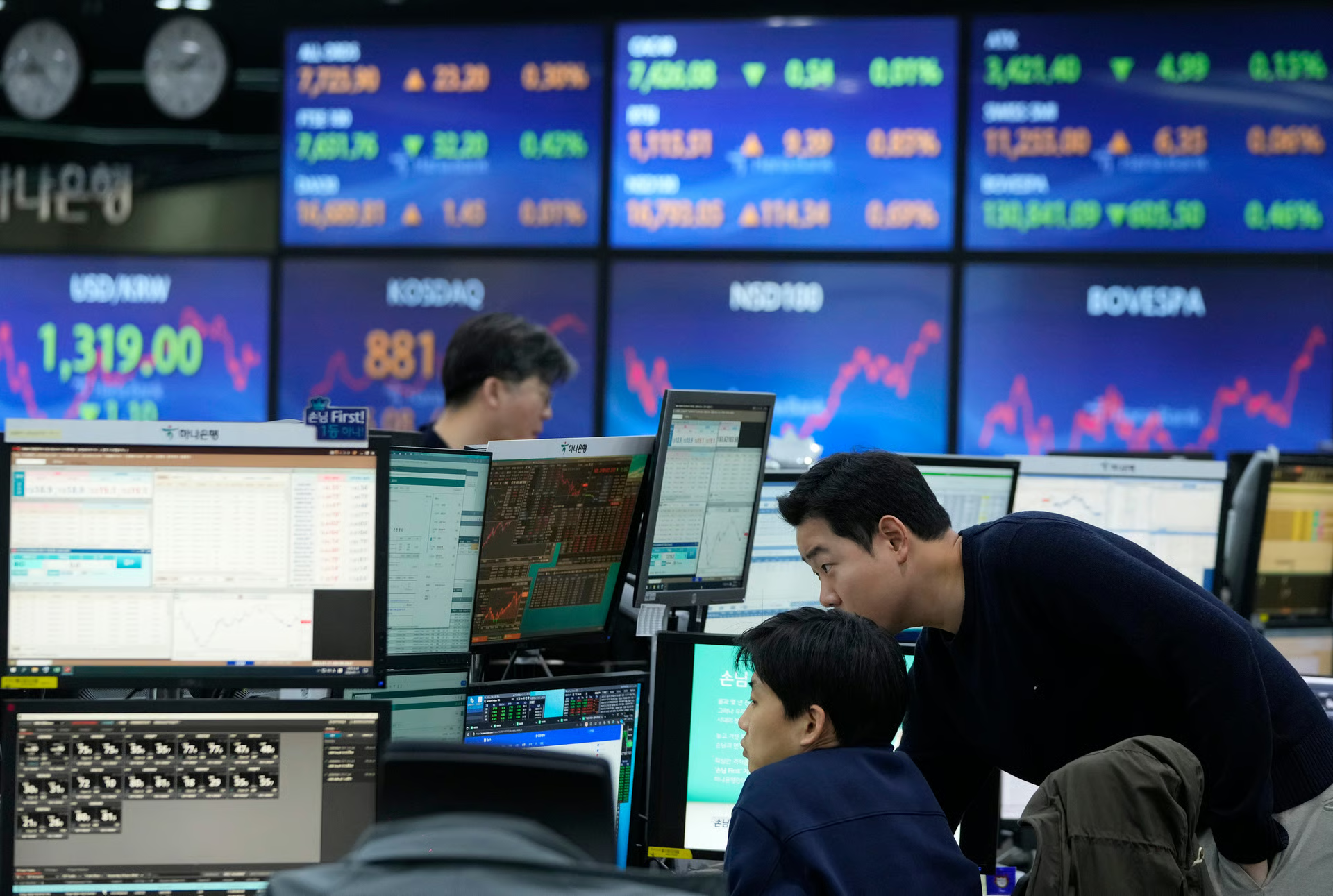
Asian stock markets closed mostly lower on Friday as investors turned cautious amid rising uncertainty over U.S. interest rates and escalating geopolitical tensions involving Iran. The risk-off sentiment pushed traders away from higher-risk assets across the region.
South Korea stood out as a rare bright spot. The KOSPI index extended its rally, climbing to fresh record highs as optimism around domestic equities remained strong following a recent technology-led surge.
Regional markets took negative cues from Wall Street, where major indices declined overnight on growing macroeconomic concerns. S&P 500 futures edged up slightly in early trade, with investors awaiting key U.S. inflation and economic growth data later in the day. Chinese markets remained closed due to the Lunar New Year holiday.
Japan and Hong Kong Lead Regional Declines
Japan’s Nikkei 225 dropped 1.4%, while the broader TOPIX index fell 1.2%, making them the weakest performers in Asia. Japanese equities declined after mixed economic data releases. National consumer price index (CPI) inflation slowed to its lowest level in nearly four years in January, while core inflation eased but stayed above the Bank of Japan’s 2% target.
At the same time, purchasing managers’ index (PMI) data showed that factory activity expanded at its fastest pace in four years, supported by strong overseas demand.
Hong Kong’s Hang Seng index slipped 0.6% as trading resumed after a three-day break. Technology stocks tracked earlier global losses. Alibaba and Baidu were among the biggest decliners, falling between 4% and 6%, after being briefly listed by U.S. authorities in a report alleging links to the Chinese military. BYD also moved lower following its mention in the same document.
Elsewhere in the region, markets traded in a narrow range. Australia’s ASX 200 fell 0.2%, while Singapore’s Straits Times index gained 0.1%. India’s Nifty 50 was largely unchanged, with technology stocks under pressure despite reports of new artificial intelligence ventures.
Investor sentiment remained fragile after U.S. President Donald Trump set a 10 to 15-day deadline for Iran to reach a nuclear agreement, warning of potential U.S. action if no deal is achieved. Reports suggesting Washington is considering additional military strikes further weighed on risk appetite.
South Korea’s KOSPI Hits Record High
In contrast to broader regional weakness, South Korea’s KOSPI surged more than 1.6% to a record high of 5,768.61 points, marking a second consecutive session of all-time highs.
While Thursday’s rally was driven by technology shares, Friday’s gains were led by brokerage, defense, and insurance stocks. Local media reported strong buying interest from retail investors, even as foreign investors continued to sell.
Separately, South Korea’s top court sentenced former President Yoon Suk-Yeol to life imprisonment on charges related to an attempted insurrection in late 2024, adding a political backdrop to an otherwise strong equity performance.