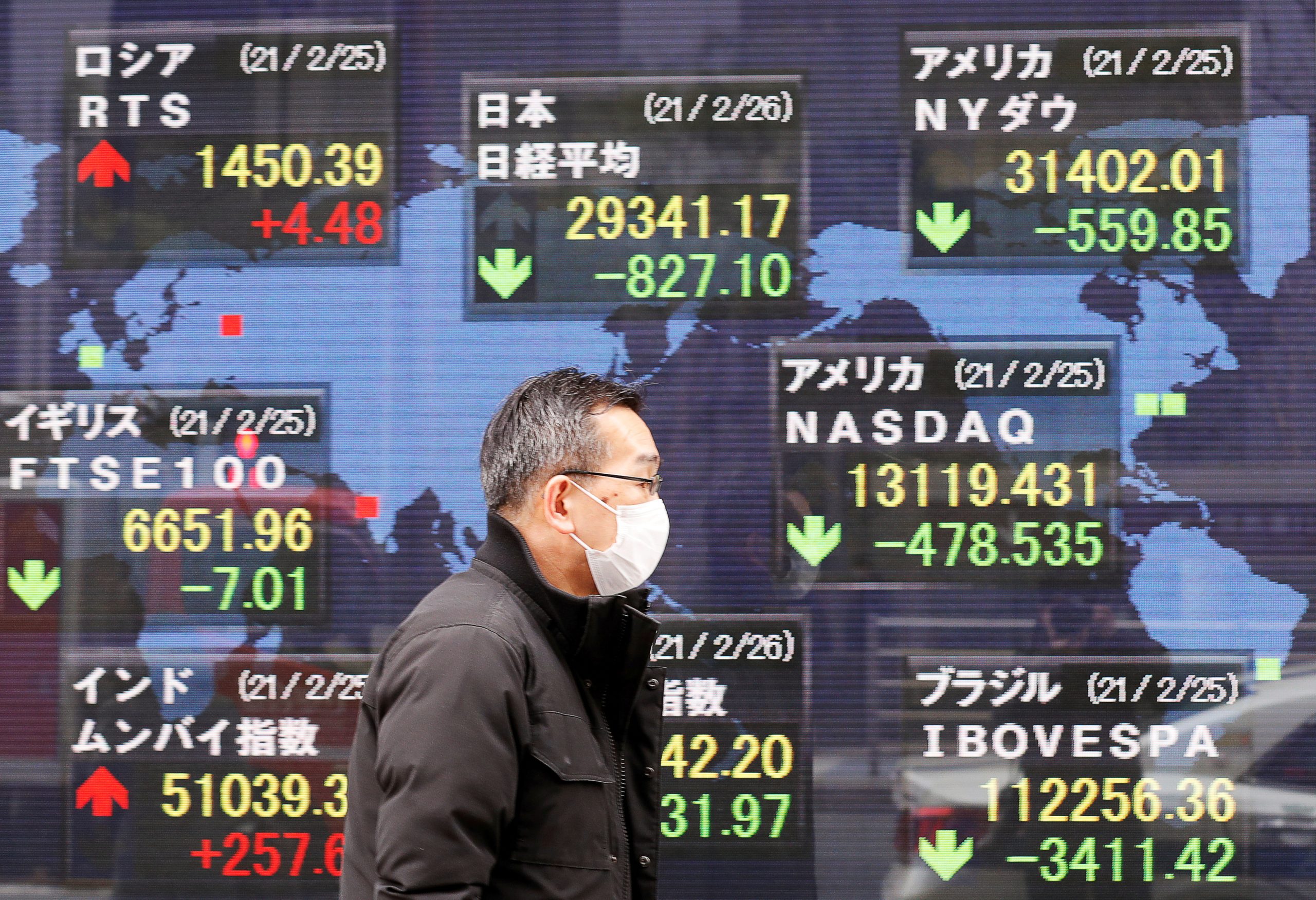
Most Asian equity markets moved modestly higher on Tuesday, following overnight gains on Wall Street. Investor sentiment was supported by a rebound in U.S. technology stocks and signs that inflation pressures are easing, although trading activity remained muted due to thin year-end volumes.
U.S. stock benchmarks ended higher for a third consecutive session on Monday, while futures linked to major indices were steady during Asian trading hours, providing a supportive backdrop for regional markets.
Asian stocks edge higher on light volumes
Wall Street’s strength was driven largely by gains in semiconductor stocks and growing expectations that softer inflation could give the Federal Reserve more flexibility to cut interest rates next year. This lifted risk appetite across Asian markets.
However, participation remained limited as investors reduced exposure and avoided large positions ahead of upcoming holidays. Year-end trading typically brings lower liquidity, which can amplify short-term price movements while keeping broader momentum restrained.
China’s Shanghai Composite rose 0.3%, while the CSI 300 index climbed 0.6%. Hong Kong’s Hang Seng index added 0.4%.
South Korea’s KOSPI advanced 0.4%, and Singapore’s Straits Times Index edged up 0.3%. Futures linked to India’s Nifty 50 were slightly higher, up 0.1%.
RBA minutes and Japan FX stance draw attention
Australian shares outperformed, with the S&P/ASX 200 jumping more than 1%. Mining stocks led gains, supported by rising commodity prices.
Minutes from the Reserve Bank of Australia’s latest policy meeting showed officials had discussed the possibility that interest rates could rise in 2026 if inflation remains stubborn. The minutes underscored the central bank’s continued emphasis on price stability, despite recent market expectations for a more dovish policy path.
In Japan, the Nikkei 225 finished largely flat, while the broader TOPIX index gained 0.6%.
Japan’s finance minister, Satsuki Katayama, said authorities have full flexibility to respond to excessive movements in the yen. Her comments reinforced market expectations that Tokyo remains vigilant against sharp currency swings that could unsettle financial markets.
Currency movements remain an important factor for Japanese equities, as a weaker yen typically supports export-driven sectors by boosting overseas earnings, while sudden currency strength can weigh on stock prices.