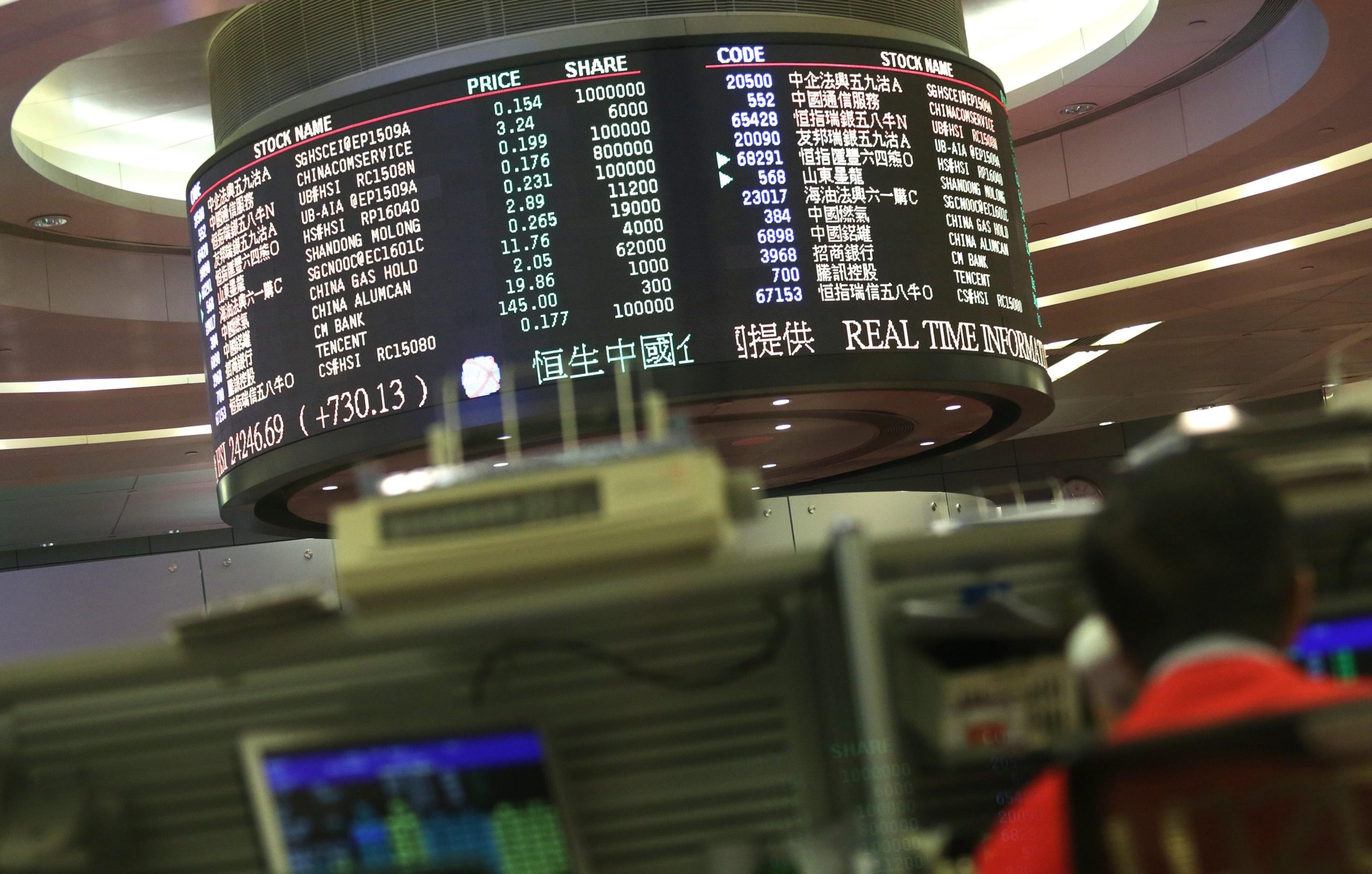
Asian stock markets held on to gains on Friday, tracking the positive momentum from Wall Street, while the yen weakened after the Bank of Japan raised interest rates to their highest level in three decades and signaled openness to further tightening.
The Bank of Japan increased its policy rate to 0.75%, a move that was widely expected by markets. The initial reaction was a sell-off in the yen, as investors awaited more detailed guidance from Governor Kazuo Ueda during his press conference later in the session.
Markets have been pricing in just one additional rate hike next year, potentially taking rates to 1.0%. However, Ueda has previously indicated that a neutral rate range could lie between 1.0% and 2.5%, prompting caution among investors in case stronger signals emerge for more aggressive tightening in 2026.
According to Capital Economics senior Asia-Pacific economist Abhijit Surya, real interest rates in Japan remain deeply negative even after the latest hike, suggesting that further policy tightening is likely. He added that incoming economic data may surprise to the upside, with rates potentially reaching 1.75% by 2027.
Fresh data released on Friday showed Japan’s core consumer price index rose 3.0% year-on-year in November, unchanged from the previous month.
In currency markets, the U.S. dollar rose 0.3% to 156.03 yen, while the euro also gained 0.3% to 182.96 yen. Japan’s 10-year government bond yield held steady at 1.975%, just below an 18-year high.
Equity markets across Asia advanced broadly. Japan’s Nikkei climbed 1.3%, following Wall Street’s overnight rally. South Korea’s benchmark index gained 0.8%, while Taiwan rose 1.3%, supported by strong earnings from chipmaker Micron Technology. MSCI’s Asia-Pacific index excluding Japan added 0.7%, and Chinese blue-chip stocks rose 0.6%.
In corporate news, TikTok’s Chinese parent ByteDance announced a deal with three major investors to establish a joint venture to operate TikTok’s U.S. business, aiming to avoid a potential U.S. government ban.
European markets opened weaker, with EUROSTOXX 50 and FTSE futures both down 0.3%, while DAX futures slipped 0.2%. U.S. equity futures were mixed, with S&P 500 futures flat and Nasdaq futures edging up 0.2%.
Market sentiment received some support from a surprise slowdown in U.S. consumer inflation to 2.7%. However, analysts cautioned that the data may have been temporarily distorted by the government shutdown and should be interpreted carefully. Expectations for Federal Reserve rate cuts shifted only slightly, with January cuts still seen as unlikely and March expectations rising modestly.
U.S. Treasury markets reacted cautiously, with 10-year yields holding at 4.126%, below recent highs. In the UK, government bonds weakened after the Bank of England cut interest rates following a narrow 5–4 vote, while signaling a gradual approach to future easing.
The European Central Bank adopted a more hawkish stance, keeping rates at 2.0% and suggesting the easing cycle may be nearing an end. Markets now assign only a small probability of rate cuts through 2026. Central banks in Sweden and Norway also held rates steady, although Norway left room for possible future cuts.
In commodities, gold slipped 0.3% to $4,319 per ounce, remaining below its October peak. Silver saw profit-taking after recent gains, while demand for palladium and platinum stayed firm.
Oil prices found modest support from potential new U.S. sanctions on Russia and ongoing supply risks linked to a blockade of Venezuelan oil tankers. Brent crude edged down 0.2% to $59.71 per barrel, while U.S. crude eased 0.3% to $56.00 per barrel.