Asian Currencies Slip as Fed Rate Cut Bets and Tariff Risks Weigh
Most Asian currencies weakened on Tuesday as traders awaited key U.S. jobs data later this week. The report is expected to confirm whether the Federal Reserve will cut rates in September. Meanwhile, the Indian rupee hovered near record lows under pressure from new U.S. tariffs.
As of 02:50 GMT, the U.S. Dollar Index was up 0.1% in Asian hours, though it remained weaker after a monthly decline.
U.S. Jobs Data in Focus
Markets are waiting for Friday’s nonfarm payrolls report for August. The numbers will be crucial in shaping expectations for a Fed rate cut. According to CME FedWatch, traders are pricing in an 87% chance of a 25-basis-point cut at the September 16–17 meeting.
Fed Chair Jerome Powell recently signaled at Jackson Hole that policymakers were prepared to ease policy if inflation continues to moderate and the labor market softens. Analysts at ING noted that revisions in July’s jobs data were a key trigger for Powell opening the door to a rate cut.
Consensus for August sits at around +75,000 new jobs, with the unemployment rate expected to edge up to 4.3% from 4.2%.
Tariff Pressures and Currency Moves
Uncertainty over U.S. trade tariffs also weighed on sentiment. A U.S. appeals court recently ruled that most of President Donald Trump’s tariffs were illegal, though the levies will remain in place until October 14 as the administration appeals to the Supreme Court.
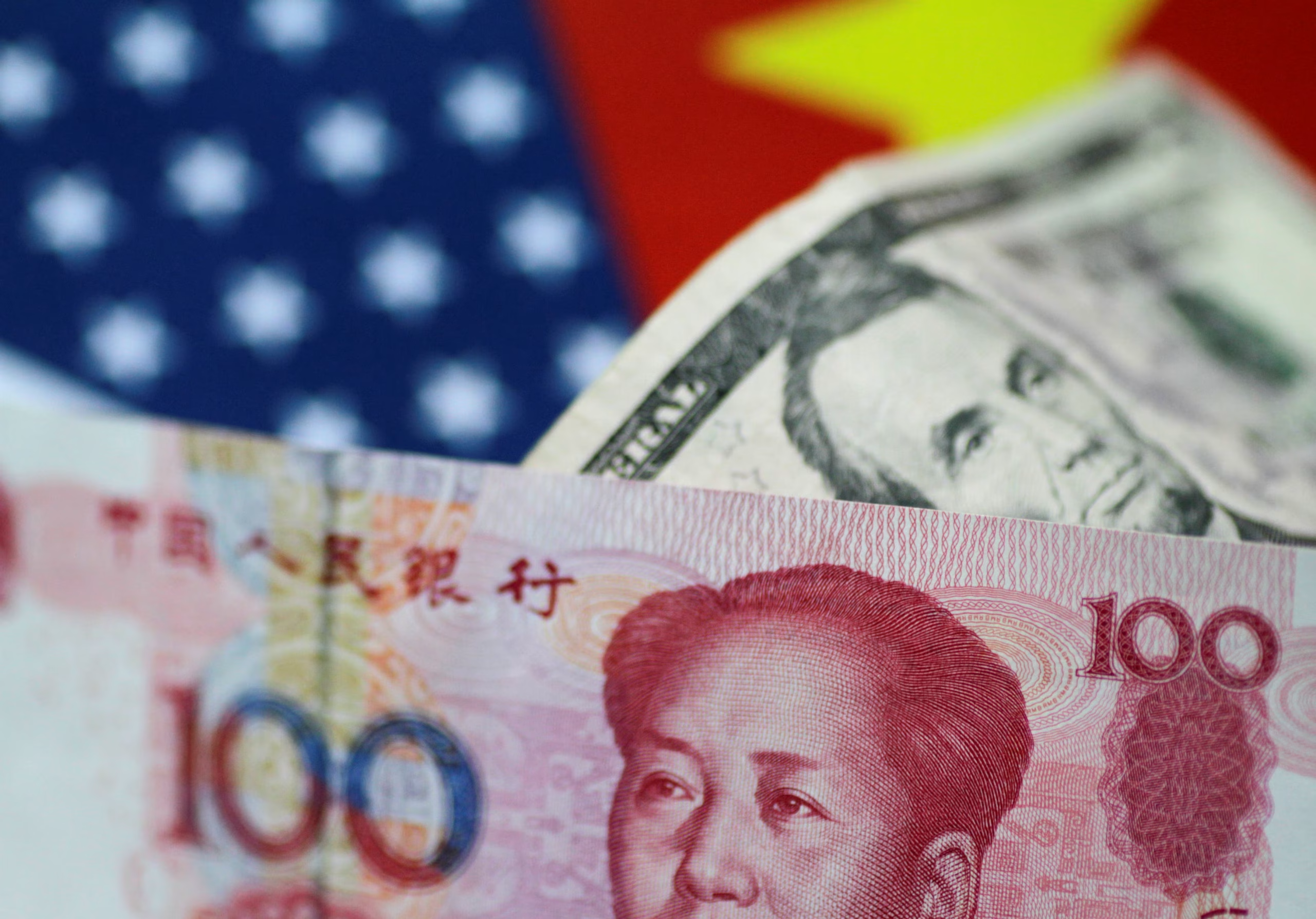
The Japanese yen gained 0.3% against the dollar, while the Singapore dollar edged 0.1% higher. In China, both the onshore and offshore yuan rose 0.1%. South Korea’s won slipped 0.1% after softer August inflation raised expectations of a Bank of Korea rate cut in October.
The Indian rupee dropped 0.2% to 88.147 per dollar, close to its all-time low of 88.34. Pressure on the rupee intensified after Washington raised tariffs on Indian goods to 50% from August 27 in response to India’s continued purchase of Russian oil.
Elsewhere, the Australian dollar eased 0.1% against the U.S. dollar.