
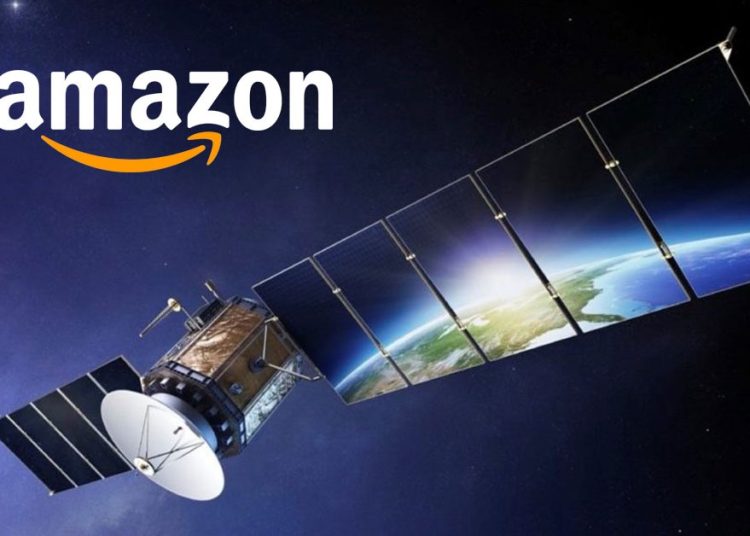
Amazon’s Kuiper Set to Challenge Starlink in Satellite Broadband, Says Barclays
Amazon’s Project Kuiper may be the underdog in the satellite broadband race, but a faster launch pace and strong AWS integration could soon position it as a serious rival to SpaceX’s Starlink, according to a recent note from Barclays analysts.
Faster Launches and Cloud Integration Give Kuiper an Edge
Barclays sees Kuiper’s accelerating satellite launch schedule and support from Amazon Web Services (AWS) as major advantages. These factors could help Amazon (NASDAQ: AMZN) compete more effectively with Starlink as Kuiper prepares for full commercial operations.
Starlink Leads for Now, But Kuiper Is Gaining Ground
Currently, Starlink serves over 6 million users globally, including 2 million in the U.S. In contrast, Kuiper is still in its early stages, with 285 satellites expected in orbit by the end of the year. Commercial service is planned for as early as the first half of 2026.
Smaller, Smarter Terminals May Lower Kuiper’s Costs
Kuiper’s new half-duplex terminal design allows for higher data speeds in a smaller, lighter device. Barclays believes this could lead to lower production costs compared to Starlink’s larger units.
Maritime and Government Markets Offer Big Potential
Barclays also highlights maritime and government sectors as major growth areas. While Starlink already serves 75,000 vessels and holds several government contracts, Kuiper is preparing to enter these markets. Maritime, in particular, is seen as a major early opportunity for Amazon.
AWS Integration Could Give Kuiper a Performance Boost
A key advantage for Kuiper is its tight connection to Amazon’s AWS cloud infrastructure. This integration is expected to improve latency and performance, offering a possible edge over Starlink’s standalone network design.
Starlink Is Also Evolving Rapidly
Despite rising competition, Starlink continues to innovate. Recent upgrades have lowered its latency to 8% below the U.S. wireless median. The company is also preparing to launch next-generation V3 satellites by early 2026, promising more than 10 times the bandwidth—if SpaceX’s Starship rocket development stays on track.
A Competitive Future in Global Satellite Internet
As Kuiper and Starlink expand into new markets and improve their technologies, the satellite broadband industry is entering a new phase. The competition will likely lead to faster speeds, lower costs, and better connectivity—especially in underserved and remote regions worldwide.