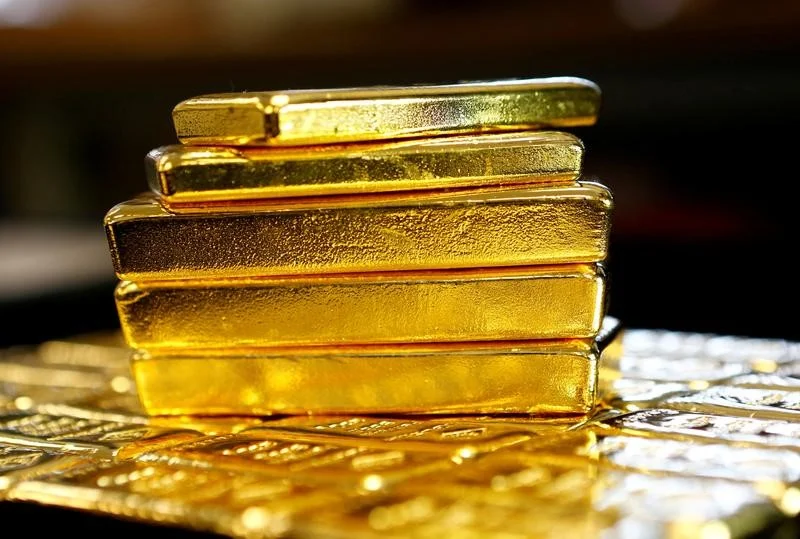
Gold prices climbed sharply on Wednesday, November 4, 2026, rising above $3,975 per ounce as a weakening US dollar supported demand for precious metals.
The recovery came as investors evaluated diplomatic efforts to resolve the US-Iran conflict and assessed the economic implications of the US midterm elections.
Spot gold advanced 1.2% to $3,978.71 per ounce at 06:11 GMT, while US gold futures gained 1.2% to $3,988.95.
Meanwhile, the US Dollar Index declined 0.4% to 101.50, making dollar-denominated bullion more attractive to international investors.
The latest movements highlight the influence of currency fluctuations, geopolitical uncertainty and Federal Reserve monetary policy expectations on gold prices.
Gold Price Rallies as US Dollar Weakens
Gold extended its recovery during Wednesday’s trading session, benefiting from renewed weakness in the US currency.
A declining dollar generally supports gold prices because the precious metal becomes less expensive for investors holding other currencies.
The latest increase followed a volatile period for bullion, with investors adjusting their positions amid conflicting signals regarding the Middle East conflict.
Gold had gained nearly 2% earlier in the week before experiencing a modest pullback.
However, renewed dollar weakness helped the precious metal regain upward momentum.
The recovery also supported other precious metals, which recorded gains across the board.
Silver advanced 1.6% to $50.5675 per ounce, while platinum increased 1% to $1,432.93.
Meanwhile, spot palladium climbed 1.7% to $952.50, with palladium futures gaining 2% to $948.75.
These movements reflected broader strength across the precious metals market.
US-Iran Peace Talks Keep Gold and Oil Markets Volatile
Geopolitical uncertainty remains a major factor influencing commodity prices.
Investors continue monitoring diplomatic negotiations between Washington and Tehran as international mediators attempt to prevent renewed large-scale military confrontation.
According to reports, both governments are reviewing fresh proposals aimed at resolving outstanding disagreements.
However, conflicting statements regarding the progress of negotiations have created uncertainty about the likelihood of a diplomatic breakthrough.
Oil prices fluctuated within a range of approximately $5 per barrel on Tuesday as traders reacted to developments surrounding the negotiations.
The diplomatic activity followed limited US airstrikes on Iranian targets on Qeshm Island, near the strategically important Strait of Hormuz.
Regional tensions had pushed oil prices higher during the previous month.
Nevertheless, energy markets reversed some of those gains after indications that the White House was prepared to allow additional time for diplomatic discussions.
The outcome of US-Iran negotiations could significantly influence gold prices, particularly through changes in energy costs, inflation expectations and monetary policy.
Rising Oil Prices and Interest Rates Influence Gold Demand
Gold and crude oil have frequently moved in opposite directions during recent trading sessions.
Higher energy prices can increase inflationary pressures throughout the global economy.
When inflation expectations rise, central banks may respond by maintaining higher interest rates or introducing additional monetary tightening.
This environment can create challenges for gold.
Unlike government bonds and other interest-bearing investments, bullion does not generate regular income.
Consequently, higher interest rates can increase the opportunity cost of holding the precious metal.
However, falling oil prices could help ease inflation concerns and reduce expectations for additional Federal Reserve rate increases.
Such a development could provide support for gold, especially if US Treasury yields and the dollar continue to weaken.
At the same time, escalating geopolitical tensions may increase demand for gold as a traditional safe-haven asset.
These competing forces help explain the volatility observed in precious metals markets.
Gold Prices Recover After Sharp October Decline
Despite Wednesday’s gains, gold remains under pressure following a difficult October.
The precious metal declined nearly 7% during the previous month, eventually falling below the psychologically important $4,000-per-ounce threshold.
The selloff was partly linked to weakness in artificial intelligence-related investments.
As technology markets experienced volatility, some investors reportedly liquidated gold holdings to cover losses or meet financial obligations elsewhere.
This selling pressure contributed to bullion’s broader decline.
Furthermore, gold has fallen approximately 25% since the US-Iran conflict began in late February.
Although geopolitical conflicts can traditionally support safe-haven demand, the resulting increase in energy prices has complicated the outlook.
Persistent inflation and tighter monetary policy have weighed heavily on the metal throughout the conflict.
Nevertheless, the latest recovery suggests that investors are reassessing gold’s prospects as currency markets and geopolitical conditions evolve.
US Midterm Elections Add Uncertainty to Gold Outlook
Political developments in Washington have also become an important driver of financial market sentiment.
The November 3 US midterm elections delivered significant Democratic gains, with the party securing control of both chambers of Congress.
The result could reshape expectations surrounding government spending, fiscal policy and the direction of President Donald Trump’s economic agenda.
A divided political environment between Congress and the White House may also increase the likelihood of legislative gridlock.
For gold investors, these developments are important because government borrowing, inflation expectations and fiscal uncertainty can influence demand for safe-haven assets.
Changes in Federal Reserve interest rate expectations could have an additional impact on bullion prices.
Consequently, traders are closely monitoring both political developments and upcoming US economic indicators.
Gold Price Outlook: Will Bullion Reclaim $4,000?
Gold’s recovery above $3,975 has brought the important $4,000 psychological level back into focus.
The precious metal subsequently moved above $4,000 during Wednesday’s trading, supported by continued dollar weakness and declining Treasury yields.
However, the sustainability of the recovery remains uncertain.
Several factors could determine the next major direction for gold, including progress in US-Iran negotiations, movements in oil prices and changes in Federal Reserve interest rate expectations.
A sustained decline in the dollar and bond yields could provide additional support for bullion.
Conversely, renewed inflation concerns or expectations of tighter monetary policy could create fresh selling pressure.
For now, gold remains highly sensitive to geopolitical developments and US economic policy, with investors closely watching whether the latest recovery can develop into a sustained upward trend.