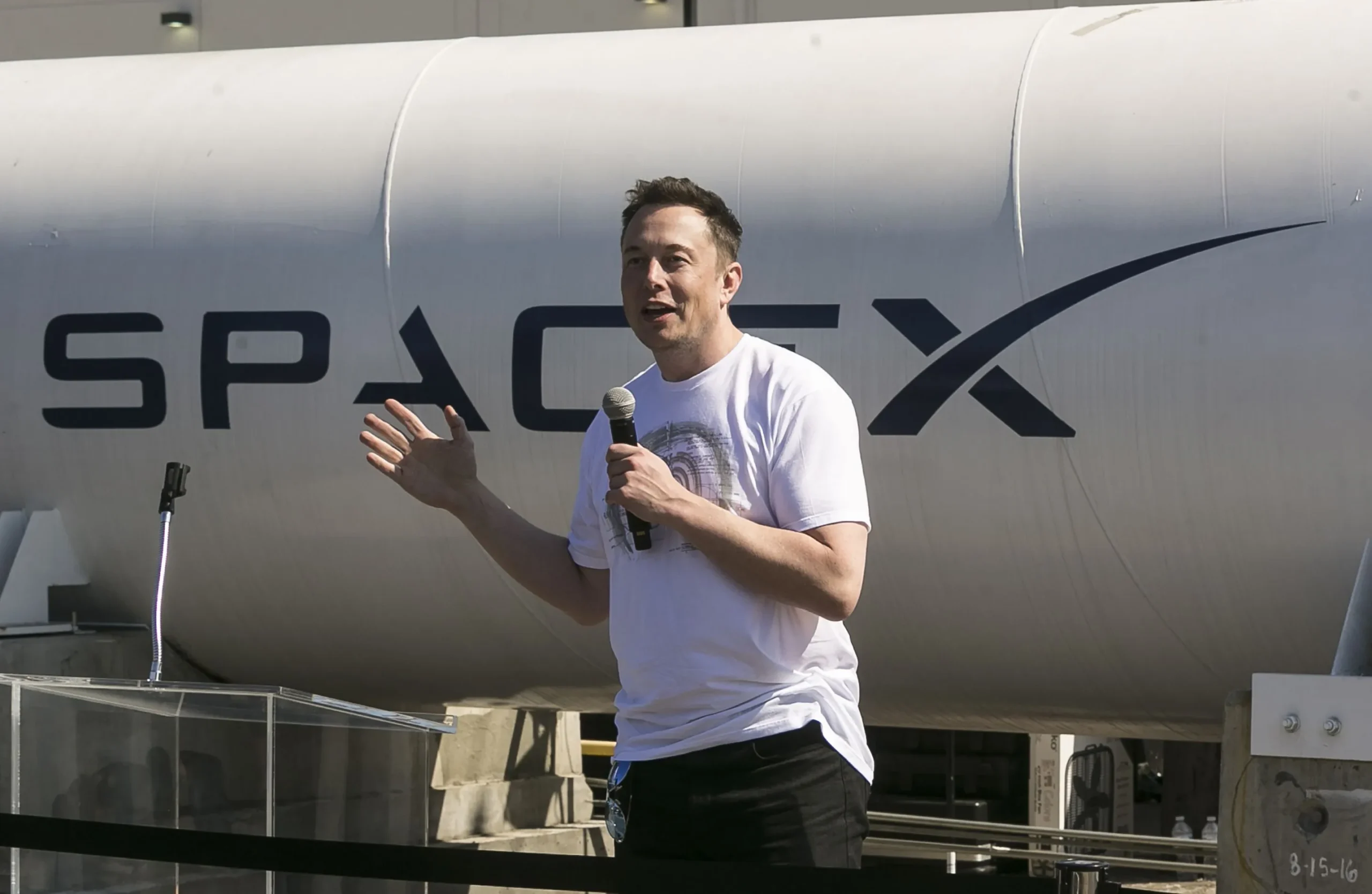
Elon Musk announced that SpaceX (NASDAQ: SPCX) has secured $40 billion in debt financing to purchase artificial intelligence chips, highlighting the enormous investment required to expand AI computing infrastructure.
However, the billionaire entrepreneur also warned that more than 200 specialized AI cloud providers, commonly known as neoclouds, could face widespread business failures and industry consolidation as access to financing becomes increasingly difficult.
The announcement comes amid growing concerns about the sustainability of AI infrastructure spending and the financial risks associated with debt-funded expansion.
SpaceX Secures $40 Billion to Expand AI Infrastructure
According to Musk, SpaceX successfully arranged the $40 billion financing package largely because of its strong credit profile and diversified business operations.
In a post on X on Sunday, October 25, Musk explained that lenders have become increasingly reluctant to provide funding to companies that depend almost entirely on artificial intelligence data centers for revenue.
SpaceX, however, benefits from established income streams generated by its Starlink satellite internet service and commercial rocket launch operations.
These businesses provide additional financial stability, allowing SpaceX to access credit markets even as financing conditions tighten for other AI infrastructure companies.
Musk indicated that the borrowing would primarily support purchases of graphics processing units (GPUs), which are essential for training and operating advanced artificial intelligence models.
The equipment is expected to arrive during the first and second quarters of 2027.
The announcement follows earlier reports that SpaceX was seeking approximately $40 billion to acquire Nvidia AI chips as part of its computing infrastructure expansion.
While Musk described the financing as completed, some details of the agreement, including its final pricing, were not immediately clear.
Elon Musk Warns of Widespread Neocloud Failures
Beyond SpaceX’s financing announcement, Musk raised concerns about the financial stability of specialized cloud computing providers.
These companies, known as neoclouds, operate data centers equipped with powerful GPUs and rent computing capacity to artificial intelligence developers.
Unlike diversified technology companies, many neocloud operators depend heavily on demand for AI processing services.
Their business models often require substantial upfront investment in expensive hardware, electricity, cooling systems, and data center facilities.
As a result, these providers can become particularly vulnerable when borrowing costs increase or lenders become more cautious.
Musk suggested that tightening credit conditions could force many of the more than 200 neocloud companies to shut down, merge, or seek alternative financing arrangements.
His warning points to the possibility of significant consolidation across the rapidly expanding AI infrastructure industry.
CoreWeave and Nebius Face Growing Financing Challenges
Companies such as CoreWeave (NASDAQ: CRWV) and Nebius (NASDAQ: NBIS) are prominent participants in the specialized AI cloud computing market.
Both businesses focus on providing computing infrastructure designed for demanding artificial intelligence workloads.
As demand for AI technology has increased, neocloud providers have invested heavily in GPUs and data center capacity to support customers developing and deploying advanced models.
However, this expansion requires considerable capital.
Companies that rely on borrowed money to finance new infrastructure face potential challenges if credit conditions tighten or demand grows more slowly than anticipated.
Higher financing expenses could also reduce profitability and make future expansion projects more difficult to fund.
Nevertheless, Musk’s comments represent a warning about broader industry risks rather than confirmation that individual companies such as CoreWeave or Nebius are facing imminent financial failure.
AI Infrastructure Spending Raises Investor Concerns
The rapid expansion of artificial intelligence has triggered substantial investment in computing infrastructure across the technology industry.
Businesses are spending billions of dollars on advanced chips, servers, networking equipment, and new data centers to meet growing demand for AI services.
However, investors are increasingly questioning whether future revenue and profitability will justify these investments.
Debt-funded expansion creates additional risks because companies must continue servicing their financial obligations regardless of changes in market demand.
If AI computing demand falls short of expectations, some providers could struggle to generate sufficient cash flow to cover their financing costs.
At the same time, intensifying competition may place downward pressure on computing service prices, potentially affecting profit margins.
These concerns have increased scrutiny of companies whose growth strategies depend heavily on continued access to external capital.
SpaceX’s Financing Highlights a Dividing AI Market
SpaceX’s reported $40 billion financing arrangement illustrates the growing importance of financial strength within the AI infrastructure industry.
Established businesses with diversified revenue sources and stronger credit profiles may be better positioned to obtain financing during periods of market uncertainty.
By contrast, smaller providers that depend primarily on AI computing contracts could face greater pressure as lenders reassess their exposure to the sector.
The development also highlights the continued demand for Nvidia GPUs, which remain central to the expansion of advanced AI computing systems.
However, sustained hardware investment does not necessarily guarantee profitable returns for every infrastructure provider.
As the artificial intelligence industry continues expanding, access to capital, operating efficiency, and consistent customer demand could become increasingly important factors determining which companies remain competitive.
Musk’s warning suggests that the next phase of AI infrastructure growth may be defined not only by technological innovation but also by financial discipline and industry consolidation.