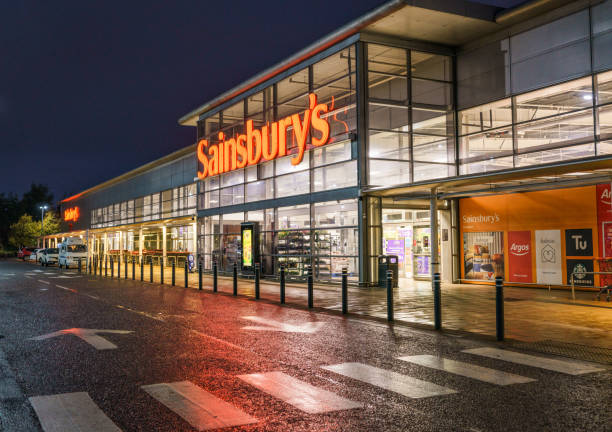
British supermarket group Sainsbury’s has raised the lower end of its full-year profit forecast after reporting stronger first-half earnings. The retailer benefited from higher grocery sales volumes, cost reductions and continued investment in competitive pricing.
Sainsbury’s reported a 3.6% increase in underlying operating profit from continuing operations to £525 million during the first half.
Following the results, the company upgraded its full-year underlying operating profit guidance to between £1.025 billion and £1.065 billion. The previous lower-end forecast stood at £965 million on a comparable basis excluding Argos.
Sainsbury’s Profit Growth Supports Improved Full-Year Outlook
The British retailer attributed its improved underlying performance to stronger sales volumes, operational efficiencies and investments in product quality and customer service.
Underlying profit before tax increased 5.2% to £366 million, reflecting continued progress in its core supermarket operations.
Meanwhile, underlying earnings per share (EPS) climbed 10.4% to 11.7 pence, significantly outpacing the increase in underlying pre-tax profit.
Earnings per share can grow faster than overall profit when companies reduce their share count through buybacks or benefit from changes in tax and other financial items. However, the reported figures alone do not establish the precise contribution of each factor.
Sainsbury’s ongoing share repurchase programme could provide additional support to earnings per share by reducing the number of shares outstanding.
Grocery Sales Rise as General Merchandise Weakens
Sainsbury’s reported £14.0 billion in sales excluding fuel, representing a 2.6% increase compared with the previous year.
Grocery revenue rose 2.9% to £13.2 billion, highlighting the strength of the company’s core food retail business.
However, general merchandise and clothing sales declined 3.4%, reflecting weaker performance outside its supermarket operations.
Like-for-like sales excluding fuel increased 1.9% during the first half.
Nevertheless, growth moderated as the reporting period progressed. Comparable sales rose 2.3% in the first quarter before slowing to 1.2% in the second quarter.
The slowdown highlights the challenges facing British retailers as they compete for household spending in a price-sensitive market.
Sainsbury’s Maintains Focus on Competitive Pricing
Despite the improved earnings outlook, Sainsbury’s expects competition across the UK grocery sector to remain intense.
The company plans to continue investing in affordable prices, product availability, quality and customer service to maintain its competitive position.
Chief Executive Simon Roberts highlighted the growing number of customers choosing Sainsbury’s for their regular grocery shopping.
He also emphasized the importance of the Nectar Prices loyalty programme and the retailer’s extensive Aldi Price Match offering in attracting shoppers.
The company’s premium Taste the Difference product range recorded sales growth exceeding 6%.
Meanwhile, fresh food sales increased 4.3%, providing further evidence of demand in important grocery categories.
These results suggest that Sainsbury’s strategy of combining competitive prices with higher-quality products continues to support its core business.
Argos Sale Contributes to Statutory Net Loss
Although Sainsbury’s delivered stronger underlying operating results, its statutory financial performance was affected by discontinued operations.
The company reported a statutory loss after tax of £164 million, compared with a profit of £155 million in the corresponding period a year earlier.
The reversal was primarily linked to a £376 million loss associated with discontinued operations.
Sainsbury’s has agreed to sell Argos to Swift Partners, with the transaction expected to be completed by the end of February 2027.
As a result, Argos is now classified as a discontinued operation in the company’s financial statements.
This distinction helps explain why Sainsbury’s reported improved underlying profitability while simultaneously recording a statutory net loss.
Free Cash Flow and Share Buybacks Remain Strong
Sainsbury’s generated £333 million in free cash flow during the first half, supporting its financial flexibility and capital allocation plans.
The company expects full-year free cash flow to exceed £500 million.
Meanwhile, Sainsbury’s has completed £200 million of its planned £300 million share buyback programme.
The remaining £100 million is scheduled for the second half of the financial year.
Share repurchases can benefit shareholders by reducing the number of shares in circulation, although their ultimate value depends on the purchase price and the company’s broader financial performance.
What Comes Next for Sainsbury’s?
Sainsbury’s improved profit guidance reflects confidence in its grocery operations despite continued pressure across the broader UK retail sector.
Higher food sales, stronger customer engagement and operational savings have helped offset weaker general merchandise performance.
However, slowing like-for-like sales growth and persistent competition remain important challenges.
Investors will closely monitor whether the retailer can maintain its market position while protecting profit margins through continued investment in pricing and service.
The planned Argos disposal, free cash flow generation and ongoing share buybacks will also remain key factors influencing Sainsbury’s financial outlook.