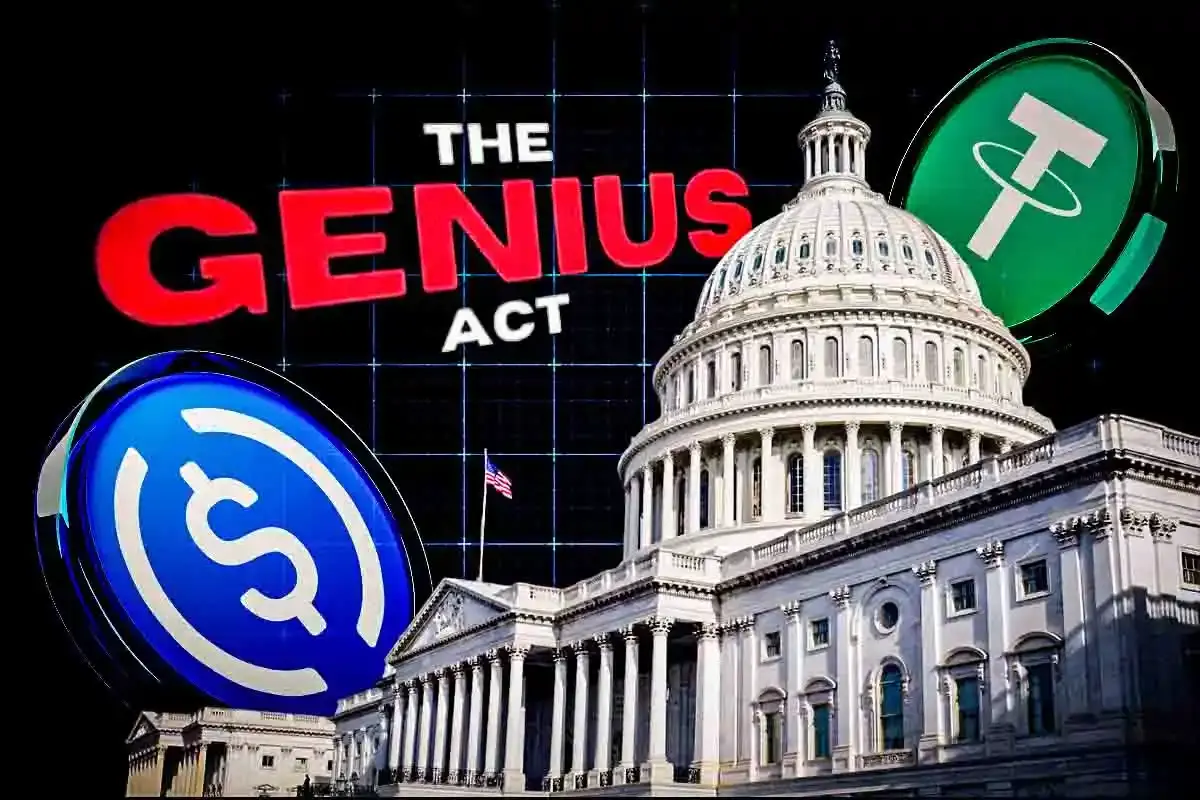
The US Office of the Comptroller of the Currency (OCC) has finalized new regulations covering stablecoin reserves, redemptions, and related services. Treasury Secretary Scott Bessent welcomed the development, describing the GENIUS Act as a major milestone for the American financial system.
Bessent also compared the Trump administration’s stablecoin legislation to historic banking reforms introduced during President Abraham Lincoln’s administration more than 160 years ago.
Bessent Draws Parallels Between the GENIUS Act and Lincoln-Era Banking Reforms
In a Wednesday post on X, Bessent praised the OCC’s final rule implementing the GENIUS Act. He described the legislation as a “watershed moment in American finance,” highlighting its potential importance for the future of digital payments.
Specifically, Bessent referenced the National Currency Act of 1863, which created a federal framework allowing nationally chartered banks to issue currency.
According to Bessent, the GENIUS Act follows a similar approach by establishing a nationwide regulatory structure for payment stablecoins in the digital economy.
Furthermore, he emphasized that the OCC’s new regulations would encourage private-sector innovation, strengthen competition, and reinforce US leadership in digital assets.
The announcement follows the OCC’s decision to finalize its stablecoin regulatory framework, as reported by Cointelegraph. The new requirements are scheduled to take effect on January 18, 2027.
Jonathan Gould, the comptroller of the currency, characterized the measures as a practical and transparent framework designed to support payment stablecoin innovation.
What the OCC’s New Stablecoin Regulations Mean for Issuers
The GENIUS Act, signed into law in 2025, introduced a federal framework for regulating payment stablecoins across the United States.
The OCC’s finalized regulations clarify how these requirements will apply to institutions operating under its supervision. In particular, the framework addresses reserve management, redemption procedures, and risk management standards.
Starting January 18, 2027, payment stablecoin issuers operating in the United States will generally need appropriate regulatory authorization under the GENIUS Act. Companies that issue stablecoins without the necessary approval could face regulatory penalties.
The regulations apply to several categories of financial institutions, including national banks, federal savings associations, and federal branches of foreign banks.
Additionally, the framework covers eligible nonbank companies seeking federal approval to issue payment stablecoins, along with certain foreign stablecoin issuers.
Stablecoin Regulation Advances as Market Growth Slows
The latest regulatory developments arrive as US dollar-backed stablecoins continue gaining popularity for digital payments and cross-border money transfers.
However, despite their growing use in financial transactions, the overall supply of stablecoins has recently experienced slower growth.
By establishing clearer operating standards, the GENIUS Act and the OCC’s final rules aim to provide greater regulatory certainty while supporting the continued development of the US digital asset industry.