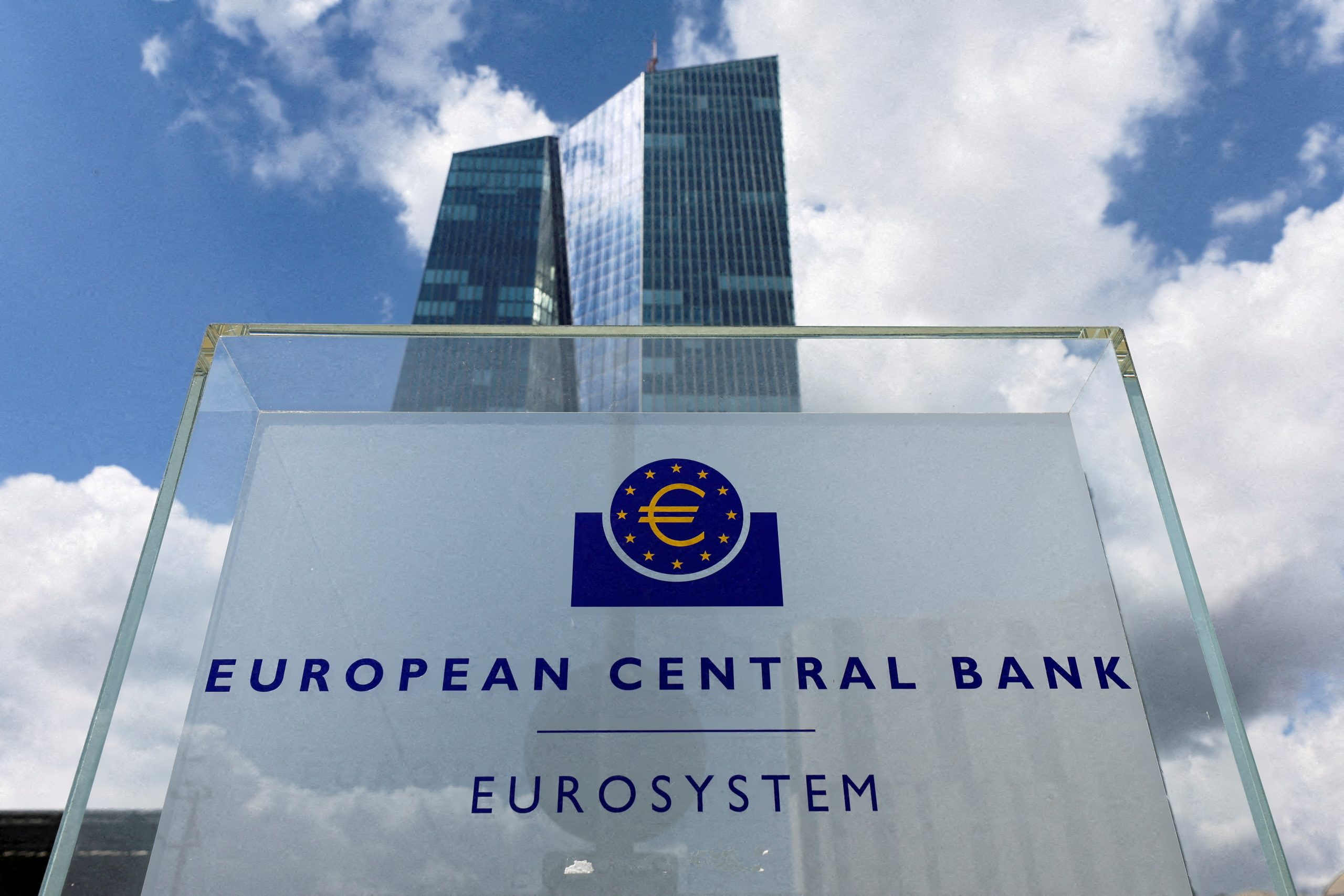
The European Central Bank is expected to raise interest rates on Thursday for the second time this year as policymakers respond to renewed inflation risks caused by the Iran war and soaring energy prices.
The conflict has intensified since the end of August, with both the United States and Iran targeting military, shipping and energy infrastructure. The escalation has pushed oil prices back above $100 per barrel and raised concerns about another inflation wave across the energy-dependent euro zone.
Economists broadly expect the ECB to increase its policy rate from 2.25% to 2.50%. Policymakers may also signal that further tightening remains possible if inflation pressures fail to ease.
ECB Rate Hike Appears Increasingly Likely
Expectations for a September rate hike have strengthened as inflation remains above the ECB’s 2% target.
Alessia Berardi, head of global macroeconomics at the Amundi Investment Institute, said a September increase now appears highly likely. She expects inflation to remain persistent over the next few months before gradually easing during the second half of next year.
The renewed surge in energy costs is one of the main reasons policymakers are considering tighter monetary policy.
Higher oil and gas prices can quickly feed into transportation, manufacturing and household costs, creating wider inflation pressures across the European economy.
Resilient Euro Zone Economy Gives ECB More Room
ECB President Christine Lagarde and other policymakers are also likely to take some confidence from recent economic data.
The 21-country euro zone economy has performed better than expected despite higher energy costs, increased competition from China and the economic impact of drought conditions.
Bank lending also accelerated in July. This suggests that the ECB’s previous rate increase in June has not yet caused a significant slowdown in economic activity.
The resilience of the economy could therefore give policymakers more room to raise rates again without immediately threatening growth.
Markets Expect More ECB Tightening
Investors currently expect at least one additional ECB rate increase before the end of the year. Markets are also pricing in the possibility of another one or two moves next year.
Martin Wolburg, senior economist at Generali Investments, expects Lagarde to maintain a hawkish but cautious stance while keeping further tightening on the table.
However, economists remain more divided.
Many believe Thursday’s expected increase could be the ECB’s final move for now. At the same time, a growing number acknowledge that additional rate hikes may become necessary if inflation remains elevated.
Higher Bond Yields Could Limit Future Rate Hikes
One factor that may prevent the ECB from raising rates aggressively is the sharp tightening already taking place in financial markets.
Long-term government bond yields have climbed to levels not seen since before the global financial crisis. Rising inflation expectations and concerns about expanding government debt have contributed to the increase.
Heavy borrowing by major technology companies seeking capital for artificial intelligence investments has added further pressure to bond markets.
Political uncertainty in Germany has also contributed to the rise in borrowing costs.
Because financing conditions are already becoming more restrictive, the ECB may prefer to assess the economic impact before committing to a longer series of rate increases.
ECB Could Raise Growth and Inflation Forecasts
The ECB is also expected to update its economic forecasts on Thursday.
Policymakers may raise their growth projections for this year and potentially for 2027, reflecting the euro zone economy’s stronger-than-expected performance.
However, the central bank could delay its forecast for inflation returning to its 2% target.
In June, the ECB expected inflation to fall back toward target by next summer. With headline inflation now above 3%, that timeline may need to be revised.
The latest forecasts may also fail to fully reflect the recent surge in energy prices because much of the increase occurred after the projections were prepared.
Rising Gas Prices Add Another Inflation Risk
Oil is not the only concern for European policymakers.
Natural gas prices have also climbed sharply in recent weeks, creating another potential source of inflation pressure.
Barclays noted that gas prices have moved toward levels associated with more adverse economic scenarios.
Gas shocks usually take longer than oil shocks to spread throughout the economy. However, their effect on broader inflation can be stronger and more persistent.
That makes the latest increase particularly important for an economy that remains heavily exposed to imported energy.
Core Inflation and Wage Growth Offer Some Relief
Despite the renewed energy shock, several indicators monitored closely by the ECB have remained relatively encouraging.
Core inflation, which excludes volatile food and energy prices, eased to 2.4% last month.
Consumer expectations for future price increases have also declined, while wage growth has started to moderate.
These developments reduce the risk that higher energy costs will trigger a broader wage-price spiral.
Andrew Kenningham of Capital Economics argued that the current environment differs significantly from the energy crisis of 2022 because demand conditions are less supportive of prolonged inflation.
Companies also appear to be absorbing a larger share of higher costs.
Carsten Brzeski, global head of macro at ING, noted that German businesses have so far been less willing to pass higher energy costs directly onto consumers than they were during the 2022 crisis.
That earlier energy shock, which followed Russia’s invasion of Ukraine, eventually pushed euro zone inflation above 10%.
Lagarde’s Press Conference Could Be Crucial
Beyond the interest rate decision, traders will closely follow Christine Lagarde’s press conference for clues about the ECB’s future policy path.
Markets will want to know whether the expected September hike is mainly a response to the latest energy shock or the beginning of a broader tightening cycle.
Lagarde may also face questions about her own future at the central bank.
Her current term as ECB president runs until October 31, 2027. However, speculation has increased about what role she may pursue afterward.
She has previously been linked to leadership discussions involving the World Economic Forum and has spoken about supporting European values in a future public role.
Lagarde has nevertheless indicated that she intends to remain at the ECB through 2027.
Recent reports involving ECB board member Isabel Schnabel and a potential move to the International Monetary Fund have also increased speculation about future leadership changes at the central bank.
For markets, however, the immediate focus remains firmly on inflation, energy prices and whether the ECB believes further rate hikes will be required.