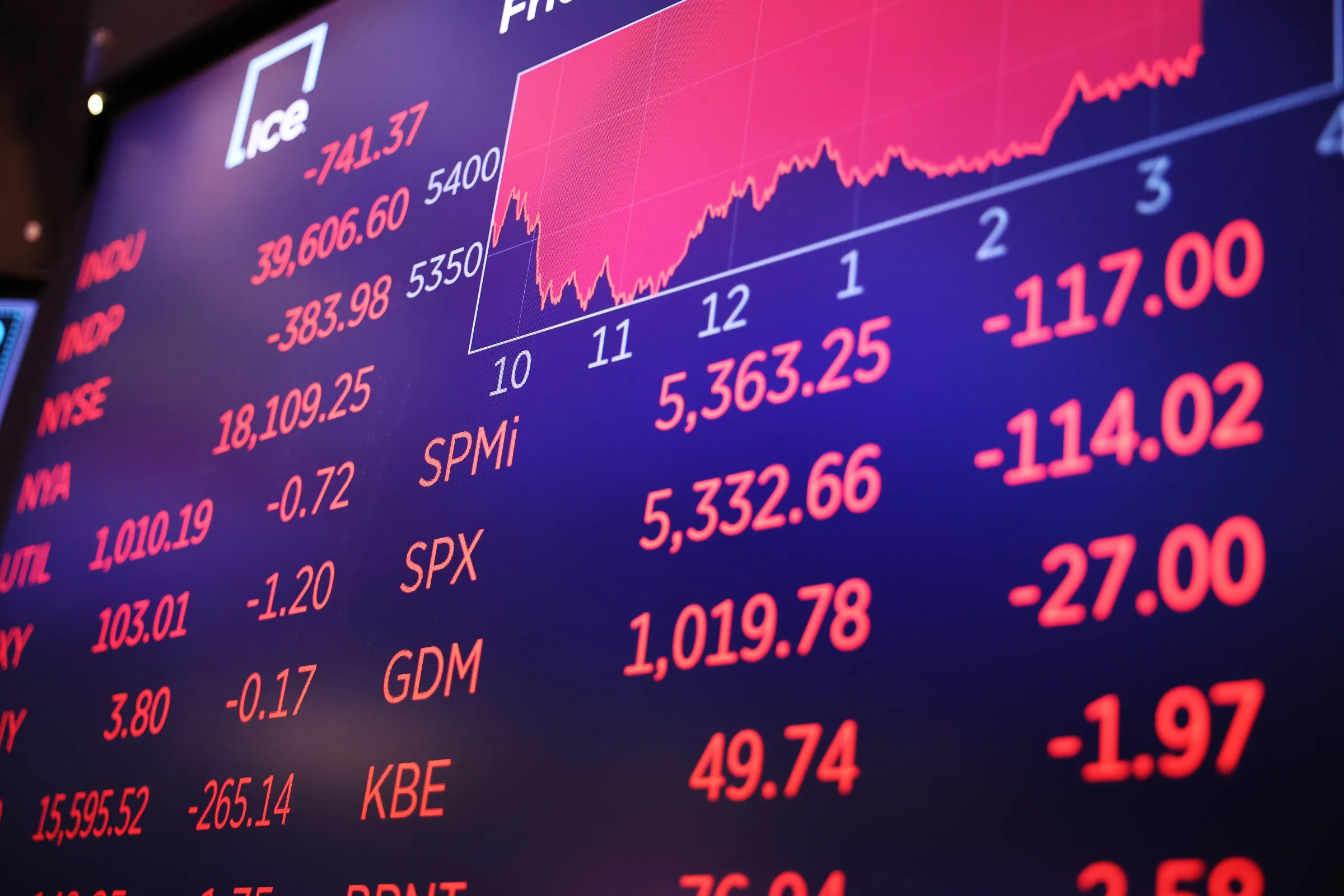
Wall Street moved lower on Tuesday as rising oil prices and higher U.S. Treasury yields weighed on investor sentiment.
The decline put U.S. stocks on course for a weak start to September, a month that has historically been difficult for equity markets.
At the same time, fresh labor market data showed some signs of softness but remained broadly resilient. As a result, expectations for the Federal Reserve’s next interest rate decision changed only modestly.
At 13:51 ET, the Nasdaq Composite was down around 1% at 26,115.80 points.
The S&P 500 fell approximately 0.7% to 7,633.91, while the Dow Jones Industrial Average declined 0.8% to 52,765.33.
U.S. Stocks Extend Recent Losses
U.S. stocks had already finished lower on Monday as traders reacted to two major developments.
Fresh military tensions in the Persian Gulf increased concerns about global energy supplies.
At the same time, investors sharply reassessed the outlook for global interest rates following increasingly hawkish signals from central banks.
Together, these factors created a difficult backdrop for risk assets.
Technology Stocks Hit by Higher Yields
Technology and growth stocks came under particular pressure as government bond yields rose.
Higher yields can reduce the appeal of high-valuation growth companies because they increase the discount rate applied to future earnings.
Mega-cap technology, semiconductor and software stocks were among the areas most exposed to the move.
That contributed to the sharper decline in the technology-heavy Nasdaq.
Oil Above $90 Adds Inflation Pressure
Crude oil remained above $90 per barrel following renewed military exchanges between the United States and Iran.
U.S. strikes on Iranian missile sites on Larak Island were followed by retaliatory Iranian missile attacks against U.S. bases in Jordan.
The escalation weakened hopes for a rapid improvement in shipping conditions around the Strait of Hormuz.
Concerns over possible disruptions to one of the world’s most important energy routes pushed oil prices higher.
Rising energy costs also revived fears that inflation could remain elevated for longer.
Global Bond Sell-Off Pushes Yields Higher
Treasury yields also climbed as the global bond market remained under pressure.
The rise in U.S. yields followed a broader sell-off in sovereign debt markets across Europe and Asia.
Japan’s benchmark 10-year government bond yield reached around 3.0%, marking one of its highest levels in decades.
Higher borrowing costs have become another headwind for equity markets, particularly for expensive growth stocks.
Fed Rate Hike Odds Rise After Warsh Speech
Wall Street is also adjusting to a more hawkish Federal Reserve outlook.
Fed Chair Kevin Warsh’s Jackson Hole speech reinforced concerns that policymakers may need to keep monetary policy restrictive.
Warsh said the central bank still had more work to do to control inflation.
Following those comments, markets increased expectations for another interest rate hike.
According to the CME FedWatch tool, investors were pricing roughly a 64.4% probability of a 25-basis-point increase at the Fed’s September meeting.
That was significantly higher than the approximately 35% probability priced one week earlier.
September Seasonality Adds Another Risk
The shift toward a more hawkish monetary policy outlook comes at a challenging time for investors.
September has historically been one of the weakest months of the year for U.S. stock market performance.
That seasonal pattern does not guarantee further losses, but it has added to investor caution as oil prices, bond yields and geopolitical risks rise simultaneously.
JOLTS Data Shows Mixed Labor Market Picture
Tuesday’s Job Openings and Labor Turnover Survey provided a mixed signal about the U.S. labor market.
Job openings totaled 7.271 million in July, below expectations of 7.330 million.
However, the figure increased from June’s downwardly revised level of 7.182 million.
The July reading also remained relatively close to the recent high of 7.585 million openings recorded in April.
That suggested that labor demand remains relatively resilient despite some signs of cooling.
Nonfarm Payrolls Could Decide the Fed’s Next Move
Investor attention will now turn to Friday’s August nonfarm payrolls report.
The employment data could provide a clearer picture of whether the U.S. labor market is weakening enough to reduce the need for another rate increase.
Markets will then focus on next week’s August Consumer Price Index report.
Together, the jobs and inflation reports could play a major role in determining whether the Federal Reserve proceeds with another rate hike in September.
For now, rising oil prices, higher Treasury yields and renewed geopolitical tensions continue to pressure Wall Street at the start of the month.