Gold prices moved slightly lower on Wednesday but remained close to a three-month high. Falling oil prices and lower U.S. Treasury yields helped ease inflation concerns, while investors continued to follow diplomatic efforts involving Iran and Oman over the Strait of Hormuz.
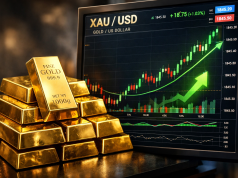
At 01:10 ET (05:40 GMT), XAU/USD declined 0.4% to $4,642.38 per ounce, while gold futures gained 0.1% to $4,699.04.
Silver also strengthened, with XAG/USD rising 0.7% to $69.05 an ounce, while platinum advanced 0.3% to $1,866.89. Meanwhile, the U.S. Dollar Index edged 0.1% higher to 99.01.
Lower Oil Prices and Treasury Yields Support Gold
Gold has gained more than 7% over the past week, leaving prices close to the three-month peak reached during the previous session.
Part of the recent support has come from falling U.S. Treasury yields and weaker oil prices. Both developments have reduced concerns over persistent inflation and potentially lowered the pressure on the Federal Reserve to maintain restrictive monetary policy.
Treasury yields dropped by roughly 5 to 7 basis points across the curve on Tuesday. Oil prices also declined as investors became more optimistic about a possible easing of tensions in the Middle East.
Iran and Oman reportedly held discussions over the creation of a temporary joint maritime corridor, which could allow some shipping activity through the Strait of Hormuz to resume.
Why Lower Oil Prices Matter for Gold
Energy prices can have a significant impact on inflation. A sharp rise in crude oil prices can increase transportation and production costs, potentially keeping inflation elevated.
Persistent inflation could encourage the Federal Reserve to keep interest rates higher for longer.
Higher interest rates generally create a headwind for gold because bullion does not generate interest or income. When bond yields rise, yield-producing assets can become more attractive compared with gold.
Lower oil prices and Treasury yields therefore provide a more supportive environment for the precious metal.
Treasury Policy Keeps Debasement Trade in Focus
Recent moves in gold have also renewed attention on the so-called debasement trade.
ANZ analysts noted that Treasury Secretary Scott Bessent provided no additional indication regarding debt-management measures announced the previous week.
However, reports suggested that the U.S. Treasury could potentially use part of its cash balance to finance buybacks of older securities carrying higher yields.
Concerns over government debt, fiscal policy and the long-term purchasing power of currencies have previously encouraged investors to increase their exposure to gold.
PCE Inflation Data Becomes Next Major Test
Investors are now focusing on the latest U.S. Personal Consumption Expenditures (PCE) inflation report, which is due Wednesday.
The PCE index is closely monitored by the Federal Reserve and could provide another important signal on inflation trends and the health of the U.S. economy.
Boston Fed President Susan Collins recently said she supports keeping interest rates unchanged for now, provided inflation continues moving toward the central bank’s 2% target.
A softer inflation reading could strengthen expectations for a more accommodative Fed policy outlook, potentially providing additional support for gold.
Warsh’s Jackson Hole Speech Could Move Markets
Attention is also turning toward Fed Chair Kevin Warsh’s first major speech at the Jackson Hole symposium on Friday.
Investors will be watching closely for clues about how the Federal Reserve views the balance between persistent inflation and broader economic conditions.
Markets are particularly interested in when policymakers could become comfortable adjusting interest rates if inflation continues to ease.
Warsh’s remarks could therefore become an important catalyst for gold, Treasury yields and the U.S. dollar.
Gold Rally Revives Safe-Haven and Debasement Demand
Gold’s latest rally has also brought renewed attention to the investment theme that helped drive bullion higher during 2025.
Investors often turn toward gold when concerns rise over government deficits, sovereign debt, fiscal policy and currency purchasing power.
With Treasury yields easing, oil prices retreating and key U.S. inflation data approaching, traders will continue to watch whether gold can maintain its position near recent highs.